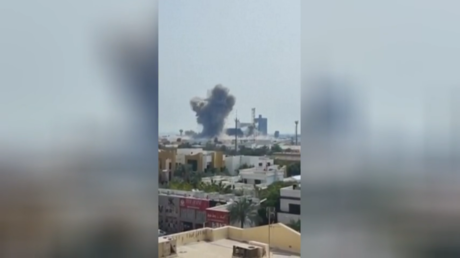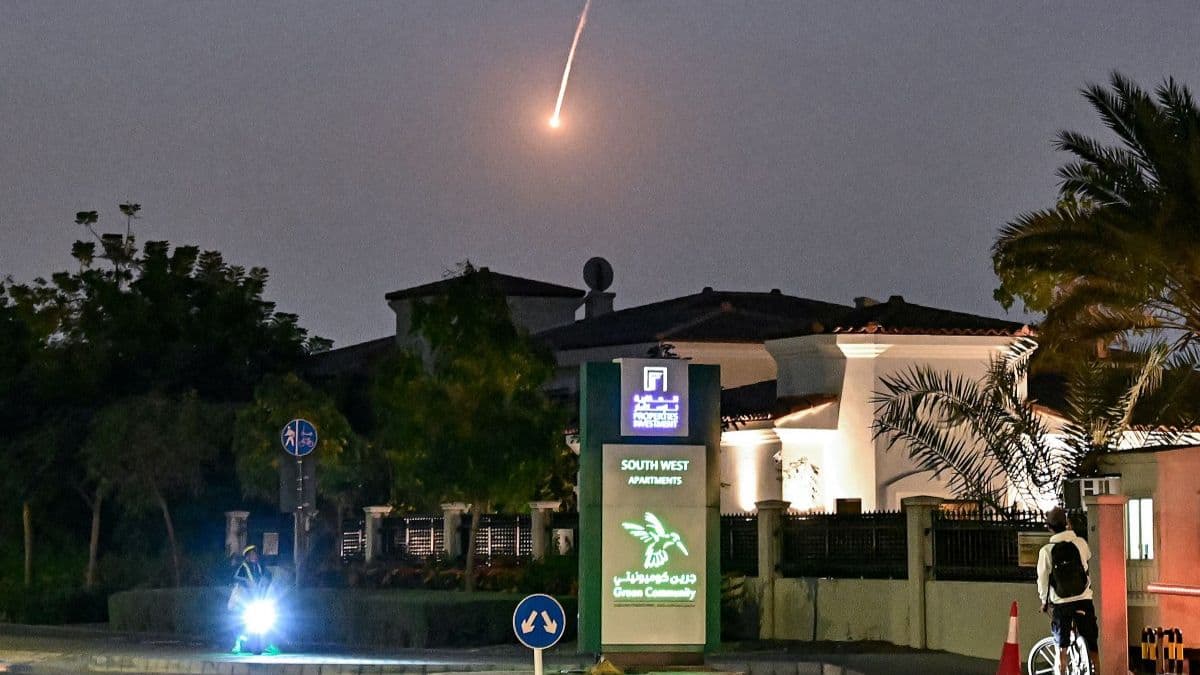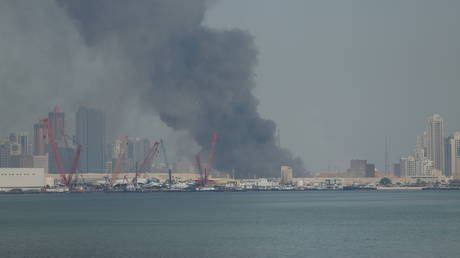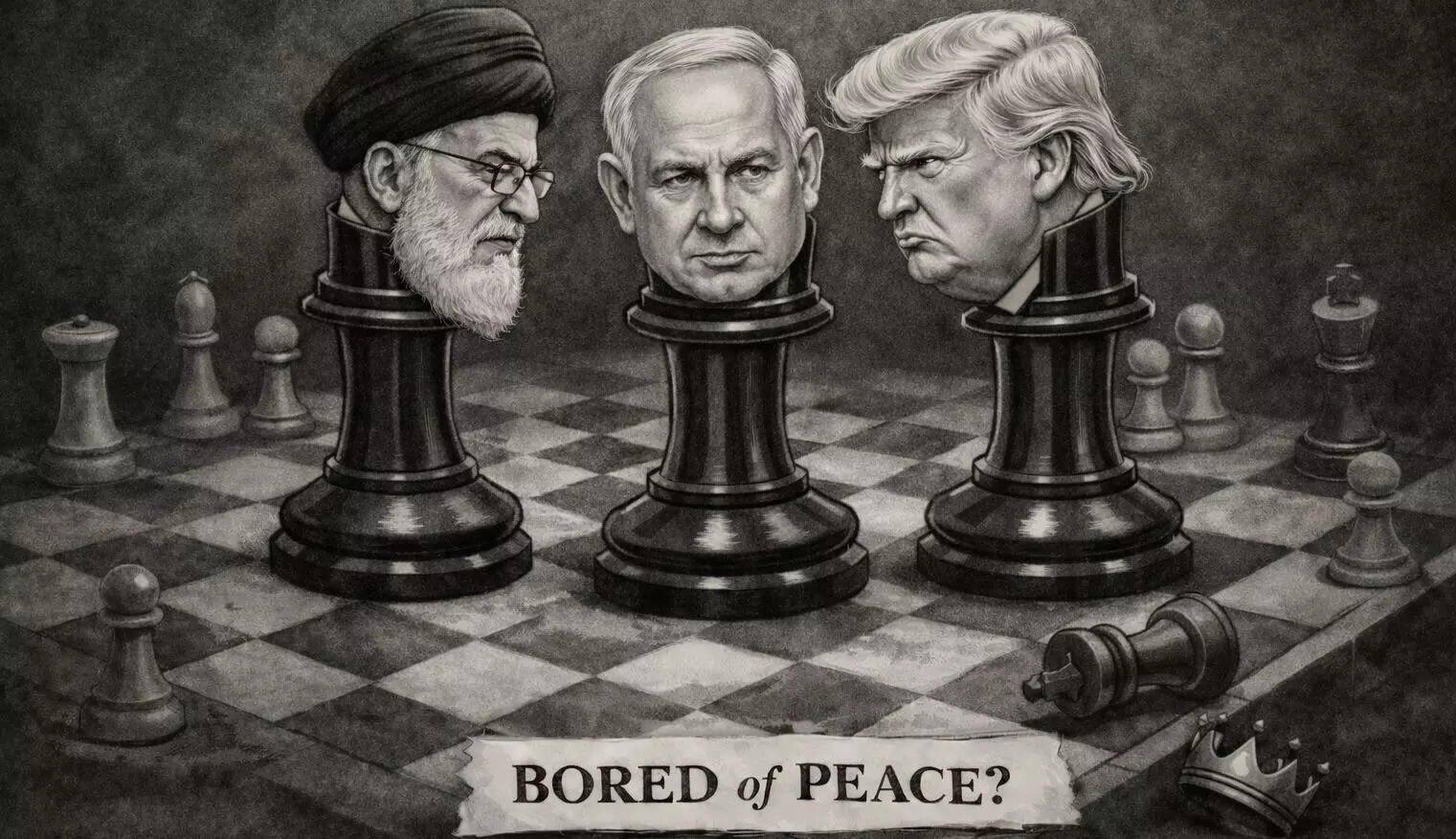
The stability of any multilateral peace agreement depends on the ratio of shared economic upside to the cost of domestic political friction. When the Abraham Accords were signed, the projected "Peace Dividend" was predicated on a fundamental decoupling of regional trade from the Israeli-Palestinian conflict. However, the current escalation across the Middle East demonstrates a failure in the Accords' internal risk-mitigation architecture. Specifically, 50% of the original signatories and key mediators—the "Board of Peace"—now find their strategic interests subordinated to active kinetic conflict or severe diplomatic retrenchment. This is not a failure of intent, but a failure of structural design.
The Tri-Node Risk Model of the Abraham Accords
The Accords were built on three distinct nodes of cooperation. If one node fails, the system enters a state of high-friction neutrality; if two fail, the agreement becomes a "Paper Peace" with no operational utility.
- The Security Node: Integrated air defense and intelligence sharing against regional hegemony.
- The Economic Node: Direct Foreign Investment (DFI) and joint ventures in desalination, cyber-security, and logistics.
- The Normalization Node: Cultural exchange and the public-facing legitimacy of the state of Israel in the Arab world.
The current conflict has effectively severed the Normalization Node for 100% of the Arab signatories. This creates a "Participation Deficit" where governments continue to communicate through backchannels (the Security Node) but must publicly distance themselves to manage internal stability. When the public and private strategies of a state diverge this sharply, the long-term viability of the agreement decays at an exponential rate.
The Cost Function of Regional Kinetic Conflict
The "Board of Peace" metaphor refers to the collection of heads of state and diplomats who brokered the 2020 agreements. Assessing their current status requires a cold calculation of their operational capacity.
The primary inhibitor to the Accords is the Escalation Overhead. For countries like the United Arab Emirates (UAE) and Bahrain, the cost of maintaining the Accords involves:
- Reputational Capital Erosion: The depletion of "soft power" within the Arab League and the Global South.
- Internal Security Tax: Increased spending on domestic monitoring to prevent radicalization sparked by regional violence.
- Opportunity Cost of Capital: Investors reroute funds from regional integration projects toward "safe haven" assets outside the Middle East.
When the article notes that "half of the board is at war," it refers to the reality that the primary mediators—the United States and Israel—are engaged in active military operations, while the Arab partners are forced into a defensive diplomatic posture. This shifts the Accords from an offensive growth strategy to a defensive survival strategy.
The Institutionalization Gap
A significant flaw in the 2020 framework was the lack of Institutionalization. The Accords were largely "Founder-Led," relying on the personal rapport between a small circle of individuals (Jared Kushner, Mohammed bin Zayed, Benjamin Netanyahu). In corporate strategy, a founder-led initiative that fails to transition to a process-led institution is highly vulnerable to personnel turnover or external shocks.
Because no formal regional body was created to arbitrate disputes or manage collective crises, the Accords lacked a "circuit breaker." When violence broke out, there was no institutional mechanism to absorb the shock. Instead, the agreement reverted to its baseline: a series of bilateral memos of understanding that hold no weight during active warfare.
The Divergence of Strategic Objectives
The signatories are currently operating under three conflicting strategic priorities, which prevents a unified "Board" response:
- Israel: Prioritizes total kinetic victory and the re-establishment of deterrence, viewing the Accords as a secondary asset that should withstand the stress of war.
- The UAE and Bahrain: Prioritize regional de-escalation to protect their "Vision 2030" style economic diversification. They view the Accords as an economic tool, not a suicide pact for their domestic legitimacy.
- The United States: Prioritizes the "Integrated Middle East" as a means to pivot resources toward the Indo-Pacific. This creates a policy vacuum where the U.S. wants the benefits of regional peace without the ongoing cost of active policing.
This divergence creates a Stall Point. No party is willing to formally exit the Accords because the sunk cost is too high, but no party is willing to advance them because the current political price is prohibitive.
The Mechanism of Diplomatic Inertia
We are witnessing a phenomenon known as Strategic Hibernation. The Accords are not "dead," but they are "inert." In this state, the technical infrastructure remains—flights may continue at reduced capacity, and some banking links remain open—but the transformative energy is gone.
The "War" state mentioned by critics is the result of the Accords' inability to address the Peripheral Security Variable: the Palestinian issue. By attempting to "bypass" this variable, the architects of the Accords created a system with a single point of failure. This is comparable to building a high-speed rail line that ignores the geological instability of the ground beneath it. The train is fast, but the tracks are subject to liquefaction.
Quantifying the Resilience of the Accords
To determine if the Accords can survive, we must look at the Trade-to-Conflict Ratio. In 2022, trade between Israel and the UAE grew by over 100%. If that trade volume remains stable or grows despite the war, the Economic Node is resilient enough to carry the agreement through the crisis. If trade volume drops by more than 40%, the economic incentive for normalization disappears, leaving only the Security Node.
The Security Node is the most "robust" but also the most "invisible." It relies on the shared threat of Iranian regional influence. This shared threat creates a floor for the relationship; no matter how much public rhetoric is used to condemn Israel, the underlying intelligence cooperation persists because it is an existential necessity for the Gulf monarchies.
The Transition from Peace to Management
The "Board of Peace" is no longer in the business of expansion; they are in the business of Crisis Management. This requires a shift in the consulting framework applied to the region.
- Phase 1: Damage Limitation. Reducing the visibility of the Accords to prevent domestic unrest in Arab capitals.
- Phase 2: Decoupled Cooperation. Moving joint projects to third-party locations (e.g., Greece or Cyprus) to allow technical work to continue without the "optics" of direct bilateralism.
- Phase 3: Conditional Re-engagement. Developing a clear set of metrics for when "normalcy" can resume, likely tied to a specific end-state in Gaza.
The primary risk is a Total System Reset, where a change in leadership in any of the key states leads to a formal withdrawal. However, the cost of withdrawal is high: it signals to international markets that the region is inherently unstable, triggering capital flight.
The Strategic Path Forward
The "Bored of Peace" critique misses the point. The actors involved are not bored; they are trapped by the limitations of their own design. To move from a state of war back to a state of functional cooperation, the "Board" must replace personal diplomacy with structural commitments.
The immediate tactical requirement is the creation of a Multilateral Reconstruction Fund. This would move the Accords from a bilateral "handshake" to a shared "equity stake" in regional stability. By tying the financial success of the Gulf states to the successful governance of Palestinian territories, the Accords would finally integrate the missing variable that led to the current system failure.
Strategic actors should monitor the Normalization-to-Kinetic Ratio. As long as the diplomatic missions remain open, the framework exists. The moment a signatory recalls its ambassador indefinitely, the Accords move from "Hibernation" to "Liquidation." The survival of the Accords depends on transforming them from a political trophy into a functional regional utility that provides measurable security benefits that outweigh the high cost of the current conflict.