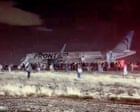
The National Transportation Safety Board (NTSB) and the Federal Aviation Administration (FAA) operate within a binary logic of "occurrence" versus "accident," a distinction that dictates the speed and depth of federal intervention. When an incident involving Frontier Airlines results in a fatality, the transition from a standard incident report to a formal investigation is not a matter of bureaucratic whim; it is a calculation of systemic risk. The primary objective is to determine if the fatality was an isolated human error or an indicator of a breakdown in the Safety Management Systems (SMS) that underpin low-cost carrier (LCC) operations.
The Hierarchy of Aviation Safety Oversight
Federal oversight is partitioned into three distinct tiers of scrutiny. Each tier is triggered by specific physical or operational outcomes.
- Administrative Tracking: Routine deviations that do not result in damage or injury.
- Incident Investigation: Occurrences other than accidents associated with the operation of an aircraft, which affect or could affect the safety of operations.
- Full-Scale Accident Investigation: Events involving death, serious injury, or substantial structural damage to the aircraft.
The Frontier incident sits at the intersection of these tiers. While a fatality technically mandates NTSB involvement under 49 CFR Part 830, the agency must first define the causal link between the aircraft's operation and the death. If the death occurred due to natural causes or was unrelated to the flight's mechanical or operational integrity, the NTSB may decline a full-scale probe. However, if the death resulted from turbulence, equipment failure, or crew protocol deviations, the investigation shifts from a localized event to a systemic audit of Frontier’s operational culture.
The Economic and Operational Pressures of LCC Models
Frontier Airlines operates on an Ultra-Low-Cost Carrier (ULCC) model. This model relies on high aircraft utilization, rapid turnaround times, and lean staffing. While these variables are financial drivers, they also represent potential friction points in a safety environment.
The Utilization Constraint
ULCCs keep aircraft in the air for more hours per day than legacy carriers. This creates a compressed window for maintenance and a higher frequency of cycles (takeoffs and landings) per airframe. When a safety incident occurs, investigators look for "maintenance drift"—the gradual erosion of safety margins to meet tight scheduling demands. A formal investigation will likely audit the specific tail number's maintenance history to see if deferred maintenance items (MELs) contributed to the event.
Crew Resource Management (CRM) in High-Stress Environments
The "human factor" is rarely a vacuum. It is a product of the environment. High-frequency flying can lead to cumulative fatigue, even if pilots and cabin crew remain within legal duty-time limits. The NTSB's focus on "mulling" an investigation suggests they are weighing whether this incident was an anomaly or a symptom of "fatigue-induced protocol non-compliance."
Mechanics of the Incident: Identifying the Core Failure
To understand the potential scope of an NTSB probe, we must categorize the possible failure modes that lead to fatalities in modern aviation.
- Environmental Dynamics: If the fatality was caused by Clear Air Turbulence (CAT), the investigation focuses on the predictive software used by dispatchers and the communication lag between Air Traffic Control (ATC) and the cockpit.
- Mechanical Integrity: If a component failure led to a cabin decompression or physical injury, the investigation expands to the manufacturer (e.g., Airbus) and the specific maintenance facility that last serviced the part.
- Ground Operations and In-Flight Procedures: Fatalities occurring during boarding, deplaning, or due to medical emergencies require an audit of the Flight Attendant Manual (FAM) and the effectiveness of on-board medical equipment (AEDs, EEMKs).
The NTSB uses a "Party System," inviting organizations like the Air Line Pilots Association (ALPA) and the aircraft manufacturer to assist. This ensures that the technical analysis is vetted by those who design and operate the hardware. The friction point here is that these parties have vested interests in the outcome, requiring the NTSB to act as a neutral arbiter of high-stakes data.
Quantifying Regulatory Risk and Market Fallout
For Frontier, the risk is not merely a fine from the FAA. The real cost function involves a combination of legal liability, increased insurance premiums, and brand erosion.
- Legal Liability: A formal NTSB finding of "Probable Cause" citing airline negligence provides the evidentiary basis for massive civil litigation.
- Operational Directives: If the investigation reveals a fleet-wide defect, the FAA can issue Airworthiness Directives (ADs) that ground aircraft or require immediate, costly modifications.
- The Safety Premium: Markets react to safety investigations because they signal a potential increase in the "Cost of Doing Business." If Frontier is forced to increase turnaround times or hire more safety oversight personnel to satisfy regulators, their ULCC edge thins.
The Data Gap in Modern Safety Reporting
One of the greatest challenges in current aviation safety is the reliance on self-reporting systems like the Aviation Safety Action Program (ASAP). These programs allow employees to report errors without fear of retribution, provided the error was not intentional. While this generates a wealth of data, it creates a "survivorship bias" in safety metrics. We only see the errors that were reported or those that resulted in a visible incident.
The NTSB’s potential investigation into Frontier will attempt to bridge this gap by comparing the airline's internal safety data against the physical evidence of the incident. If there is a discrepancy between what was reported via ASAP and what occurred on the flight deck, the regulator will likely pivot toward a more aggressive enforcement posture.
Strategic Pivot: The Move Toward Predictive Safety Management
The aviation industry is transitioning from reactive safety (investigating after a crash) to predictive safety (using Flight Data Monitoring or FDM). Every modern aircraft records thousands of data points per second. An NTSB investigation will involve a "Deep Download" of the Flight Data Recorder (FDR) and Cockpit Voice Recorder (CVR).
They will analyze:
- Exceedances: Did the aircraft fly outside of its designed envelope?
- Standard Operating Procedure (SOP) Adherence: Did the crew skip checklist items to save time?
- Automation Dependency: Did a reliance on autopilot contribute to a lack of situational awareness?
The Threshold for Intervention
The decision to investigate hinges on a concept known as "Transferable Learning." If the NTSB believes that the Frontier incident offers no new lessons for the industry—for instance, if it was a freak medical event—they will leave the file to the FAA’s local Flight Standards District Office (FSDO). If, however, the incident suggests a flaw in how Airbus aircraft handle specific turbulence profiles or how ULCC crews are trained for emergencies, a full investigation is inevitable.
The NTSB’s current hesitation reflects a rigorous vetting of the preliminary data. They are determining if the "signal" of the incident is loud enough to justify the "noise" of a multi-year federal probe.
The immediate requirement for Frontier’s leadership is an internal "Look-Back" audit that precedes the federal findings. This audit must move beyond compliance with FAA minimums and instead stress-test the airline's internal safety culture against the high-utilization demands of their business model. Specifically, they must quantify the correlation between crew fatigue levels and "minor" safety deviations recorded over the last 24 months. If a trend line exists, the current fatality is not an outlier but an inevitability. Failure to self-correct before the NTSB issues a final report will result in a regulatory-mandated restructuring of their operational protocols, which will be significantly more expensive than a proactive internal overhaul.