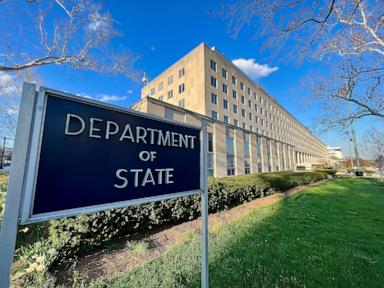
Federal judicial intervention has invalidated the executive directive suspending immigrant visa processing across seventy-five nations, exposing the friction between broad administrative intent and statutory delegation. United States District Judge Jeannette Vargas ruled that the policy, spearheaded by Secretary of State Marco Rubio, exceeded statutory boundaries defined within the Immigration and Nationality Act. The mechanism of the freeze relied on categorical nationality-based exclusions justified by public charge projections, effectively bypassing the decentralized adjudication architecture mandated by Congress.
The Statutory Architecture of Visa Adjudication
Federal immigration law distributes authority across specific nodes within the government. Congress established that consular officers possess exclusive discretion to evaluate individual visa applications based on enumerated statutory criteria. The executive maneuver attempted to short-circuit this decentralized evaluation process by substituting individual merit assessment with a blanket geographic filter. Meanwhile, you can find similar stories here: The Locked Door Inside Tokyo and the Cost of Absolute Duty.
The primary components of the legal breakdown involve:
- Delegation Overreach: The Secretary of State holds broad administrative oversight, but immigration statutes explicitly restrict executive interference in individual consular determinations.
- The Public Charge Instrument: The administration cited data from the Council of Economic Advisers suggesting high rates of public assistance utilization among specific immigrant cohorts to justify a macro-level suspension.
- Statutory Conflict: Section 1152 of the Immigration and Nationality Act prohibits discrimination based on nationality in the issuance of immigrant visas, creating a direct legislative barrier to sweeping geographic bans.
When an executive branch utilizes macro-economic aggregate metrics to halt micro-level processing entirely, it creates a systemic bottleneck. The judicial ruling restores the authority of consular posts to process cases on an individual basis, invalidating rejections tied solely to the seventy-five-country designation. To understand the complete picture, check out the recent analysis by TIME.
Economic Rationales Versus Administrative Realities
The executive justification for the pause hinged on fiscal exposure models. By pointing to potential reliance on public assistance programs, the administration framed the visa suspension as a risk mitigation strategy for domestic welfare systems.
However, translating macro-level demographic trends into micro-level operational bans introduces severe structural errors:
- Ecological Fallacy: Attributing group-level statistical tendencies from economic reports to every individual applicant ignores variance in personal financial independence, employment sponsorship, and familial support structures.
- Discretionary Erosion: Removing the analytical role of consular officers turns adjudication into a binary administrative toggle rather than a nuanced risk-assessment protocol.
- Operational Backlog Multipliers: Halting entire pipelines creates compounding processing delays that ripple through employment-based petitions and family reunification frameworks, increasing administrative overhead once the policy is lifted.
Employment-based applicants and family sponsors caught in the directive faced indeterminate delays. The economic cost of these delays manifests as acute labor shortages in specialized sectors and prolonged separation costs for sponsoring households.
The Judicial Remedy and Systemic Repercussions
The Southern District of New York ruling vacates the denials issued under the specific directive, returning those files to active status for individualized review. This creates an immediate operational challenge for embassies and consulates globally. Consular posts must re-engage applicants whose files were frozen, managing an influx of casework without a proportional expansion of adjudicative resources.
The administration retains the right to appeal the decision, signaling that executive restrictions on immigration will continue to test the limits of statutory authority in appellate courts. Future attempts to restrict entry based on financial pre-screening must navigate the narrow statutory path carved by existing immigration legislation, forcing the executive branch to pursue regulatory rule-making rather than blanket directives if it intends to alter immigrant admission standards permanently.
File petitions for affected applicants must now be audited against standard statutory criteria rather than nationality filters. Consular management teams should prepare for accelerated review protocols to address the backlog generated during the operational pause.
Federal Court Blocks 75-Country Immigrant-Visa Pause
This video provides a brief legal update on the federal court decision blocking the immigrant visa suspension for the seventy-five affected countries.