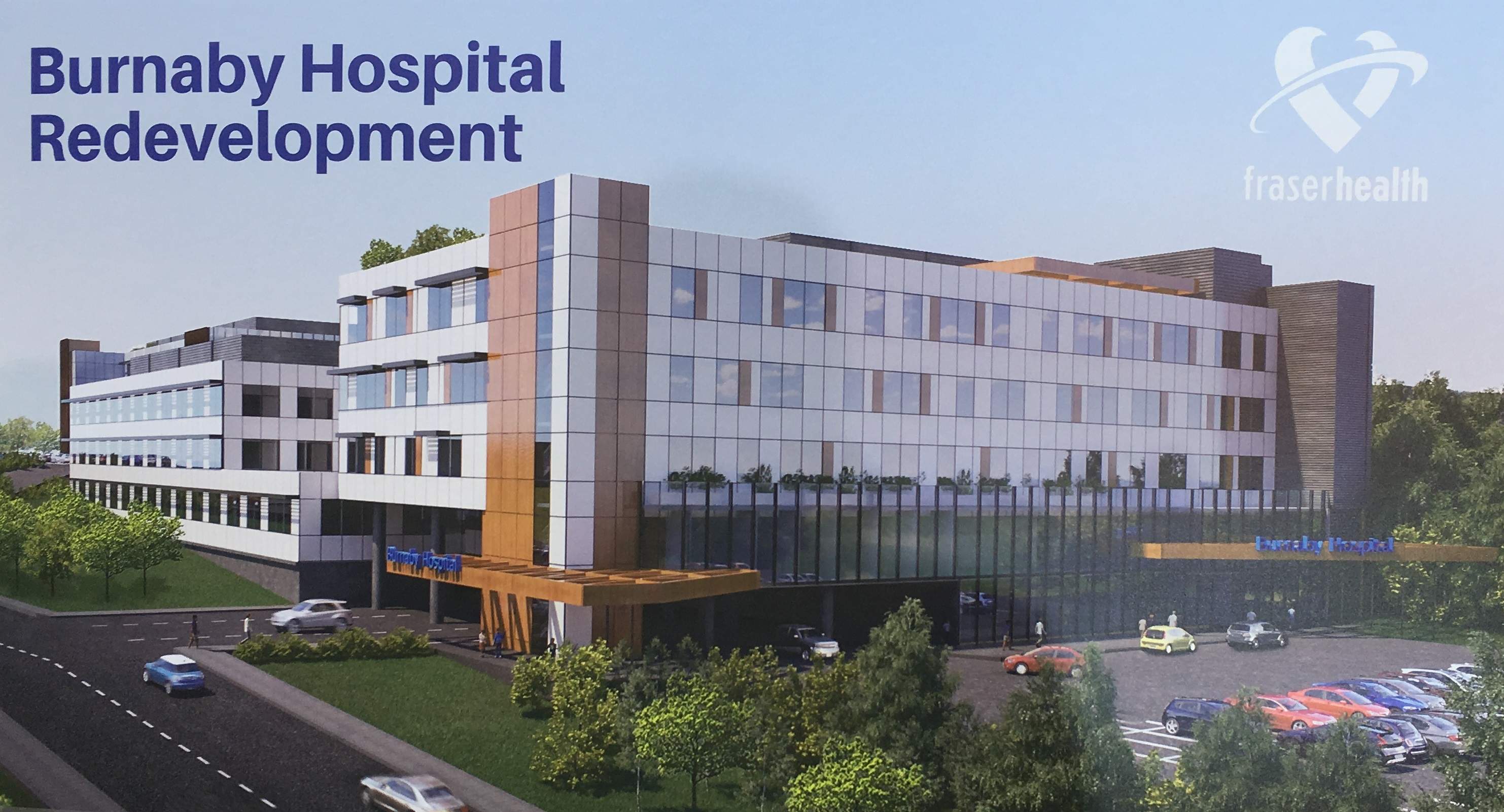
The cancellation of Phase 2 of the Burnaby Hospital redevelopment by the British Columbia provincial government represents more than a localized budgetary retreat; it is a systemic failure of long-range capital planning within an inflationary procurement environment. When the state terminates a critical infrastructure project after years of public commitment, it signals a fundamental misalignment between projected capital expenditures and the reality of hyper-local labor shortages and material price volatility. The immediate result is a localized healthcare capacity deficit, but the broader implication is a loss of institutional credibility in the public-private procurement pipeline.
The Triad of Project Dissolution
The collapse of Phase 2 can be attributed to three distinct, intersecting pressures that render the original project scope untenable under current fiscal constraints.
- The Labor Productivity Trap: Public sector projects in British Columbia compete for a finite pool of skilled trades with massive industrial energy projects and private high-density residential developments. This competition creates a wage-spiral effect where the public sector, bound by rigid budgetary cycles, cannot match the fluid compensation structures of the private market.
- Regulatory Burden and Design Drift: The time elapsed between the initial 2019 announcement and the projected 2026 commencement allowed for significant "scope creep" and changes in building code requirements, particularly regarding seismic resilience and infection control standards post-2020. Every month of delay added a compounding percentage to the soft costs of redesign.
- Capital Rationing: The provincial treasury operates on a hierarchy of needs. When the aggregate cost of the provincial health capital plan exceeds the debt-servicing threshold, secondary phases of multi-stage projects are the first to be excised to preserve the solvency of "Phase 1" assets already under construction.
The Mechanics of the Burnaby Capacity Gap
The Burnaby Hospital redevelopment was intended to modernize an aging campus where parts of the infrastructure date back to 1952. The cancellation of Phase 2—which was slated to include a new inpatient tower and an integrated cancer center—leaves the facility in a state of operational asymmetry.
Phase 1, which focuses on the Jim Pattison Pavilion and the expansion of the emergency department, creates a high-velocity intake point. However, without the expanded bed capacity and specialized surgical suites originally planned for Phase 2, the hospital faces a "bottleneck effect." High-efficiency intake (Phase 1) combined with stagnant discharge capacity (the missing Phase 2) results in increased "code gridlock," where patients remain in the emergency department because there are no available inpatient beds.
The loss of the BC Cancer Centre component within Phase 2 is particularly damaging to the regional health network. It forces patient migration to Vancouver or Surrey, increasing the burden on those facilities and raising the total cost of care per patient due to transportation and administrative friction.
The Cost Function of Deferred Infrastructure
Postponing healthcare infrastructure is never a cost-neutral decision. The provincial government's attempt to "pause" or "re-evaluate" the project ignores the basic physics of construction economics.
Escalation Rates vs. General Inflation
General CPI (Consumer Price Index) is a poor metric for healthcare construction. Special hospital systems—such as medical gas piping, shielded imaging suites, and negative pressure ventilation—experience escalation rates often doubling or tripling general inflation. By cancelling the contract now, the government is guaranteeing that any future iteration of Phase 2 will cost significantly more in real dollars, even if the scope remains identical.
The Maintenance Deficit
The existing aging structures that were supposed to be replaced by Phase 2 must now be maintained. These buildings operate on the "steep" part of the maintenance curve, where the cost of repair exceeds the depreciated value of the asset. This creates a "zombie infrastructure" scenario where public funds are diverted from clinical outcomes to patch failing HVAC and plumbing systems in obsolete buildings.
Strategic Realignment of the Procurement Model
To prevent future failures of this magnitude, the provincial government must move away from the traditional "design-bid-build" or even the "design-build" models that have proven vulnerable to current market shocks.
Progressive Design-Build (PDB)
In a PDB model, the owner (the Province) and the contractor work together during the early stages of design to define the project scope and cost. This allows for real-time adjustments to the budget before a final price is locked in. The failure at Burnaby suggests the government locked into a project vision that was disconnected from the actual cost of delivery, leading to the eventual "sticker shock" that triggered the cancellation.
Risk-Sharing Pools
Current procurement often places the entirety of inflationary risk on the contractor. In a volatile market, contractors respond by adding massive risk premiums to their bids or by walking away entirely. A more sophisticated approach involves a tiered risk-sharing mechanism where the province absorbs a portion of material price increases beyond a certain threshold (e.g., a 10% swing in the price of structural steel).
The Political Economy of Healthcare Rationing
The decision to cancel is rarely purely financial; it is a tactical choice in the political economy. By prioritizing the Surrey Memorial Hospital expansions or the new St. Paul’s Hospital over Burnaby Phase 2, the government is performing a regional triage.
This triage assumes that the political cost of a delay in Burnaby is lower than the political cost of a budget deficit or a failure in a more "swing" electoral district. However, this ignores the demographic reality of Burnaby’s aging population. The "People Also Ask" concern regarding wait times is directly linked to this decision. Without the bed capacity of Phase 2, surgical wait times in the Fraser Health Authority will likely remain in the bottom quartile of provincial performance.
The Path Forward: Asset Optimization
Since the capital for a full-scale Phase 2 is no longer on the table, the strategic focus must shift to "asset optimization" of the existing footprint. This is not a substitute for new construction, but a survival strategy for the regional health authority.
- Virtual Ward Implementation: To mitigate the lack of physical beds, Fraser Health must aggressively expand hospital-at-home programs. This uses remote monitoring technology to treat acute patients in their residences, effectively "creating" bed capacity without pouring concrete.
- Ambulatory Shift: Any remaining capital should be diverted into freestanding ambulatory care centers. By moving day surgeries and diagnostic imaging out of the main hospital hub, the existing Burnaby campus can be reserved for high-acuity inpatient care.
- Modular Expansion: Instead of a multi-year, multi-billion dollar tower, the province should investigate high-specification modular medical units. These can be deployed in 12–18 months to provide incremental capacity at a fraction of the cost of a traditional build.
The cancellation of Burnaby Hospital Phase 2 is a stark reminder that in the current economic climate, "announced" is not "assured." The provincial government must now prove it can manage the resulting capacity crisis through operational innovation rather than just capital expenditure. Failure to do so will result in a permanent degradation of the standard of care for the third-largest city in British Columbia.