Diplomatic progress between China and the Association of Southeast Asian Nations (ASEAN) on the South China Sea Code of Conduct (COC) represents an exercise in managing friction rather than resolving territorial claims. Reports confirming procedural advancements alongside the failure to meet year-end completion targets expose a fundamental flaw in how observers evaluate regional diplomacy. Treating a missed deadline as an unexpected setback misreads the underlying incentive structures governing both Beijing and the ten ASEAN member states. The prolonged timeline is not an administrative accident; it is the primary output of a negotiation designed to convert acute maritime disputes into a chronic, controllable bureaucratic process.
The Architecture of Diplomatic Delay
To understand why the COC remains unratified more than two decades after the 2002 Declaration on the Conduct of Parties in the South China Sea (DOC), analysts must separate procedural velocity from substantive convergence.
Procedural velocity refers to the frequency of working group meetings, the completion of draft readings, and joint communiqués expressing mutual goodwill. These metrics allow foreign ministries to signal stability to financial markets and domestic audiences. Substantive convergence requires binding agreements on enforcement mechanisms, dispute resolution, and geographic scope. Currently, procedural velocity is high while substantive convergence remains near zero.
This divergence stems from three structural asymmetries embedded in the negotiating framework:
- Consensus Paralysis within ASEAN: ASEAN operates on strict unanimity. A single member state can veto or water down language that threatens its bilateral economic relationship with Beijing. Because ASEAN comprises four active maritime claimants (Brunei, Malaysia, the Philippines, and Vietnam), one non-claimant with overlapping Exclusive Economic Zone (EEZ) friction (Indonesia), and five continental or non-claimant states (Cambodia, Laos, Myanmar, Singapore, Thailand), the bloc lacks a unified strategic threat perception.
- Bilateral Leverage vs. Multilateral Constraint: Beijing maintains an overwhelming asymmetric advantage in bilateral negotiations, where economic statecraft, infrastructure financing, and trade dependency outweigh a single neighbor's diplomatic leverage. A binding multilateral COC neutralizes this advantage by collectivizing ASEAN's bargaining power. Rational statecraft dictates that Beijing will indefinitely extend negotiations to preserve bilateral optionality while using the ongoing talks to delegitimize external intervention by extra-regional powers like the United States.
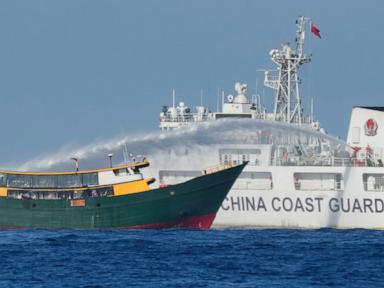
- Facts on the Water vs. Words on Paper: While diplomats debate syntax in air-conditioned conference rooms, maritime militias, coast guard vessels, and artificial island infrastructure continuously alter the physical status quo. Time favors the actor capable of sustained physical presence. Every year the COC remains unsigned is another year in which administrative control over disputed features becomes normalized through sheer persistence.
Deconstructing the Core Deadlocks
Standard diplomatic reporting treats the missed deadline as a matter of "outstanding issues." In operational terms, these issues represent irreconcilable legal and strategic positions that cannot be bridged through clever drafting.
The Legal Binding Paradox
The central friction point is whether the final COC will carry the force of international law or function as a non-binding political declaration. For claimant states like the Philippines and Vietnam, a non-binding agreement merely replicates the 2002 DOC, which failed to prevent large-scale land reclamation and militarization of disputed reefs. Without enforceable penalties for violations, a Code of Conduct operates as a voluntary guideline that strong actors ignore whenever strategic necessity demands.
Conversely, accepting a legally binding instrument with third-party arbitration mechanisms directly contradicts Beijing's core sovereignty doctrine. Under the 1982 United Nations Convention on the Law of the Sea (UNCLOS), maritime entitlements derive from land features. Beijing's expansive historical claims, often visualized via the nine-dash or ten-dash line, exist outside standard UNCLOS frameworks. Signing a legally binding COC that subordinates these claims to international maritime law would constitute a permanent strategic retreat.
Geographic Scope and Jurisdictional Ambiguity
A contract cannot be enforced if the contracting parties refuse to define the territory it governs. Negotiations consistently stall over the precise geographic boundaries of the South China Sea as applied to the COC.
- The Maximalist Definition: Encompasses the entirety of the waters within Beijing's expansive historical claim lines, overlapping directly with the sovereign EEZs of coastal ASEAN states.
- The Minimalist Definition: Restricts the COC's application strictly to disputed features—specifically the Spratly and Paracel archipelagos—while excluding undisputed EEZs and continental shelves.
If ASEAN agrees to the maximalist definition, its maritime members implicitly validate that their sovereign EEZs are disputed territories subject to joint management. If Beijing accepts the minimalist definition, it forfeits its broader jurisdictional claims over vital sea lanes and underwater resources. Neither side can concede this point without incurring severe domestic political costs.
The Third-Party Exclusion Clause
Drafting disputes repeatedly center on the role of external powers. Beijing has consistently pushed for provisions requiring consensus among all COC signatories before any party conducts joint military exercises or energy exploration with non-regional actors.
This clause functions as a strategic lock-out mechanism:
- Military Containment: It grants Beijing an effective veto over ASEAN defense cooperation with the United States, Japan, Australia, and European navies, severely degrading regional deterrence.
- Resource Monopolization: By restricting joint hydrocarbon exploration with Western energy firms, it forces ASEAN claimants to either leave offshore reserves untapped or partner exclusively with Chinese state-owned enterprises on Beijing's terms.
For states like the Philippines, which relies on a Mutual Defense Treaty with Washington, or Indonesia and Vietnam, which routinely engage international energy majors, surrendering sovereign foreign policy autonomy to a regional veto is unacceptable.
The Game Theory of Perpetual Negotiation
Evaluating the COC through the lens of classical game theory clarifies why neither side walks away from the table despite decades of non-resolution. The negotiations represent an iterated signaling game rather than a traditional bargaining process.
If ASEAN abandons the talks, it destroys its primary diplomatic mechanism for engaging Beijing collectively, triggering immediate bilateral coercion against individual claimants and fracturing regional unity. If Beijing abandons the talks, it validates Western narratives of regional aggression, driving hesitant Southeast Asian states directly into formal security alignments with Washington.
Both parties derive continuous utility from the process of negotiation while facing catastrophic costs from abandonment or capitulation.
[High Cost of Abandonment] ---> Mutual Commitment to Ongoing Talks
                                       |
                                       v
[Irreconcilable Core Interests] ---> Indefinite Procedural Extension
                                       |
                                       v
[Unchecked Maritime Friction] ---> De Facto Normalization of Presence
This equilibrium explains why official readouts consistently emphasize "progress" on non-controversial chapters—such as marine environmental protection, search-and-rescue protocols, and scientific research—while deferring the foundational chapters on dispute settlement and enforcement.
Operational Realities at Sea
The disconnect between diplomatic rhetoric and maritime reality is widening. While negotiators celebrate incremental textual agreements, operational friction in the South China Sea has escalated in both frequency and intensity.
The deployment of gray-zone tactics—using coast guard vessels, maritime militia fishing fleets, and hydrographic survey ships rather than gray-hulled naval warships—allows Beijing to assert administrative control without crossing the threshold into conventional warfare. Water cannon deployments, laser dazzlers, shoulder-bumping maneuvers, and blockade operations against resupply missions represent a continuous stress test of ASEAN claimants' resolve.
These operational realities expose the primary limitation of any diplomatic framework: paper rules cannot constrain physical capabilities without a credible enforcement mechanism. Even if China and ASEAN were to sign a comprehensive COC tomorrow, the agreement would lack an independent coast guard, a judicial tribunal with enforcement powers, or a collective security guarantee. Compliance would remain entirely dependent on the self-restraint of the dominant regional power.
Strategic Implications for Regional Actors
Because a definitive, enforceable COC will not materialize on any near-term diplomatic timeline, state actors and commercial enterprises operating in the Indo-Pacific must adjust their strategic planning accordingly.
- Shift from Multilateral Treaties to Minilateral Deterrence: Claimants facing acute maritime pressure can no longer rely on ASEAN consensus to protect sovereign rights. The strategic center of gravity is shifting toward minilateral security arrangements—such as trilateral patrols among the United States, Japan, and the Philippines, or bilateral intelligence-sharing agreements between Vietnam and regional partners.
- Institutionalize Transparency as a Counter-Measure: Without a binding legal treaty, exposing gray-zone coercion through real-time satellite imagery, embedded journalism, and public diplomatic protests becomes the primary tool for raising the reputational cost of unilateral actions.
- Price Chronic Friction into Maritime Operations: Shipping firms, subsea cable operators, and offshore energy developers must treat the South China Sea as a permanently contested operating environment. Risk models cannot assume a coming diplomatic stabilization; capital allocation must account for arbitrary inspection regimes, localized blockades, and elevated insurance premiums.
The failure to conclude the Code of Conduct this year is not a temporary delay to be resolved in the next round of summits. It is a structural certainty. Regional stability will not be secured by a consensus document signed in a conference hall, but by the daily balance of deterrence, maritime domain awareness, and resilient minilateral coalitions maintained on the water.