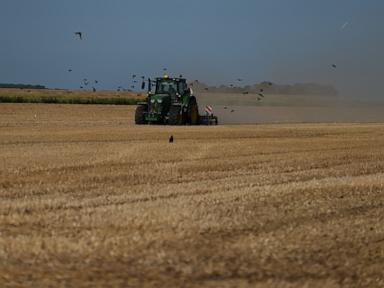
Agricultural resilience in Europe is determined by a rigid set of hydrological and logistical constraints rather than temporary weather anomalies. When acute precipitation deficits strike the continent, the impact does not manifest uniformly; it propagates through a highly specialized supply chain where localized failures cascade into systemic market shocks. Analyzing the 2022 European drought, which severely impacted Dutch potato cultivation and Bosnian corn production, reveals the structural fragilities inherent in modern continental farming.
The Hydrological Cost Function and Crop Vulnerability
Crop yield reduction during a drought is a direct function of soil moisture depletion during critical phenological stages. Different crops possess distinct sensitivity curves.
- Root and Tuber Vulnerability: Dutch potato farming relies heavily on precise irrigation management and high-value arable land situated in delta regions. Potatoes require consistent soil water tension. When precipitation drops and river discharge levels—particularly from the Rhine—recede, freshwater availability decreases, forcing reliance on brackish or restricted groundwater reserves. This induces physiological stress, reducing tuber bulking and total marketable yield.
- Cereal Grain Vulnerability: Bosnian corn production operates within a different structural paradigm, depending more heavily on rain-fed agricultural systems rather than intensive infrastructure-driven irrigation. Rain-fed systems lack a buffer against meteorological droughts. During the tasseling and silking stages, moisture deficits cause pollination failure and incomplete kernel set, destroying harvest volume long before physical harvesting begins.
The core economic failure in both cases is the absence of dynamic pricing for water extraction rights and the underinvestment in redundant water storage networks. Farmers absorb short-term weather shocks because capital expenditure for advanced drought-mitigation infrastructure yields low returns during average precipitation years.
Logistical Bottlenecks and Transport Cost Inflation
Agricultural damage is compounded by physical transport constraints. European inland waterways serve as high-capacity arteries for bulk agricultural inputs and outputs.
When sustained heatwaves reduce river levels across Western and Central Europe, cargo vessels cannot load to capacity. This hydrodynamic constraint triggers a secondary economic shock:
- Barge Draft Restrictions: Lower water depths force operators to shed up to fifty percent of cargo weight to maintain buoyancy, instantly doubling or tripling per-ton transport costs.
- Modal Shift Pressures: Bulk goods displaced from rivers must move to rail and road networks. These networks lack the surge capacity to absorb millions of tons of displaced agricultural commodities, creating terminal bottlenecks.
- Input Price Transmission: Fertilizer and feed shipments moving upstream face the same logistical penalties, inflating production costs for the subsequent harvest cycle.
This transport failure breaks the spatial arbitrage mechanism of the European single market. Grain may be physically available in one region, but the cost function of moving it renders it economically inaccessible to processors in another.
Market Transmission and Structural Mitigation Limits
The downstream effect of constrained yields and inflated transport costs is margin compression for processors and price volatility for end consumers. Food manufacturers operating on thin operational margins cannot indefinitely absorb raw material spikes.
Hedged procurement strategies and long-term futures contracts offer temporary insulation, but multi-year weather volatility invalidates standard actuarial models. Crop insurance schemes often fail to cover systemic, continent-wide hydrological events adequately, as reinsurers face correlated risk across entire climate zones.
Adapting to recurrent continental droughts requires shifting from reactive disaster relief to structural capital reallocation. Growers must transition toward drought-tolerant cultivars, optimize soil organic matter to enhance water retention capacity, and deploy precision drip irrigation where water rights permit. Concurrently, regional logistics frameworks must integrate multi-modal redundancy to decouple continental food security from the water level of a single river basin.
To prevent structural failure during subsequent dry cycles, policymakers must price water as a scarce economic input rather than an infinite public utility, aligning agricultural incentives with hydrological reality.