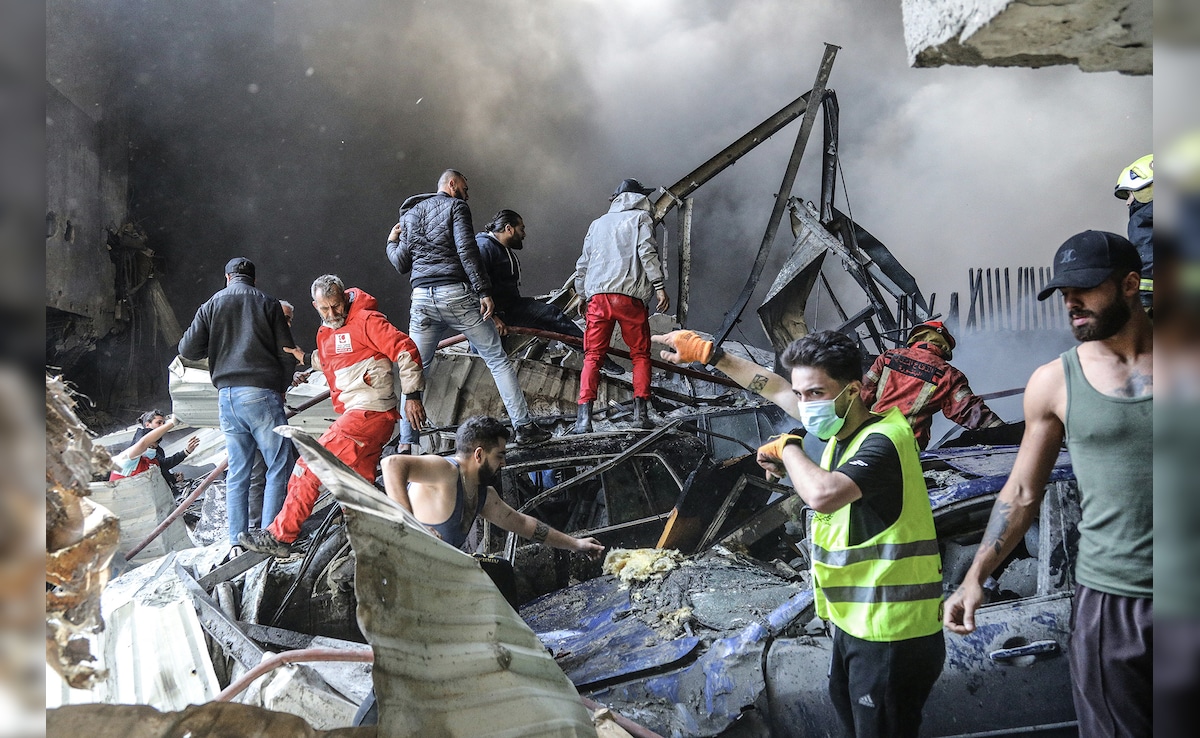
The Iranian economy is currently trapped in a feedback loop of industrial contraction and capital flight that predates recent regional kinetic conflicts but has been accelerated by them. While headlines focus on "mass layoffs" as an isolated symptom, the actual mechanism is a multi-front collapse of the country’s manufacturing base, driven by a lethal combination of energy deficits, currency debasement, and the exhaustion of state-led interventions. The central problem is not merely a downturn; it is a fundamental shift in the cost of production that renders much of Iran's non-oil sector mathematically unviable.
The Tri-Factor Constraint on Iranian Production
The viability of any industrial firm in Iran is governed by three primary variables: utility reliability, input costs under $FX$ volatility, and access to credit. All three are currently failing.
1. The Energy Deficit Bottleneck
Iran sits on some of the world's largest gas reserves, yet its industrial sector faces chronic winter gas shortages and summer electricity blackouts. This energy poverty creates a "forced seasonality" in production. When the state prioritizes residential heating over industrial output, the result is a massive increase in the Unit Cost of Production. Fixed costs—salaries, debt service, and facility maintenance—remain constant while output drops to zero during shutdowns.
For a mid-sized textile or automotive parts manufacturer, a two-month energy-induced shutdown is not a pause; it is a permanent loss of market share. Foreign competitors with stable energy grids can fulfill orders that Iranian firms cannot, leading to the erosion of export contracts that were already hampered by sanctions.
2. The Hyper-Inflationary Input Gap
Iran's inflation rate, hovering between 40% and 50% for several years, creates a "replacement cost" crisis. A manufacturer sells a product today, but by the time they need to restock raw materials, the cost of those materials has exceeded the revenue from the previous sale.
$Profit_{Real} = Revenue_{t} - Cost_{t+1}$
When $Cost_{t+1}$ grows faster than the firm's ability to adjust $Price_{t}$, the business is effectively liquidating its capital just to stay operational. This leads to the "widespread shutdowns" observed in recent months. Business owners are choosing to shutter operations and move their remaining capital into "dead" assets like gold, real estate, or foreign currency rather than continue producing at a loss.
3. Credit Contraction and High-Interest Debt
The Central Bank of Iran (CBI) has attempted to curb inflation by tightening the money supply. This has resulted in a credit crunch where only state-linked entities (bonyads) or firms with significant political connections can access affordable loans. Small and medium enterprises (SMEs) are forced into the informal lending market or must accept interest rates that exceed their margins. Without working capital, these firms cannot bridge the gap between production cycles, leading to immediate insolvency.
The Mechanics of Mass Layoffs
The layoffs reported in the Iranian media are the final stage of a long-term operational decay. They are not a temporary reaction to war fears but a permanent downsizing of the private sector workforce.
The Shift from Production to Services
As manufacturing fails, labor is being pushed into the low-productivity service sector. Iran is seeing a surge in "informal employment"—gig economy drivers, street vendors, and day laborers. This shift is devastating for long-term GDP growth. Manufacturing has a high "multiplier effect" (one job in an auto plant supports several jobs in parts, logistics, and retail). Service jobs in a depressed economy do not have this multiplier.
The Brain Drain as Capital Outflow
Labor is not the only thing being lost. Human capital—engineers, managers, and technical specialists—is leaving the country at record rates. This is a form of capital flight that is rarely quantified but represents a permanent loss of the country’s "Production Possibility Frontier." When a factory closes in Arak or Isfahan, the equipment can be sold, but the specialized knowledge required to run it leaves the country entirely, making future recovery significantly more expensive.
The Failure of State Mitigation Strategies
The Iranian government has attempted to mask these structural failures through several failed or counterproductive interventions.
- Mandatory Pricing Controls: The state attempts to fix the prices of essential goods to prevent popular unrest. However, when the cost of production exceeds the fixed price, manufacturers simply stop producing. This leads to the shortages seen in the medicine and food sectors.
- Multiple Exchange Rates: Maintaining a "preferential" exchange rate for imports creates massive opportunities for corruption. Firms apply for subsidized dollars to import "essential goods," but instead sell the currency on the black market or import luxury items. This drains the state's dwindling hard currency reserves without helping the actual economy.
- Infrastructure Neglect: Because the state is focused on immediate survival and regional influence, investment in the power grid and gas extraction has stalled. The "energy crisis" is a result of a decade of under-investment. Without an infusion of roughly $200 billion in energy infrastructure, the industrial sector will continue to shrink regardless of the geopolitical situation.
The Impact of Regional Instability
The threat of war acts as a "risk premium" that compounds every existing economic problem. Even if a full-scale conflict does not materialize, the possibility of conflict keeps the Iranian Rial in a state of constant devaluation.
Capital Preservation vs. Capital Investment
In a stable environment, a business owner invests in new machinery. In a "pre-war" environment, that owner converts all liquid assets into USD or Tether and waits. This creates a "liquidity trap" where money exists in the system but does not circulate through the economy. The velocity of money in the productive sector has slowed to a crawl.
The Shipping and Logistics Tax
Regional tension has increased the cost of insurance and shipping for Iranian trade. Sanctions already forced Iran to use "ghost fleets" and complex transshipment routes (usually through the UAE or China), which adds a 20-30% "sanctions tax" to all trade. Increased kinetic activity in the region has pushed these costs even higher, further squeezing the margins of exporters.
Distinguishing Between Recession and Atrophy
It is critical to understand that Iran is not in a standard business cycle recession. A recession implies an eventual recovery once demand returns. Iran is experiencing structural atrophy.
Atrophy occurs when the physical and human infrastructure of production dissolves. A factory that has been closed for two years due to gas shortages cannot simply be "turned back on." The machinery has degraded, the skilled labor has moved, and the supply chain has reorganized around other providers.
The Iranian automotive sector provides a stark example. Once a source of national pride and a significant employer, it now survives solely on state subsidies and the assembly of low-quality Chinese kits. The domestic R&D and manufacturing capacity have been hollowed out.
The Fiscal Implosion
The Iranian government faces a narrowing path to fiscal solvency. With oil exports limited by sanctions and sold at heavy discounts to China, tax revenue from the shrinking private sector is becoming more critical. However, you cannot tax a closed factory.
- Inflation as a Tax: The government is increasingly relying on the "inflation tax"—printing money to pay state salaries, which further devalues the currency and punishes savers.
- Asset Seizure and "Privatization": The state has "privatized" many industries by handing them over to the Islamic Revolutionary Guard Corps (IRGC) or state-linked foundations. These entities are not motivated by profit or efficiency but by political survival and patronage. This further reduces the overall productivity of the economy.
The Strategic Path Forward
The Iranian economy is currently unfixable within the current political and geopolitical framework. For any genuine recovery to occur, the following "First Principles" of economic stabilization must be met, though they remain unlikely in the short term:
- Unified Exchange Rate: Abolishing the multi-tier currency system to eliminate arbitrage and corruption. This would cause a short-term price shock but is the only way to restore market signals.
- Energy Infrastructure Privatization: Allowing private (or foreign) investment into the gas and electricity sectors to solve the supply-side bottleneck.
- Geopolitical De-escalation: Reducing the "risk premium" to encourage the return of domestic capital from "dead" assets into productive industry.
Without these shifts, the Iranian economy will continue to bifurcate: a wealthy, state-connected elite managing a dwindling resource base, and a hollowed-out middle class forced into survival-level service labor. The "mass layoffs" are not the story; they are the obituary for an industrial base that is being systematically starved of the basic inputs required for modern existence. The immediate strategic move for any entity exposed to the Iranian market is a total pivot toward capital preservation and the assumption that the domestic manufacturing sector will not return to pre-2020 levels for at least a decade.