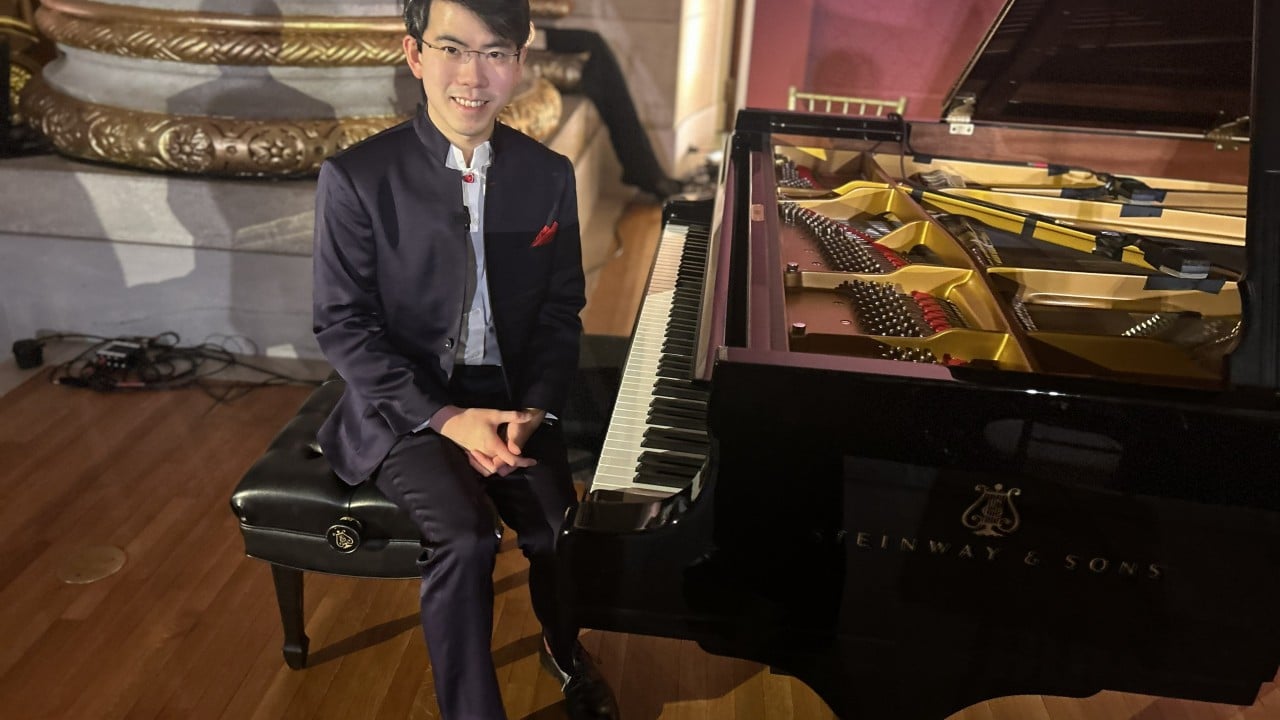
The deployment of high-level musical performance as a tool for geopolitical signaling operates through a mechanism known as "cultural arbitrage." By utilizing a performer like Aristo Sham—a Hong Kong-born, Harvard-New England Conservatory-educated pianist—cultural institutions in Washington, D.C., bridge the gap between technical excellence and ideological projection. This analysis deconstructs the specific variables that allow a solo recital to function as a strategic asset, moving beyond the superficial "message of openness" to examine the underlying structural alignment of repertoire, pedigree, and diplomatic timing.
The Tri-Lens Framework of Artistic Value
To quantify the impact of Sham’s presence in the United States capital, one must evaluate the performance through three distinct lenses: Technical Proficiency, Institutional Pedigree, and Symbolic Utility.
1. Technical Proficiency as an Entry Barrier
High-stakes cultural diplomacy requires a baseline of undeniable excellence to prevent the "propaganda" label from devaluing the performance. Sham’s technical stack is built on a foundation of international competition victories (Casagrande, Viotti). In the context of a Washington recital, his proficiency acts as a "proof of work" protocol. The complexity of the repertoire—often spanning the rigorous logic of Brahms to the modern textures of Carl Vine—serves to demonstrate that the values of discipline and intellectual rigor are universal, regardless of the performer's origin.
2. Institutional Pedigree and Network Effects
Sham’s biography represents a convergence of elite Western intellectual and artistic institutions. A joint program between Harvard University and the New England Conservatory (NEC) creates a unique profile: the "Scholar-Artist." This dual-track education allows the performer to navigate both the aesthetic and the analytical worlds. In Washington, this pedigree functions as a credentialing mechanism. It signals to a policy-oriented audience that the performer is not merely a vessel for music but a peer in intellectual discourse.
3. Symbolic Utility in Geopolitical Contexts
The specific timing of a Hong Kong artist performing in the U.S. capital cannot be decoupled from the shifting status of Hong Kong’s autonomy. The "message of openness" cited in previous narratives is a qualitative description of a quantitative shift in soft power dynamics. Sham becomes a living data point for the "One Country, Two Systems" dialogue. His ability to move freely across international borders and engage with Western audiences reinforces a specific narrative of Hong Kong’s continued relevance as a global cultural hub, despite increasing administrative integration with mainland China.
The Mechanics of Repertoire Selection
Repertoire is the "software" running on the "hardware" of the piano and the performer. For a recital intended to convey openness and intellectual depth, the selection must balance historical weight with contemporary relevance.
- The Germanic Core: Works by Brahms or Schumann establish a connection to the Western Canon. This satisfies the traditionalist segment of the audience and proves the performer's mastery of the foundational structures of classical music.
- The Contemporary Variable: Including modern composers, particularly those with diverse or non-European backgrounds, signals an "open" intellectual system. It suggests that the artist is not merely a curator of the past but an active participant in the evolution of the medium.
- The Virtuosic Finale: High-velocity pieces function as a demonstration of "human capital." The physical demand of a Liszt or a Prokofiev sonata serves as a visceral reminder of the individual’s capacity for extreme specialization and achievement.
The Economic and Diplomatic Cost Function
Cultural diplomacy is not a zero-cost endeavor. It involves the mobilization of philanthropic capital, diplomatic security, and venue management. The "return on investment" (ROI) for a recital at a venue like the Phillips Collection or a similar D.C. institution is measured in "influence units" rather than ticket sales.
The cost function of such an event includes:
- Opportunity Cost: The selection of one artist over another signals specific diplomatic priorities.
- Reputational Risk: Any political statement made by the performer (or the absence of one) is scrutinized by multiple state actors.
- Infrastructure Overhead: The logistics of transporting high-tier talent and maintaining premium instruments.
The benefit side of the ledger is dominated by the strengthening of "inter-elite bonds." The audience for these recitals typically consists of diplomats, policymakers, and cultural tastemakers. The performance provides a neutral ground for informal networking—a "buffer zone" where hard-edged policy can be softened by aesthetic experience.
The Cognitive Impact of Live Performance on Diplomatic Audiences
Neuro-aesthetic research suggests that live musical performance synchronizes brainwaves among audience members. In a diplomatic setting, this synchronization creates a temporary state of social cohesion. When Aristo Sham performs, he is not just playing notes; he is facilitating a collective psychological state.
The "Openness" message is therefore a result of a biological feedback loop:
- Complexity Processing: The audience must focus on intricate musical structures, which reduces cognitive capacity for adversarial thinking.
- Shared Affect: The emotional arc of the music creates a common experience among diverse attendees.
- Transcendental Signaling: The excellence of the performance suggests that human achievement can transcend political friction.
Strategic Bottlenecks and Limitations
While the "Aristo Sham model" of cultural diplomacy is effective, it faces several structural bottlenecks:
The primary limitation is Scalability. A solo pianist can only reach a few hundred people in a single evening. While digital broadcasts expand this reach, the "synchronization effect" is significantly diminished in a non-live environment.
The second limitation is Attribution. It is difficult to correlate a single cultural event with a specific policy shift. The impact is cumulative and long-term, making it a "slow-burn" strategic asset rather than a rapid-response tool.
The third bottleneck is The Neutrality Trap. To remain effective as a cultural diplomat, the artist must maintain a degree of political neutrality. However, in a hyper-polarized environment, silence is often interpreted as a statement. This forces the artist to walk a narrow line between artistic integrity and political utility.
Identifying the "Scholar-Performer" Competitive Advantage
Sham’s specific competitive advantage lies in his ability to articulate his musical choices through an academic lens. This reduces the "opacity" of classical music. By explaining the structural relationships within a piece before performing it, he provides the audience with an analytical framework. This approach appeals directly to the "Washington Mindset," which values data and explanation over raw emotion.
The transition from a "performer" to a "cultural commentator" is the final stage of this evolution. When an artist can discuss the historical context of a piece and its relevance to modern globalism, they become more than an entertainer; they become a strategic advisor in the realm of soft power.
The Structural Future of Cultural Exchange
The reliance on individual virtuosos like Sham will likely increase as traditional state-to-state diplomacy becomes more fraught. Individual actors provide "plausible deniability" for states while still allowing for the transmission of cultural values.
For institutions looking to replicate this success, the strategic play is to identify performers who possess the "Dual-Expertise Profile": extreme technical mastery combined with a high degree of cross-cultural literacy. The objective is not just to host a concert, but to engineer an environment where the performance acts as a catalyst for high-level intellectual exchange.
The strategic recommendation for cultural agencies is to pivot away from large-scale, generic "cultural tours" and toward highly targeted, "boutique" recitals featuring scholar-artists. These events should be integrated into broader diplomatic tracks, ensuring that the musical repertoire aligns with specific thematic goals—be it innovation, resilience, or, in the case of Aristo Sham, the persistence of intellectual openness in a shifting geopolitical landscape.
The final strategic move involves the integration of these performances into digital influence operations. By capturing the metadata of these events—the attendee lists, the social media resonance, and the analytical discourse following the performance—diplomatic bodies can measure the "velocity" of their soft power assets with far greater precision than previously possible. Aristo Sham is not merely a pianist; he is a high-bandwidth node in a global network of influence.