The bilateral agreements executed between India and Indonesia in July 2026 mark a structural shift from rhetorical alignment to hard-power integration. By anchoring cooperation in deep-water naval infrastructure, supersonic missile proliferation, and critical mineral processing, New Delhi and Jakarta are engineering an asymmetric counterweight to asymmetric pressures in the Indo-Pacific. This strategic architecture optimizes both nations' defensive postures while creating systemic dependencies in technological and industrial supply chains.
The framework rests on three interdependent operational pillars: the militarization of regional choke points, the harmonization of air-and-sea denial hardware, and the institutionalization of technological standards. For an alternative perspective, consider: this related article.
The Sabang Nicobar Maritime Choke Point Architecture
The joint development of Indonesia's Sabang Port, located at the northern tip of Sumatra, transforms a commercial harbor into a strategic sentry over the Strait of Malacca. The geographic reality dictating this project is its proximity—approximately 100 nautical miles—to India’s concurrent infrastructure development at Great Nicobar Island.
[Andaman & Nicobar Islands (India)]
                │
         ~100 Nautical Miles
                │
         [Strait of Malacca] ◄─── (22% of Global Maritime Trade)
                │
        [Sabang Port (Indonesia)]
This dual-node architecture creates a structural bottleneck for external naval forces tracking through the world’s busiest maritime corridor, which accommodates roughly 22 percent of global trade and 29 percent of seaborne oil. Related analysis on this trend has been published by Reuters.
- Operational Interoperability: Co-developing Sabang allows Indian and Indonesian coast guards to establish synchronized surveillance networks. This eliminates previous blind spots at the western entrance of the Malacca Strait.
- Logistical Redundancy: By operating reciprocal logistics facilities within a 100-mile radius, both navies can sustain prolonged maritime interdiction operations without returning to distant main bases.
- Subsurface Monitoring: The deep-water profile of the Sabang waters permits the deployment of fixed underwater sensor arrays, crucial for tracking foreign submarine transits entering the Indian Ocean basin.
This infrastructure network forces external actors to calculate the cost of navigating a highly monitored and potentially hostile corridor during periods of geopolitical instability.
Asymmetric Tactical Denial via BrahMos and Astra Integration
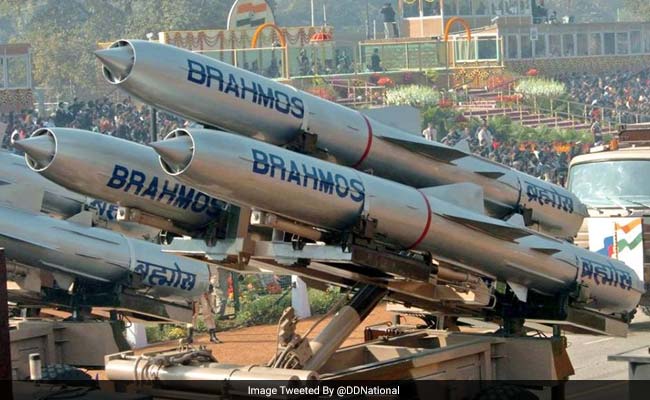
The defense hardware components of the 2026 pact—valued at approximately $200 million for the initial BrahMos expansion alone—reveal a calculated shift toward uniform combat systems. Indonesia's decision to expand its BrahMos supersonic cruise missile inventory and introduce India's indigenous Astra Beyond Visual Range Air-to-Air Missile (BVRAAM) standardizes the regional defense ecosystem.
The Coastal Defense Variable
The procurement of additional Brah莫s batteries allows the Indonesian military to construct a distributed coastal defense network across its vast archipelagic geography. The missile’s speed of Mach 2.8 combined with low-altitude sea-skimming flight paths compresses an adversary's reaction window to less than a minute upon radar detection. By deploying these batteries alongside existing installations in the Philippines and Vietnam, a synchronized anti-access/area-denial (A2/AD) perimeter forms across Southeast Asian littoral zones.
Aerial Platform Optimization
The import of the Astra BVRAAM targets an operational vulnerability within the Indonesian Air Force. Indonesia operates Russian-origin Su-30 fighter aircraft. Because India’s defense industrial base has already executed the complex software and mechanical integration of the Astra missile onto the Su-30 platform during developmental testing and domestic deployments, Jakarta bypasses costly and time-consuming research and development cycles.
The structural advantages of this integration include:
- Extended Engagement Envelopes: The Astra system offers an operational range exceeding 100 kilometers, allowing Indonesian pilots to neutralize aerial threats before entering the effective range of opposing air-defense systems.
- Electronic Counter-Countermeasures (ECCM): The integration of an indigenous active Radio Frequency seeker ensures high terminal accuracy even within highly contested electronic warfare environments.
- Supply Chain Independence: Transitioning to Indian munitions reduces long-term reliance on restrictive Western or unstable European supply lines for front-line ordinance.
Industrial Interdependence and Technological Standardization
Beneath the defense architecture lies a deliberate effort to secure the industrial inputs required for protracted geopolitical competition. The agreement shifts India from a simple consumer of Indonesian raw materials to a direct investor in its processing infrastructure.
The Critical Minerals Value Chain
India's capital deployment into Indonesian facilities specializing in steel, nickel, and rare-earth permanent magnets targets vulnerabilities in the global technology supply chain.
- Nickel Refining: Indonesia holds the world’s largest nickel reserves. Indian investment in local refining secures a predictable supply of battery-grade nickel necessary for the domestic manufacturing of energy storage systems and military hardware.
- Rare-Earth Permanent Magnets: These components are foundational to the guidance systems of precision-guided munitions, electric vehicle drivetrains, and advanced radar systems. Building a localized manufacturing loop between India and Indonesia insulates both economies from export restrictions imposed by dominant market players.
Sovereign Technology Exportation
The cooperation extends into institutional technology through two distinct vectors: sovereign election infrastructure and digital payment integration.
India’s commitment to engineering Indonesia-specific Electronic Voting Machines (EVMs) represents a major transfer of institutional capability. Conducting secure, large-scale elections across an archipelagic nation presents immense logistical and security challenges. By adapting India’s battle-tested hardware design, which operates independently of internet connectivity to mitigate cyber-interference, Indonesia hardens its democratic infrastructure against external manipulation.
Simultaneously, the integration of India’s Unified Payments Interface (UPI) with Indonesia’s domestic payment networks lowers the friction of cross-border commerce. This digital linkage reduces reliance on traditional clearinghouse systems dominated by extra-regional financial institutions, building transactional resilience.
Strategic Forecast
The convergence of Indian and Indonesian strategic trajectories will likely accelerate the multi-polarization of regional security architectures. As the Sabang port transitions into an active logistical node and the Indonesian military operationalizes its newly acquired missile systems, the strategic calculus for naval deployments in the eastern Indian Ocean changes.
The primary vulnerability facing this partnership remains the execution speed of infrastructure investments and the potential for domestic political shifts to alter foreign policy priorities. However, the structural nature of these agreements—tied directly to physical defense platforms, raw material processing, and critical financial architecture—suggests that the defense-industrial integration of New Delhi and Jakarta will remain a durable feature of regional statecraft through the end of the decade. The immediate operational imperative for both nations is the rapid synchronization of maritime radar data and the fast-tracking of factory floor integration for the critical mineral joint ventures.