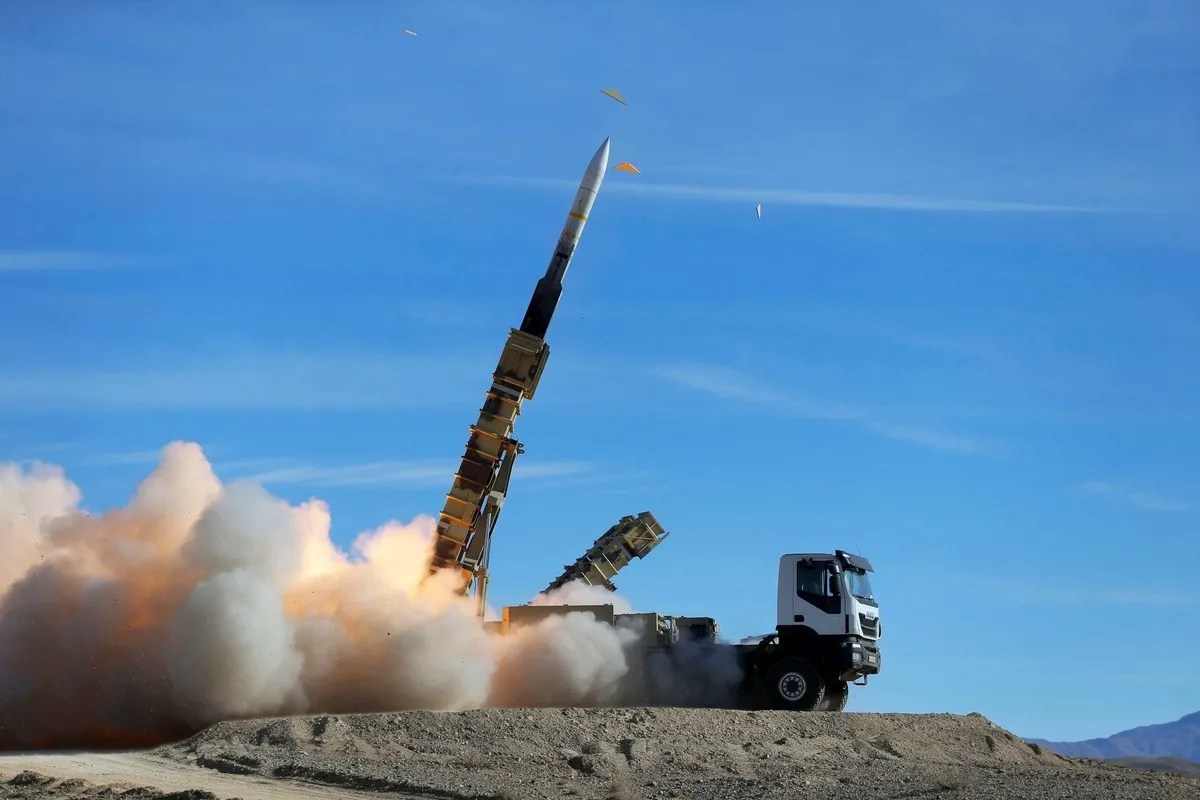
The U.S. Navy’s $1.36 billion contract modification with Lockheed Martin for the integration of Conventional Prompt Strike (CPS) weapon systems onto the Zumwalt-class (DDG 1000) destroyers represents more than a procurement update; it is a fundamental pivot in naval surface warfare architecture. This capital allocation transitions the Zumwalt class from its original, failed mission profile of littoral fire support to a primary role as a stealthy, deep-strike platform. The technical objective is the deployment of the Common Hypersonic Glide Body (C-HGB) from a mobile sea base, addressing a critical gap in the Pentagon’s ability to hit time-sensitive targets at ranges exceeding 1,700 miles.
The Architecture of the Hypersonic Pivot
The Zumwalt class was originally designed around the Advanced Gun System (AGS), a 155mm platform intended to provide high-volume fire for Marine landings. When the cost per Long Range Land Attack Projectile (LRLAP) ballooned to approximately $800,000 to $1 million per round, the Navy rendered the guns "non-operational." This left the DDG 1000 fleet with significant unused internal volume and power capacity. Read more on a similar topic: this related article.
The current $1.36 billion deal leverages this "stranded" space. By removing the AGS mounts, the Navy creates the physical footprint necessary for the Large Missile Launcher (LML) system. The C-HGB missiles are significantly larger than the standard Tomahawk or SM-6 missiles that fit into the MK 41 Vertical Launch System (VLS). The LML is essentially a three-pack configuration of 34-inch diameter tubes, providing the Zumwalt the ability to carry approximately 12 hypersonic missiles per hull.
The CPS Weapon System Mechanics
Conventional Prompt Strike functions through a two-stage booster rocket that accelerates the C-HGB to hypersonic speeds—defined as Mach 5 or greater. Once the booster reaches the desired altitude and velocity, the glide body detaches. Unlike a ballistic missile, which follows a predictable arc, the C-HGB maneuvers within the atmosphere. Additional journalism by Gizmodo explores related perspectives on the subject.
This maneuverability creates two tactical advantages:
- The Horizon Problem: By flying at lower altitudes than ballistic missiles, the CPS remains below the radar horizon of ground-based sensors for a longer duration, reducing the defender's reaction time to minutes.
- Kinetic Intercept Defiance: Current missile defense systems, such as the SM-3, rely on predicting a target's future position based on its current trajectory. The C-HGB's ability to change course mid-flight renders these predictive algorithms ineffective.
The Industrial Supply Chain and Program Risk
The $1.36 billion modification covers not just the hardware but the complex systems integration required to marry a 21st-century hypersonic missile to a hull designed in the early 2000s. Lockheed Martin acts as the prime integrator, but the success of the program relies on a tiered industrial base.
The Propulsion and Glide Body Nexus
The C-HGB is a joint program between the Navy and the Army (which calls its version the Long-Range Hypersonic Weapon, or LRHW). Dynetics, a subsidiary of Leidos, is the primary producer of the glide bodies, while Northrop Grumman and Lockheed Martin handle the rocket motors. This joint-service approach is intended to drive down unit costs through economies of scale, yet the supply chain faces three distinct bottlenecks:
- High-Temperature Materials: Hypersonic flight generates extreme thermal loads, often exceeding 2,000 degrees Celsius. The carbon-carbon composites required to maintain structural integrity at these temperatures have long lead times and limited domestic production capacity.
- Precision Guidance Systems: Maintaining a GPS lock or inertial navigation accuracy at Mach 5+ while surrounded by a plasma sheath (formed by ionized air at high speeds) requires specialized sensor apertures and hardened electronics.
- Testing Infrastructure: The United States currently lacks the wind-tunnel capacity and flight-test ranges to support the aggressive launch cadence required to validate these systems by the mid-2020s.
Structural Constraints of the Zumwalt Platform
While the DDG 1000 is the ideal candidate for this mission due to its stealth and power, the integration involves significant engineering trade-offs. The ship’s Integrated Power System (IPS) produces 78 megawatts of electricity, which is more than enough to support the electronics for CPS. However, the physical stability of the ship is a factor.
The Zumwalt uses a "tumblehome" hull, which narrows above the waterline. Removing heavy gun mounts and replacing them with large-diameter missile tubes alters the ship's center of gravity. Naval Sea Systems Command (NAVSEA) must ensure that the "Three-Pack" LML configuration does not compromise the ship's stability in heavy seas, a task that requires extensive computational fluid dynamics modeling and physical testing.
Displacement and Weight Distribution Variables
The removal of the two 155mm AGS mounts recovers roughly 200 tons of weight per ship. The replacement LML system, including the missiles, canisters, and the structural reinforcement of the deck, must stay within these weight margins to avoid recalibrating the ship’s buoyancy and hydrodynamics. If the CPS system exceeds these margins, the Navy may be forced to reduce the number of tubes or add ballast, which would degrade the ship’s speed and fuel efficiency.
The Logic of Deterrence and Global Positioning
The decision to put CPS on the Zumwalt before the Virginia-class Block V submarines is a strategic choice based on "presence." A destroyer is a visible deterrent. While a submarine offers superior stealth, a Zumwalt-class ship positioned in the Western Pacific sends a clear signal of kinetic capability that can be tracked by adversaries, serving the purpose of conventional deterrence.
Target Sets and Mission Profiles
The CPS is not a weapon for general warfare; it is an "opening day" asset. Its high cost—estimated at tens of millions of dollars per shot—limits its use to high-value targets:
- Anti-Access/Area Denial (A2/AD) Nodes: Long-range radar installations and surface-to-air missile batteries.
- Command and Control (C2) Hubs: Hardened bunkers where delay in destruction allows the adversary to coordinate a response.
- Mobile Transporter Erector Launchers (TELs): Time-sensitive targets that move shortly after firing their own missiles.
Financial Oversight and Contractual Structures
The $1.36 billion is a Cost-Plus-Incentive-Fee contract. This structure indicates that the Navy acknowledges the high technical risk involved. In a firm-fixed-price contract, the contractor bears the risk of cost overruns. In a cost-plus-incentive-fee model, the government covers the costs but provides bonuses to Lockheed Martin for meeting specific performance milestones or schedule dates.
This choice suggests the Navy prioritizes speed over absolute cost certainty. The goal is to have the USS Zumwalt (DDG 1000) outfitted and operational with CPS by 2025, followed by the USS Michael Monsoor (DDG 1001) and USS Lyndon B. Johnson (DDG 1002).
The Second-Order Effects on Naval Strategy
The integration of CPS signals the end of the "multi-mission" destroyer era for the Zumwalt class. By committing the majority of its vertical launch capacity to hypersonic strike, the DDG 1000 becomes a specialized "sniper" of the fleet. It will likely require a screen of Arleigh Burke-class destroyers to provide air defense (AAW) and anti-submarine warfare (ASW) protection, as its own internal magazine for defensive missiles will be limited after the LML conversion.
This creates a "high-low" mix in naval procurement. The "high" end consists of a few, extremely capable, and expensive strike platforms like the converted Zumwalts, while the "low" end (the Arleigh Burkes) provides the volume of fire and defensive layers necessary for the high-end assets to survive in a contested environment.
Deployment Limitations and Operational Realities
The primary risk to this strategy is the limited number of hulls. With only three ships in the class, the Navy can realistically keep only one ship on station at any given time, accounting for maintenance cycles and transit. This makes the DDG 1000 fleet a high-value target for any adversary. The stealth features of the hull—designed to give it the radar cross-section of a fishing boat—become the primary survival mechanism.
The success of the $1.36 billion investment will be measured by the successful flight test of a C-HGB from a ship-board launcher. Failure to meet the 2025 integration window would not only be a financial loss but would leave a multi-year gap in the U.S. military’s ability to counter peer-adversary A2/AD bubbles.
The Navy must move immediately to finalize the hull-loading calculations for the USS Zumwalt. The priority is the dry-docking schedule at HII’s Ingalls Shipbuilding, where the physical removal of the AGS and installation of the LML will occur. Any delay in the shipyard schedule ripples through the entire hypersonic roadmap, pushing back the deployment of the most significant leap in naval surface strike since the introduction of the Tomahawk. Management must ensure that the long-lead material contracts for the LML structures are synchronized with the ship's arrival in Mississippi to minimize "dead time" in the dock.