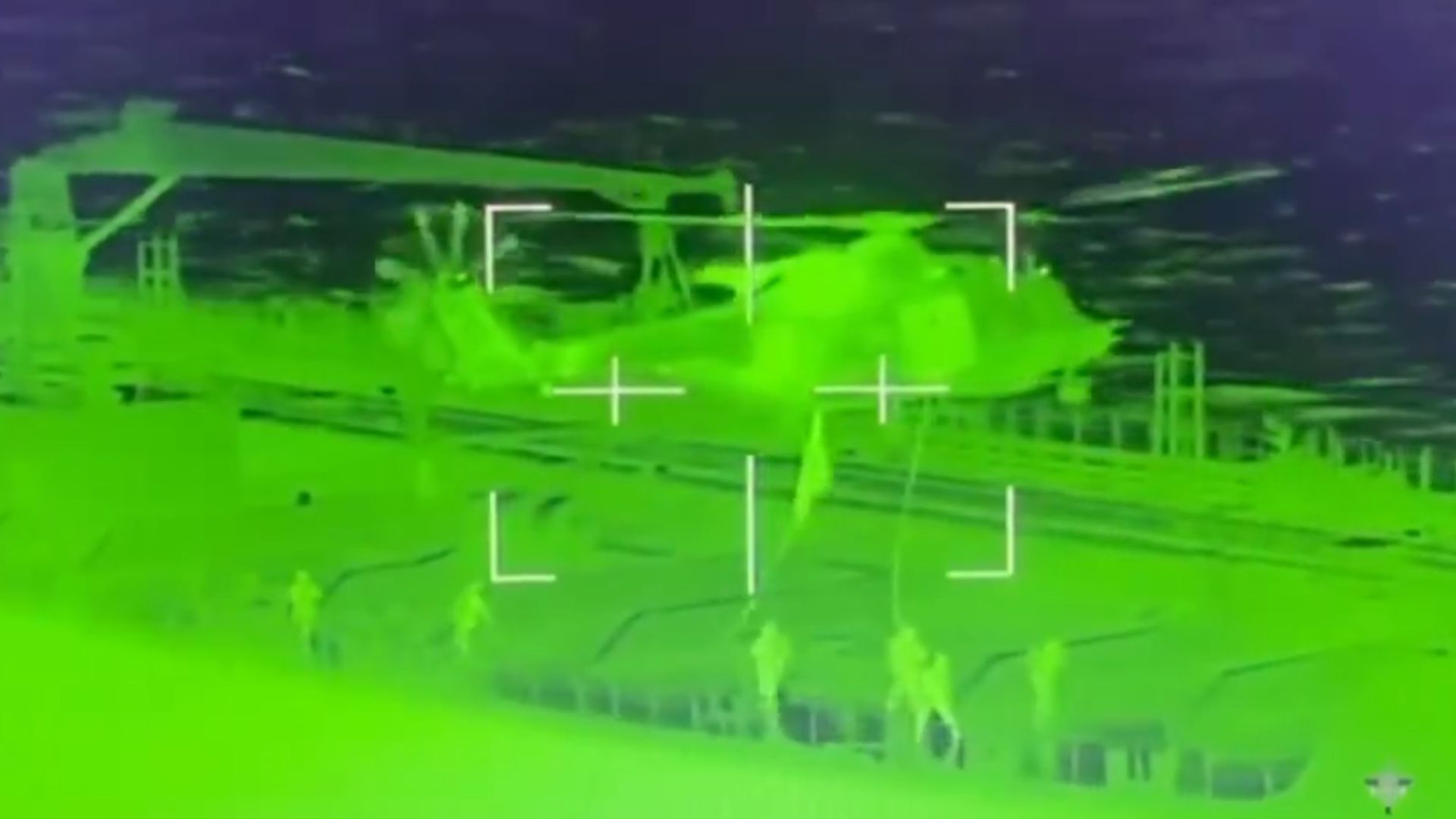
The transition from shadow warfare to direct kinetic engagement between state actors marks a fundamental shift in Middle Eastern security architecture. When Israeli defense forces initiate strikes within the "heart of Tehran," they are not merely engaging in a tactical military operation; they are executing a recalibration of regional deterrence. This analysis deconstructs the operational parameters, the degradation of integrated air defense systems (IADS), and the strategic signaling inherent in high-precision strikes on a sovereign capital.
The Architecture of Vertical Escalation
Military engagement between Israel and Iran has historically been governed by a "gray zone" framework—asymmetric proxies, cyber-operations, and targeted assassinations. Moving the theater of operations to Tehran breaks this symmetry. The Israeli military strategy operates on a three-pillar logic:
- Deterrence Restoration: Proving that distance and sovereign borders provide no sanctuary for command-and-control infrastructure.
- Degradation of Capability: Targeting specific nodes—missile production facilities, drone assembly plants, and radar installations—that facilitate Iranian regional projection.
- Psychological Dominance: Forcing the Iranian leadership to prioritize domestic defense over external aggression.
The execution of these strikes relies on a sophisticated cost-benefit function. Israel must weigh the tactical success of destroying a hardened target against the strategic risk of a multi-front regional war. The "heart of Tehran" represents the highest possible risk tier in this calculation.
Technical Erosion of Integrated Air Defense Systems (IADS)
For Israeli assets to reach the Iranian capital, they must bypass or suppress multiple layers of defense. This involves a sequence of Electronic Warfare (EW) and Suppression of Enemy Air Defenses (SEAD).
The primary obstacle is the Russian-made S-300 system, augmented by domestic Iranian variants like the Bavar-373. These systems are designed to detect and track targets at long ranges. However, the efficacy of an IADS is not determined by the quality of a single missile, but by the connectivity of its sensor network.
- Electronic Displacement: Israeli F-35I "Adir" variants utilize advanced suite-level electronic countermeasures to create "noise" or ghost signatures, effectively blinding radar operators.
- Kinetic Neutralization: Using stand-off munitions like the "Rocks" or "Blue Sparrow" missiles allows Israeli aircraft to launch strikes from outside the immediate engagement envelope of terminal defenses.
- Packet-Based Saturation: By launching decoy drones alongside manned aircraft, the attacker forces the defender to deplete limited interceptor stocks on low-value targets, creating a window for the primary strike package.
The failure of Tehran’s air defense to prevent a strike on the capital suggests either a technological gap in radar processing speeds or a tactical failure in the hand-off between long-range and point-defense systems.
The Logistics of Long-Range Kinetic Projection
Striking Tehran from Israel requires a round-trip flight of approximately 3,000 kilometers. This creates a massive logistical bottleneck regarding fuel and payload.
There are three primary methods to solve the range-payload equation:
- Aerial Refueling: Utilizing Boeing KC-46 or modified 707 tankers. These assets are high-value and vulnerable, necessitating a significant fighter escort, which in turn increases the radar cross-section of the entire strike package.
- Third-Party Airspace: Utilizing corridors through neighboring states. This introduces a diplomatic variable; if a sovereign nation allows passage, they become a de facto participant in the escalation.
- Stand-Off Munitions: Reducing the need to fly directly over the target by using long-range cruise missiles. While safer for the pilots, this reduces the "intelligence-on-the-fly" capability that manned pilots provide for Battle Damage Assessment (BDA).
The choice of targets in Tehran—likely tied to the Islamic Revolutionary Guard Corps (IRGC) or strategic military-industrial sites—indicates that the intelligence used was both granular and real-time. This suggests a deep penetration of the Iranian security apparatus, where signals intelligence (SIGINT) and human intelligence (HUMINT) converge to provide "clickable" target coordinates.
Economic and Infrastructure Attrition
While the immediate focus is on the explosions, the long-term impact is measured in the "Cost to Repair" versus "Cost to Destroy" ratio.
- Specialized Machinery: Many of Iran’s precision manufacturing tools for missile components are sanctioned and difficult to replace. Destroying a single high-end CNC machine or a specialized cleanroom can set a program back by 12 to 18 months.
- Energy Grid Vulnerability: If strikes move from military targets to dual-use infrastructure, the economic pressure on the Iranian state increases exponentially. However, this carries the risk of alienating the civilian population and triggering international condemnation.
- Logistical Chain Disruption: By hitting the "heart" of the capital, Israel disrupts the administrative hub of the IRGC. The delay in decision-making caused by physical damage to communications hubs is a force multiplier for the attacker.
The Counter-Escalation Framework
Iran’s response is constrained by its own military limitations and strategic objectives. Their retaliatory options exist on a spectrum:
- The Proxy Lever: Activating Hezbollah or Houthi assets to saturate Israeli defenses. This preserves Iranian assets but risks the total destruction of their proxies.
- Direct Ballistic Response: Launching a mass wave of Shahed drones and Fattah missiles. The limitation here is the high interception rate of the "Arrow" and "David's Sling" systems.
- Asymmetric Maritime Interference: Closing the Strait of Hormuz or targeting commercial shipping. This is a global escalation that would likely draw in a US-led coalition, a scenario Iran traditionally seeks to avoid unless the survival of the regime is at stake.
The current strike pattern suggests a calibrated attempt to stay below the threshold of a "total war" while simultaneously demonstrating that the old red lines no longer exist.
Strategic Realignment of Middle Eastern Alliances
The strikes on Tehran act as a catalyst for regional realignment. Traditional Arab powers face a dilemma: they share Israel's concern regarding Iranian hegemony but fear the blowback of a direct confrontation.
- Intelligence Sharing: There is a growing, albeit quiet, framework for regional air defense. Data from early-warning radars in the Gulf can be fed into a centralized network, providing Israel with precious minutes of advanced warning.
- The "Neutrality" Paradox: Countries like Jordan or Saudi Arabia must navigate the optics of their airspace being used. If they intercept Israeli missiles, they aid Iran; if they allow them through, they risk Iranian domestic subversion.
The "Heart of Tehran" strike proves that the geographic buffer Iran once enjoyed is obsolete. The technological superiority of the Israeli Air Force (IAF), combined with sophisticated electronic warfare, has effectively shrunk the distance between Tel Aviv and Tehran to zero.
Operational Forecast and Risk Mitigation
Future engagements will likely see a shift toward "loitering" operations. As drone technology evolves, the ability to keep sensors over Tehran for extended periods—rather than a single high-speed bombing run—will allow for "dynamic targeting." This means striking moving targets, such as high-ranking officials or mobile missile launchers, in real-time.
The primary risk for Israel remains the "Swarms vs. Interceptors" math. No defense system is 100% effective. If Iran manages to launch 500+ projectiles simultaneously, the statistical probability of a breakthrough increases. Therefore, the Israeli strategy must remain focused on "Preemptive Neutralization"—hitting the launchers before they can fire.
The military logic dictates that once the capital has been struck, every other target in the country is now "on the table." This removes the psychological barrier to further escalation. The strategic play now moves to the diplomatic and economic spheres, where the impact of the strike must be converted into a permanent reduction in Iranian regional influence.
Decision-makers should monitor the movement of Iranian "high-value assets" (HVA) out of the capital into hardened underground facilities like Fordow or Natanz. This movement will signal whether the regime intends to absorb the blow or prepare for a prolonged kinetic exchange. The focus must remain on the degradation of the IRGC’s command-and-control hierarchy, as the physical destruction of buildings is secondary to the disruption of the human networks that manage Iran’s regional operations.