Washington’s long-standing playbook for a conflict with Iran has hit a wall of cold, hard reality. The assumption that superior American technology and economic strangulation would force a regime change or a total military capitulation has proven to be a catastrophic miscalculation. This failure is not the result of a single tactical error but stems from a fundamental misunderstanding of asymmetric warfare and the shifting alliances in the Middle East.
The United States entered its planning phases with the belief that Iran could be isolated. Instead, Tehran has successfully integrated itself into a defensive and economic bloc with Russia and China, turning "maximum pressure" into a manageable, if painful, cost of doing business. The war did not go according to plan because the plan relied on a world that no longer exists—a world where the U.S. was the sole arbiter of global power.
The Asymmetric Trap
Pentagon strategists have spent decades preparing for high-intensity, state-on-state conflict. They envisioned a campaign defined by "shock and awe," utilizing precision-guided munitions to decapitate Iranian command and control. However, Iran spent those same decades studying the American way of war in Iraq and Afghanistan. They did not build a mirror image of the U.S. Air Force; they built a swarm.
Iran’s military doctrine is built on the principle of making any American entry into the Persian Gulf prohibitively expensive. This is achieved through a massive investment in low-cost, high-impact technology. Thousands of fast-attack boats, sea mines, and a dense network of mobile cruise missile batteries are designed to saturate American defenses. In every major war game conducted over the last ten years, the U.S. Navy has struggled to counter this "mosquito" strategy without losing multi-billion dollar carriers to weapons that cost less than a luxury car.
The math simply does not favor the U.S. fleet. An SM-6 interceptor missile costs roughly $4 million. The Iranian-produced drones and rockets they are meant to intercept can cost as little as $20,000. This is an economic war of attrition where the defender wins by simply making the attacker go broke. When the U.S. military realized it would have to trade its limited stock of high-end interceptors for cheap plywood drones, the "quick victory" scenario evaporated.
The Failure of Proxy Containment
A central pillar of the American strategy was the belief that regional allies—primarily Saudi Arabia, the UAE, and Israel—could shoulder the burden of containing Iranian influence. This assumed a level of unity and shared risk tolerance that was never grounded in reality. The Abraham Accords were supposed to create a "Middle East NATO," but when the rockets actually started flying, the cracks in this alliance became craters.
Gulf states realized that they are the primary targets in any hot war. Their desalination plants, oil refineries, and glass-tower cities are incredibly vulnerable to Iranian retaliation. Consequently, we have seen a quiet but steady diplomatic pivot. Riyadh’s restoration of ties with Tehran, brokered by Beijing, was a clear signal that the region is no longer willing to be the battlefield for a U.S.-led crusade.
Without the guaranteed use of regional bases and airspace, the logistics of a war with Iran become a nightmare. The U.S. would be forced to operate from "over the horizon," significantly reducing the frequency and effectiveness of its strikes. Iran, meanwhile, operates from the high ground of the Iranian Plateau, a natural fortress that makes a ground invasion—an idea briefly entertained by hawks in the 2010s—a logistical and human impossibility.
The Russian and Chinese Lifeline
Sanctions were meant to be the non-kinetic weapon that broke the Iranian will. The "maximum pressure" campaign was designed to starve the Iranian military of parts and the government of revenue. This failed because of the emergence of a "sanction-proof" axis.
China has become the buyer of last resort for Iranian oil, using non-dollar payment systems that bypass the SWIFT banking network. This provides Tehran with a steady stream of revenue that the U.S. Treasury Department cannot touch. Simultaneously, the war in Ukraine has forged a deep military-industrial partnership between Tehran and Moscow. Iran provides the drones that Russia needs; Russia provides Iran with advanced Su-35 fighter jets and S-400 missile defense systems.
This trade has neutralized the primary American advantage. Iran is no longer a pariah state acting alone; it is a critical node in a secondary global economy. American planners expected a hollowed-out military. They found instead a force that was being battle-tested and upgraded in real-time through cooperation with a nuclear-armed superpower.
The Intelligence Gap and Internal Resilience
There was a persistent belief in Washington that the Iranian populace was one "gentle nudge" away from overthrowing the Islamic Republic. Intelligence reports frequently focused on the very real grievances of the Iranian people—inflation, social restrictions, and corruption. However, history shows that external military threats often trigger a "rally around the flag" effect.
Planners failed to account for the deep-seated nationalism that exists in Iran, even among those who dislike the current government. The memory of the Iran-Iraq War remains a potent cultural touchstone. Any American strike on Iranian soil would likely unify the country against a foreign invader rather than spark a pro-Western revolution. This fundamental misunderstanding of Iranian sociology led to a strategy that overestimated the political impact of kinetic strikes.
Furthermore, the Iranian state has proven to be far more resilient than expected. They have developed a "resistance economy" that prioritizes domestic production and essential services over luxury goods. While the Iranian middle class has suffered, the security apparatus and the industrial base have remained intact. The U.S. expected a house of cards. They found a bunker.
The Red Sea Distraction
The recent escalation in the Red Sea by Houthi rebels demonstrated the final flaw in the American plan: the inability to handle multiple fronts simultaneously. By using its "Axis of Resistance" proxies, Iran has successfully forced the U.S. to divert massive resources to protect global shipping lanes.
This is the ultimate expression of Iranian strategic depth. They do not need to fight the U.S. directly to win. They only need to create enough chaos in the global supply chain to make the political cost of confrontation unbearable for a Western leader facing an election. The U.S. Navy is currently being exhausted by a group of rebels in Yemen, leaving fewer resources and less political will to engage with the Iranian mainland.
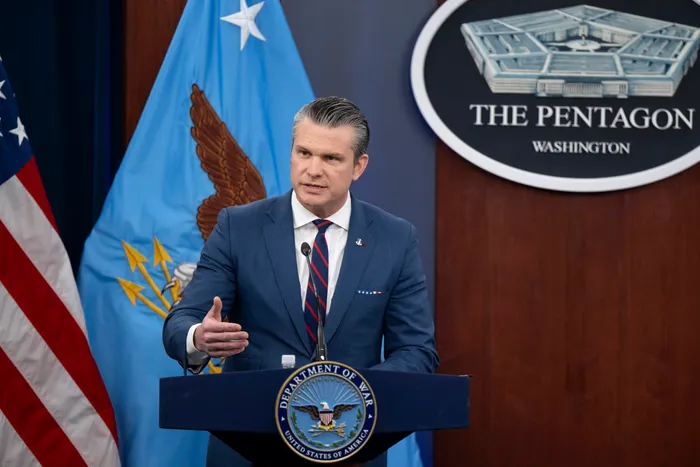
The planners in the Pentagon are now facing a reality where the "Iran problem" cannot be solved by a carrier strike group or a round of sanctions. The leverage has shifted. Iran has used time, geography, and a new set of powerful friends to rewrite the rules of the game.
American policy remains stuck in a loop of outdated assumptions and empty threats. The window for a decisive military solution has closed, replaced by a complex, multi-polar struggle where the U.S. is no longer the dominant player. Washington must now decide whether to continue chasing a failed dream of total dominance or to accept the far more difficult task of managing a permanent and powerful rival in the Middle East.