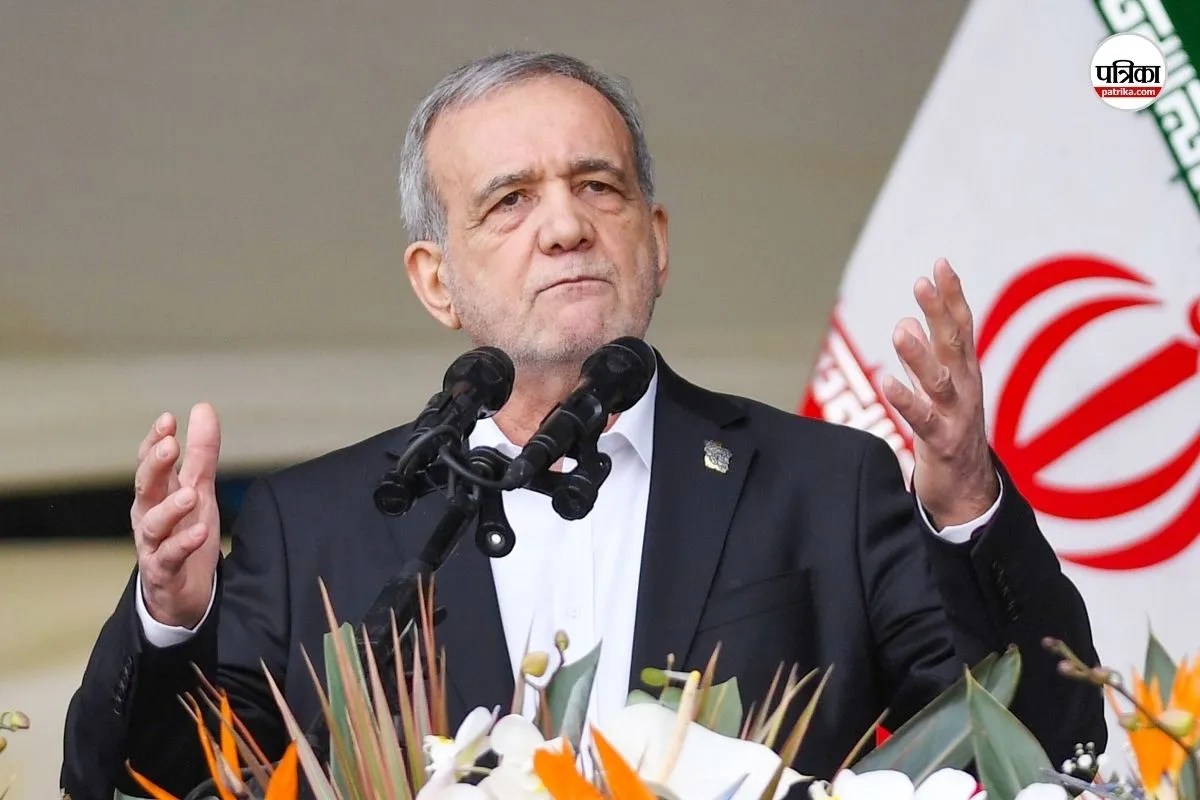
The rhetorical posture of Iranian President Masoud Pezeshkian represents a deliberate attempt to recalibrate the Islamic Republic’s "Resistance" doctrine within the constraints of global economic isolation and shifting regional power dynamics. By publicly stating that Iran "does not seek war but will not be bowed," the administration is not merely issuing a populist warning; it is executing a dual-track strategy designed to manage domestic expectations while testing the elasticity of Western diplomatic red lines. To understand this maneuver, one must analyze the structural tension between Iran's ideological commitment to sovereignty and its pragmatic need for sanctions relief.
The Triad of Iranian Strategic Signaling
The current Iranian position rests on three distinct pillars of engagement that dictate how Tehran interacts with the United States and its allies.
- Sovereign Inviolability: This is the non-negotiable floor of Iranian rhetoric. By framing the nation as "impossible to bend," Pezeshkian targets the psychological component of deterrence. The logic suggests that any perceived weakness would invite a "Maximum Pressure 2.0" scenario, whereas a stance of defiant readiness increases the projected cost of military intervention for the adversary.
- The Negotiation Preference: Contrary to the hardline "No Talk" stance often attributed to Iranian leadership, the Pezeshkian administration utilizes the offer of dialogue as a tool for de-escalation. This is not an admission of defeat but a tactical pause. By positioning Iran as the party seeking "talks, not war," the administration shifts the burden of aggression onto the United States in the court of international public opinion.
- Controlled Escalation: This mechanism ensures that the preference for peace is backed by a credible threat of chaos. The "war" that Iran avoids is a total conventional conflict, yet the state maintains its capability for asymmetric friction through regional proxies and technical advancements in its nuclear program.
The Economics of Defensive Posturing
The internal logic of Pezeshkian’s statement is deeply rooted in the Opportunity Cost of Conflict. For Iran, a full-scale war is economically ruinous, yet a total capitulation to Western demands would result in the collapse of the regime’s internal legitimacy.
The Iranian economy operates under a "Resistance Economy" model, characterized by:
- Import Substitution: Reducing dependence on foreign goods to mitigate the impact of sanctions.
- Shadow Financial Networks: Utilizing non-standard banking channels to export petroleum products.
- Strategic Depth: Maintaining a presence in Iraq, Lebanon, and Yemen to ensure that any conflict remains outside Iran’s geographic borders.
The "impossible to bend" narrative serves a specific economic function: it signals to domestic markets and foreign investors (primarily in the East) that the state remains stable. If the leadership appeared ready to buckle, capital flight would accelerate and the rial would enter a hyper-inflationary spiral. Stability, even under sanctions, is preferable to the volatility of a regime perceived as failing.
The Asymmetry of Modern Deterrence
Standard geopolitical analysis often fails to account for the Asymmetry of Risk Appetite between Tehran and Washington. For the United States, the Middle East is a theater of interest; for Iran, it is the home front. This discrepancy allows Iran to maintain a higher threshold for pain while demanding greater concessions.
Pezeshkian’s rhetoric exploits this by defining the conflict as one of "will" rather than just hardware. While the U.S. possesses superior conventional military assets, Iran’s defense strategy focuses on Area Denial (A2/AD). By threatening the flow of oil through the Strait of Hormuz and utilizing sophisticated drone and missile technology, Iran raises the "Risk Premium" of any military strike to a level that the Western political cycle cannot easily absorb.
The Nuclear Variable and Diplomatic Leverage
The "talks" Pezeshkian references are intrinsically tied to the Joint Comprehensive Plan of Action (JCPOA) or a successor framework. The Iranian strategy follows a specific sequence of escalation and offer:
- Technical Advancement: Increasing uranium enrichment levels to create a "Nuclear Overhang."
- Diplomatic Outreach: Offering to return to compliance in exchange for comprehensive sanctions lifting (not just suspension).
- Public Declarations: Using high-level addresses to signal that the window for diplomacy is open but closing.
This sequence creates a "Time-Decay Factor" for Western negotiators. Each day that passes without a deal sees Iran’s technical knowledge base expand, making a return to the original 2015 status quo increasingly difficult. Pezeshkian’s assertion that Iran wants "dialogue" is a formal invitation to the West to settle before the "Nuclear Overhang" becomes a "Nuclear Reality."
Logical Fallacies in External Interpretations
Many analysts interpret Pezeshkian’s tone as a sign of a "moderate" shift. This is a category error. In the Iranian political hierarchy, the President manages the bureaucracy and international optics, while the Supreme Leader and the Islamic Revolutionary Guard Corps (IRGC) manage the strategic assets. Pezeshkian’s "softer" tone is a calibrated instrument of the state, not a rebellion against it.
The "moderation" is a functional requirement for diplomacy, not a fundamental change in the state's DNA. The objective remains the same: the removal of sanctions and the recognition of Iran as a primary regional power. The method—whether through the "iron fist" of the hardliners or the "velvet glove" of the Pezeshkian administration—is merely a choice of tool.
The Constraint of Domestic Demographics
Pezeshkian’s rhetoric also serves a vital internal purpose. Iran’s young, increasingly secular population is fatigued by economic hardship. By emphasizing that the government wants peace and wants to talk, the administration attempts to neutralize the criticism that the regime is ideologically obsessed with conflict at the expense of its citizens.
This creates a Domestic Legitimacy Loop:
- The government tries to talk (demonstrating "reasonableness").
- The West refuses or demands more (demonstrating "hostility").
- The government stands firm (demonstrating "strength").
This loop allows the administration to blame the continued economic suffering on external actors rather than internal mismanagement. It frames the struggle not as a choice of the regime, but as an inevitable consequence of defending the nation’s pride.
Strategic Forecasting: The Pivot to the East
While Pezeshkian addresses the U.S. directly, the subtext of his message is often directed toward Beijing and Moscow. By appearing willing to talk but unwilling to surrender, Iran positions itself as a reliable partner in the "Multipolar World" narrative favored by the BRICS+ nations.
Iran's integration into the Shanghai Cooperation Organisation (SCO) and BRICS provides it with a diplomatic and economic safety net that did not exist during the previous decade. If the U.S. ignores Pezeshkian’s overtures, Iran has a credible "Pivot to the East" as a fallback strategy. This reduces the efficacy of Western sanctions and provides Iran with the "bend-proof" resilience Pezeshkian claims.
Final Strategic Assessment
The optimal move for global actors is to view the Pezeshkian administration's rhetoric as a Signal of Readiness for a High-Stakes Bargain. The window for a "talks-based" resolution is currently wider than it has been in years, but it is underpinned by a significantly more robust Iranian military and technical infrastructure.
The strategy for the West cannot be simple containment; it must involve a recognition of Iran's regional security interests in exchange for verifiable limits on its nuclear and missile capabilities. Pezeshkian has laid the groundwork for a face-saving exit for both sides. Failure to engage with the technical nuances of this offer will likely result in Iran accelerating its "Defensive Autonomy" model, moving further into the orbit of non-Western powers and making a future diplomatic resolution virtually impossible. The "impossible to bend" claim is currently a rhetorical stance; without a shift in the diplomatic approach, it will become a structural reality.