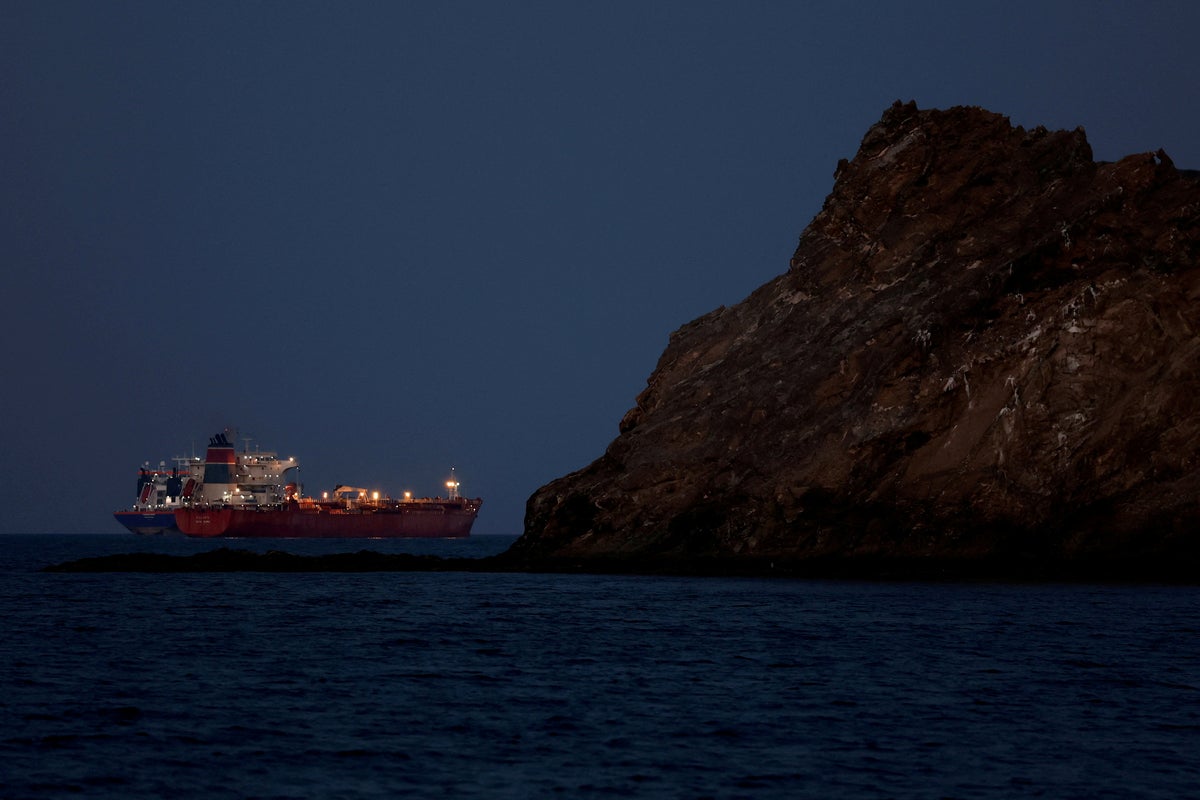
The strategic value of Diego Garcia is not derived from its sovereignty but from its unique intersection of geographic isolation and deep-water infrastructure. Positioned at $7^\circ 18' 48'' S, 72^\circ 24' 40'' E$, the atoll serves as the primary logistical node for United States Central Command (CENTCOM) and Indo-Pacific Command (INDOPACOM) operations. Recent escalations in Iranian long-range strike capabilities and the shifting legal status of the British Indian Ocean Territory (BIOT) have transitioned this asset from a "sanctuary" to a "contested node." Understanding its survival requires an analysis of its logistical throughput, its role in the global undersea cable network, and the specific kinetic threats posed by asymmetric missile proliferation.
The Triad of Functional Utility
The operational necessity of the base rests on three distinct pillars of power projection. If any pillar is degraded, the utility of the entire Indian Ocean presence collapses. Meanwhile, you can find related developments here: The Cold Truth About Russias Crumbling Power Grid.
- Heavy Bomber Sustenance: Diego Garcia is one of the few global sites outside the continental United States capable of supporting B-2 Spirit and B-21 Raider operations. This requires specialized Climate-Controlled Low Observable Docking (CLOARD) facilities to maintain stealth coatings. Without these hangars, long-range strike capacity in the Middle East and South Asia relies on multiple mid-air refuelings, increasing mission fatigue and mechanical failure risks.
- Maritime Prepositioning Force (MPF): The lagoon provides a protected deep-water anchorage for the Military Sealift Command. These vessels hold enough equipment to support a Marine Expeditionary Brigade for 30 days. This removes the "bottleneck of distance," allowing the U.S. to surge heavy armor into a theater without waiting for transoceanic transit.
- Space and Signals Intelligence (SIGINT): The site hosts a Ground-based Electro-Optical Deep Space Surveillance (GEODSS) station. This system tracks high-altitude satellites and space debris, providing the specific orbital data required for space superiority. Its location allows for the monitoring of satellite handovers that are invisible to stations in Guam or the Middle East.
Kinetic Vulnerability and the Iranian Range Extension
The historical safety of Diego Garcia was predicated on the "Tyranny of Distance." It was simply too far for most regional actors to strike. That buffer has evaporated. The Iranian "Khaibar Shekan" and "Fattah" missile classes possess theoretical ranges and reentry speeds designed to challenge regional interceptors.
The threat logic follows a specific escalation ladder: To see the full picture, check out the recent article by The New York Times.
- The Saturation Variable: Iranian doctrine emphasizes "swarming" defenses. Even with the presence of Aegis-equipped destroyers or land-based Patriot batteries, the cost-exchange ratio favors the attacker. An interceptor missile costs significantly more than the incoming projectile. A sustained barrage aims to deplete the base's interceptor magazine, leaving the runways and fuel farms exposed.
- The Drone-Carrier Proxy: While direct ballistic strikes from Iranian soil are at the edge of current range limits, the deployment of "Shahed" style loitering munitions from commercial vessels or repurposed tankers creates a mobile launch platform. This reduces the required flight time, minimizing the window for early warning systems to trigger a response.
- The Fuel Farm Criticality: The base's Achilles heel is its JP-5 and JP-8 fuel storage. Aviation operations are entirely dependent on these singular points of failure. Unlike a continental base with pipeline access, Diego Garcia is a "closed loop." A single successful strike on the fuel manifold halts all sorties, effectively neutralizing the base without destroying the aircraft.
Sovereignty as a Force Multiplier or Friction Point
The ongoing legal dispute between the United Kingdom and Mauritius regarding the Chagos Archipelago is not merely a post-colonial grievance; it is a structural risk to the base’s lease longevity. The 2019 International Court of Justice (ICJ) advisory opinion and subsequent UN General Assembly resolutions have characterized the UK’s administration as "illegal."
The strategic friction arises from the Status of Forces Agreement (SOFA). Currently, the U.S. operates under a UK umbrella. A transition to Mauritian sovereignty introduces a new variable of political volatility. If Mauritius becomes the landlord, the U.S. loses the "sovereign certainty" provided by a permanent UN Security Council member (the UK). The potential for a future Mauritian government to leverage the base lease against U.S. foreign policy—or to allow Chinese maritime "research" vessels access to the surrounding waters—creates a permanent state of diplomatic insecurity.
The Undersea Data Chokehold
Diego Garcia serves as a critical junction for the undersea fiber-optic cables that facilitate global financial transactions and military communications. The geography of the Indian Ocean floor forces data traffic through specific corridors.
The threat here is sub-kinetic. The rise of Russian and Chinese specialized "oceanographic" vessels capable of deploying Autonomous Underwater Vehicles (AUVs) puts the physical integrity of these cables at risk. Severing these links doesn't just blind the base; it creates a regional "data blackout" that would disrupt the synchronization of carrier strike groups. The base acts as the "repeater station" for the region; if the station is compromised, the latency of command decisions increases from milliseconds to seconds, a fatal margin in modern electronic warfare.
Atmospheric and Environmental Degradation
Beyond kinetic and political threats, the base faces a "slow-motion" failure via rising sea levels. The mean elevation of the atoll is approximately four feet.
The failure mechanism is Saltwater Intrusion. The base relies on a fragile freshwater lens—a layer of fresh groundwater that floats above the denser saltwater. As sea levels rise, storm surges wash over the atoll, contaminating the freshwater lens and eroding the coral foundation. This necessitates the installation of high-energy desalination plants, which increases the base's internal power demand and further complicates the logistics of self-sufficiency. If the environment cannot sustain the human population of the base, the cost of maintenance will eventually exceed the value of the strategic output.
Counter-Intervention Logic and Hardening
To maintain Diego Garcia as a viable node through 2040, the Department of Defense must pivot from "presence" to "resilience." This involves three specific technical shifts:
- Distributed STOVL Operations: Reducing reliance on the main 12,000-foot runway by integrating Short Take-Off and Vertical Landing (STOVL) aircraft like the F-35B. This allows for distributed operations across smaller, reinforced pads that are harder to target than a single massive runway.
- Autonomous Defense Perimeters: Deployment of unmanned surface vessels (USVs) and underwater sensors to create a "transparent" sea-zone around the atoll, identifying "dark vessels" or UUVs before they reach the terminal strike zone.
- Redundant Energy Microgrids: Shifting away from heavy fuel oil generators to modular nuclear reactors or hardened solar-battery arrays. This reduces the "Logistics Tail" and ensures that a strike on the fuel farm does not result in a total power failure for SIGINT and GEODSS operations.
The Indo-Pacific theater demands a persistent anchor in the Indian Ocean. However, the current configuration of Diego Garcia assumes a low-threat environment that no longer exists. The base must be treated not as a permanent fortress, but as a high-value, high-maintenance node in a shifting network of global power.
The strategic play is to decouple the base's functional utility from its colonial baggage. The U.S. should pursue a direct, 99-year treaty with Mauritius that bypasses the UK’s fading administrative role, while simultaneously investing in "hard-kill" active defense systems to counter the growing Iranian and proxy missile threat. Failure to update the defensive posture within the next 36 months will transform Diego Garcia from a strategic asset into a multi-billion dollar liability.