The sea is never just water. To a sailor on the Hankuk Chemi, the Strait of Hormuz is a pressurized tunnel, a twenty-mile-wide choke point where the world’s energy pulse beats against jagged cliffs and invisible political fault lines. When the steel hull shudders, it isn’t just physics. It is the sound of a geopolitical tectonic plate shifting beneath your feet.
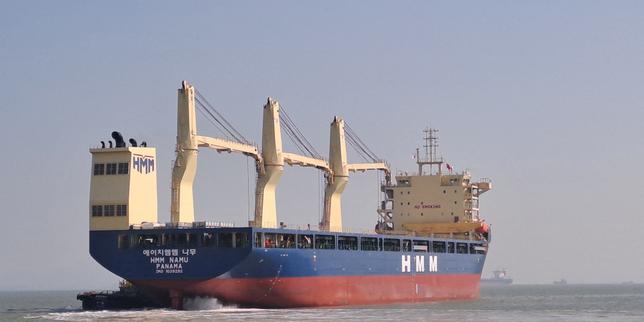
Late Tuesday, the silence of the night watch was shattered by an explosion. A South Korean vessel, laden with chemicals and the quiet hopes of a crew just trying to make it to the next port, became the latest coordinate in a shadow war. Fragments of steel hissed into the dark water. The alarm bells followed—a frantic, rhythmic screaming that signaled the end of routine and the beginning of a crisis. In similar developments, read about: Strategic Modernization and the Doctrine of Full Spectrum Deterrence.
Tehran was quick to speak. The denial came with a practiced, icy composure. They weren't there. They didn't see it. They have no hand in the violence that haunts these waters. But in the Strait, truth is often as murky as the churned-up silt of the seabed.
The Arithmetic of Anxiety
Think of the Strait of Hormuz as the carotid artery of the global economy. One-fifth of the world’s oil flows through this narrow passage. When a ship explodes here, the math changes instantly. It isn't about the cost of a hull repair or the loss of a single cargo. It is about the "risk premium"—a cold, financial term for the terror of what might happen tomorrow. The New York Times has also covered this critical topic in great detail.
Consider the captain. He isn't thinking about oil futures or diplomatic cables. He is looking at a radar screen, wondering if the next blip is a fishing boat or a fast-attack craft. He is smelling the acrid tang of burnt insulation and salt air. To him, the "tensions in the Middle East" aren't a headline. They are a physical weight in his chest.
The South Korean government now faces a familiar, grueling geometry. They must balance the safety of their citizens against the necessity of trade, all while navigating a relationship with Iran that is perpetually strained by frozen assets and international sanctions. It is a game of chess played with live ammunition.
A Ghost in the Machinery
The technical mystery of the blast is where the narrative thickens. Modern maritime sabotage has moved beyond the crude mines of the past. Today, we see the fingerprints of "limpet" mines—devices designed to be attached to a ship’s side, often by divers or unmanned submersibles, intended to disable rather than sink.
It is a surgical kind of violence. It sends a message without starting a full-scale war. It says: We can touch you whenever we want. We can stop the world’s heart whenever we choose.
Iran’s denial is part of the choreography. In the theater of the Strait, ambiguity is a weapon. If no one claims the strike, the victim is left punching at shadows. You cannot retaliate against a ghost. You can only tighten your grip on the railing and wait for the next ghost to appear.
The Invisible Stakes of a Cold Sea
Why does a South Korean ship matter to someone sitting in a cafe in Paris or a suburb in Ohio? Because the Strait of Hormuz is the ultimate connector.
If the Strait closes, or even if the insurance rates for transit become too high, the cost of living shifts. The price of the plastic in your hand, the fuel in your car, and the heat in your home all trace back to these twenty miles of water. We are all passengers on the Hankuk Chemi, whether we realize it or not. We all rely on the fragile illusion that the oceans are a neutral commons, free from the whims of regional hegemons.
But that illusion is evaporating.
The crews of these tankers are the frontline workers of a war that hasn't been declared. They live in a state of hyper-vigilance, watching for the shimmer of a wake that shouldn't be there. They know that in the grand halls of power, their lives are often viewed as acceptable variables in a larger equation of pressure and leverage.
The Language of the Abyss
When a nation denies involvement in an act that serves its strategic interests perfectly, it isn't necessarily lying to convince you. It is lying to provide a "way out." It offers a diplomatic exit ramp that allows other nations to avoid the catastrophic escalation of a direct confrontation. It is a lie that everyone agrees to hold up, like a piece of crumbling scenery, because the reality behind it is too terrifying to face.
The reality is that the Strait has become a laboratory for grey-zone warfare. This is where technology meets ancient grievances. It is where autonomous drones and cyber-spoofing meet the raw, physical reality of fire and steel.
The South Korean ship sits in the water, a smoking testament to the fact that neutrality is a luxury the modern world can no longer afford. The crew looks toward the horizon, where the lights of the Iranian coast flicker like distant, unblinking eyes. They are waiting for news. They are waiting for permission to move. They are waiting for the world to decide if their brush with death was an accident, a crime, or a signal.
The ocean eventually swallows the debris. The ripples of the explosion fade into the natural rhythm of the tide. But the salt remains, corrosive and biting, eating away at the hull of international law until there is nothing left but the rust.
A sailor stands on the deck, lighting a cigarette. His hands are shaking, just a little. He looks at the dark water and realizes that the most dangerous thing about the Strait isn't the mines or the missiles. It is the silence that follows the blast—the sound of a world collectively holding its breath, praying that this time, and only this time, the spark doesn't find the powder keg.