The geopolitical commentariat is obsessed with the "slide into war." They track every tanker movement and every drone intercept in the Strait of Hormuz as if we are one stray spark away from a global inferno. It makes for great cable news ratings and even better defense budget justifications. But it is wrong.
What we are witnessing in the Gulf is not a precursor to all-out war. It is a highly ritualized, incredibly expensive, and deeply cynical performance. The "standoff" is the equilibrium. Stability in the Middle East has never been about peace; it has been about the choreographed management of tension. When analysts scream about the risk of a regional conflagration, they ignore the cold, hard logic of self-preservation that governs every player in the water.
The Myth of the Accidental War
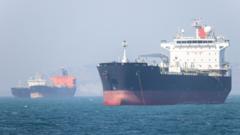
The most common "lazy consensus" is that a tactical error—a nervous sonar operator or a miscalculated missile strike—will trigger a domino effect leading to total war. This theory treats sovereign nations like temperamental toddlers. In reality, the Strait of Hormuz is the most scrutinized 21 miles of water on the planet.
War is expensive. Total war is a bankruptcy filing for every regime involved. The Iranian leadership knows that a permanent closure of the Strait would be an act of national suicide. It wouldn't just stop Western oil; it would terminate their own access to global markets and invite a conventional response that would dismantle their infrastructure in forty-eight hours. On the flip side, the United States has no appetite for a third multi-decade ground war in the region.
We aren't "sliding" anywhere. We are parked in a stalemate where the threat of disruption is more valuable than the disruption itself. The tension is a commodity. It keeps oil prices buoyed, keeps defense contracts flowing, and allows local powers to project strength to their domestic audiences without actually having to fight a peer-to-peer conflict.
Why the Tanker War 2.0 Is a Paper Tiger
Critics point to the seizure of vessels and the use of "shadow fleets" as evidence of a breaking point. I’ve watched commodity desks react to these headlines for twenty years. The markets barely flinch anymore because the math doesn't support the panic.
Global energy markets have become increasingly decentralized. The rise of American shale and the expansion of pipelines through Saudi Arabia and the UAE that bypass the Strait have diluted the "chokehold" Iran once held. While a total blockage would certainly spike prices, the global economy is far more resilient to a Hormuz hiccup than it was in 1984.
The current "tit-for-tat" strategy is actually a safety valve. By engaging in low-level maritime harassment, regional actors can signal their grievances and demonstrate "red lines" without crossing the one line that matters: the kinetic destruction of high-value targets. It is a pressure release valve, not a fuse.
The Logic of the Proxies
We are told that the "Axis of Resistance" and its various proxies are wildcards that could drag the world into chaos. This assumes these groups act in a vacuum. They don't. They are assets on a balance sheet.
Managing a proxy is like managing a high-risk portfolio. You want the volatility to scare your opponents, but you don't want the underlying asset to go to zero. Tehran manages its proxies with a leash that is much shorter than Western intelligence often admits. The goal isn't to start a war that destroys the proxy; the goal is to maintain a state of "neither war nor peace" that forces the West to stay at the negotiating table.
The High Cost of Being Right
The danger of this contrarian view isn't that I’m wrong about the intent; it’s that the cost of maintaining this "fake" standoff is becoming astronomical. We are spending billions of dollars in carrier strike group deployments and missile defense to counter drones that cost $20,000 to build.
This is the real crisis: an asymmetric economic drain. The West is being bled dry by the cost of protection, not the reality of combat. Every time a $2 million interceptor is fired at a cheap loitering munition, the "standoff" achieves its true objective. It is a war of attrition on the treasury, not the infantry.
Stop Asking if War Is Coming
People always ask: "When will the Strait finally blow up?"
It's the wrong question. You should be asking: "Who benefits from you believing it’s about to blow up?"
If you follow the money, it leads to a very different map than the one shown on the news. The tension maintains the status quo. It justifies the presence of fleets. It justifies the repression of internal dissent in the name of national security. It keeps the "security architecture" of the 20th century relevant in a world that has moved on.
The Strait of Hormuz is not a flashpoint. It is a theater. The actors know their lines, the props are all in place, and the audience is terrified exactly as planned. The only way to win is to stop buying the ticket.
The biggest risk isn't a slide into war. It's the permanent, exhausting, and incredibly profitable continuation of the standoff. We aren't waiting for the storm; we are living in the climate they created.
Stop looking for a declaration of war. It isn't coming. They can't afford it.

.jpeg?width=1200&auto=webp&trim=0%2C0%2C0%2C0)