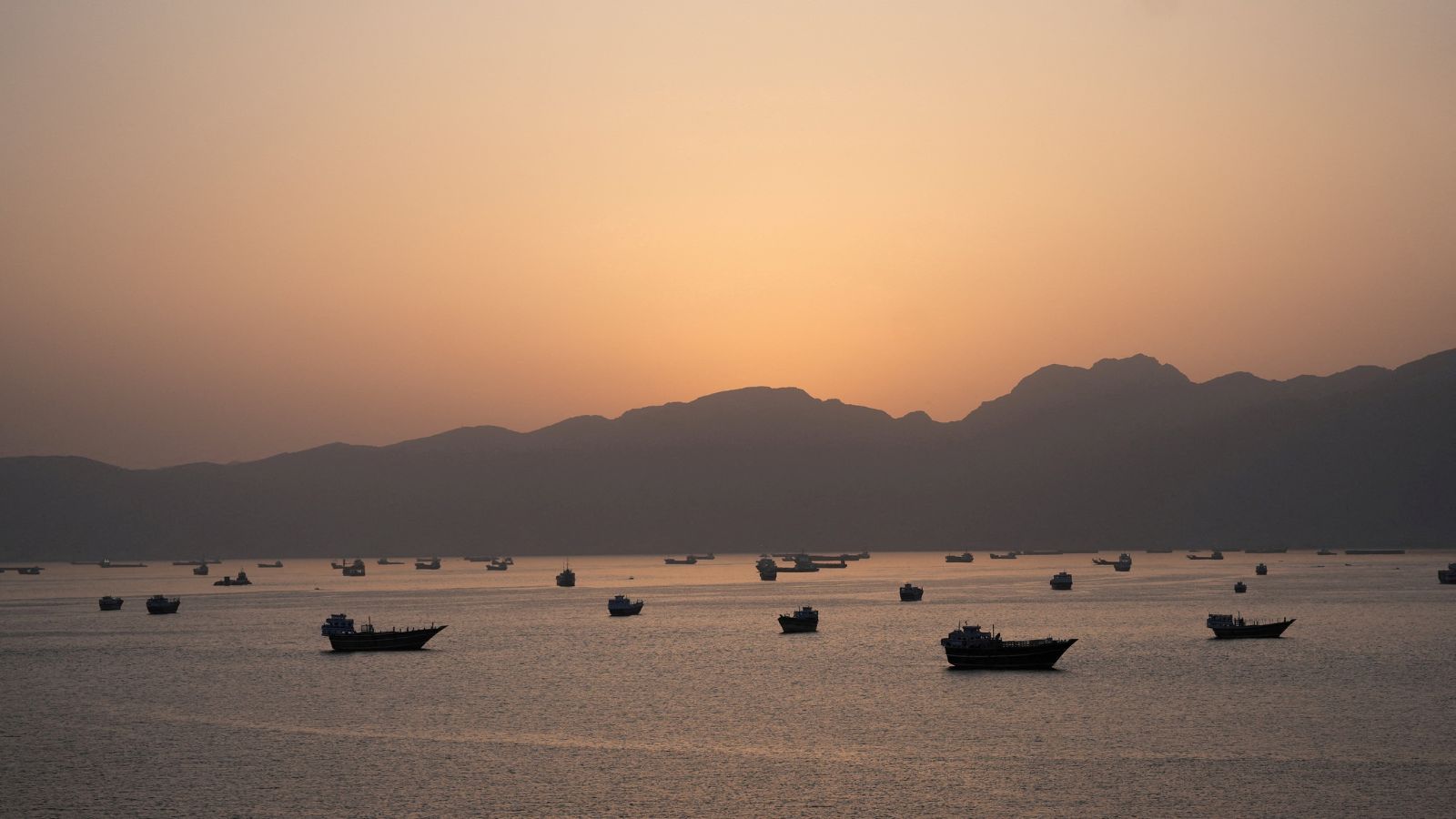
The mainstream media is currently obsessing over the wrong metric in the Middle East. With ink barely dry on the latest diplomatic overtures between Washington and Tehran, pundits are rushing to declare a new dawn for global shipping. They see a peace deal and expect insurance premiums to plummet and naval escorts to pack up and go home.
They are completely wrong.
The lazy consensus states that conflict in the Strait of Hormuz is driven purely by state-level geopolitical theater. The narrative assumes that if you fix the diplomatic friction, you fix the maritime security crisis. This view ignores the structural reality of modern asymmetrical warfare, commercial shipping economics, and the weakness of international maritime law.
Ships are not safe in the Strait of Hormuz because peace deals do not rewrite geography, nor do they disarm the non-state actors who actually control the choke point.
The Illusion of State Control in the Choke Point
The foundational error of recent analysis is the belief that a handshake in a capital city dictates reality on the water. The Strait of Hormuz is a narrow stretch of water—barely 21 miles wide at its narrowest point—through which roughly a fifth of the world's petroleum passes.
Diplomats assume the Iranian state operates as a monolith. Anyone who has analyzed regional maritime security knows the Islamic Revolutionary Guard Corps Navy (IRGCN) operates with a massive degree of tactical autonomy. The IRGCN does not use standard naval doctrine. They rely on fast attack craft, drifting mines, and low-cost loitering munitions.
A peace treaty does not magically dismantle an entire military infrastructure built specifically for asymmetric denial. For decades, the strategy has been to hold the global economy hostage via shipping lanes. Giving up that leverage completely just because a document was signed would be strategic suicide for regional hardliners.
Furthermore, the proliferation of cheap missile technology means the threat has leaked to proxy groups outside the direct command structure of regional superpowers. You cannot sign a peace treaty with a drone manufactured for a few thousand dollars and launched from an unmarked truck.
The Broken Premium: Why Insurance Actuaries Don't Care About Peace Deals
Let's look at how the market actually prices risk, rather than how journalists think it does. Shipowners do not look at political speeches; they look at Lloyd's Joint War Committee (JWC) listings.
The Hull War, Piracy, Terrorism and Related Perils Listed Areas are not updated based on good vibes. They are updated based on hard actuarial data. When a region is designated a war risk zone, underwriters tack on an additional premium for every single transit.
Imagine a scenario where a standard Very Large Crude Carrier (VLCC) carrying two million barrels of oil plans a transit through the Gulf of Oman into the Persian Gulf. Even during a diplomatic thaw, the physical vulnerabilities of the vessel remain identical:
- Low freeboard: When fully laden, these massive vessels sit incredibly low in the water, making them ridiculously easy targets for boarding parties utilizing fast-rope techniques or small boats.
- Speed limitations: A loaded supertanker moves at roughly 13 to 15 knots in restricted channels. It cannot dodge, it cannot run, and it cannot defend itself.
- Electronic warfare vulnerabilities: Spoofing of Automatic Identification System (AIS) signals and GPS jamming have become routine in the strait.
Insurance underwriters know that a single rogue incident—a mine left over from previous friction, a local commander trying to prove a point, or an electronic malfunction causing a collision—can result in a total loss or hundreds of millions of dollars in environmental cleanup liabilities. Therefore, the premium stays high. The "peace dividend" is swallowed by the permanent structural risk of the geography itself.
The Flawed Premise of Maritime Law
The general public believes that international waters afford absolute protection under the United Nations Convention on the Law of the Sea (UNCLOS). This is a legal fantasy when applied to the Strait of Hormuz.
While UNCLOS prescribes the right of transit passage for foreign vessels through straits used for international navigation, the interpretation of these laws on the water is brutally contested. Iran has signed but never ratified UNCLOS. They maintain that the right of transit passage applies only to states that are party to the convention. Instead, they recognize the more restrictive right of "innocent passage," which allows them to stop and board vessels they deem to be violating their environmental or security regulations.
All it takes is a fabricated claim of a pollution incident or a minor maritime collision for a commercial vessel to be legally detained. We saw this with the Stena Impero, and we saw it with the Hankuk Chemi. These were not acts of open warfare; they were regulatory hijackings masked as maritime law enforcement. A peace treaty does not change a nation's domestic legal interpretation of its own territorial waters.
Stop Asking if the Strait is Safe—Ask Who Profits from the Peril
The real question shipowners should be asking is not "When will the strait be safe?" but rather "How do we operate profitably in a permanently hostile environment?"
The companies making real money right now are not the ones waiting for a diplomatic miracle. They are the ones adapting to the permanent reality of a grey-zone conflict environment.
To survive and profit in the modern Strait of Hormuz, operators must deploy unconventional strategies:
1. Hardened Decentralization
Relying entirely on Western naval coalitions like Operation Sentinel or EMASoH (European Maritime Awareness in the Strait of Hormuz) is a losing game. Flag states change, political wills shift, and naval assets are frequently reassigned to other theaters. Smart operators are increasingly utilizing private maritime security companies (PMSCs) that specialize in non-lethal electronic counter-measures and advanced sensory arrays to detect drones and fast craft long before they arrive.
2. Algorithmic AIS Management
The old method of turning off AIS to hide a ship is dead. It makes the vessel a target and violates international regulations, giving local authorities the perfect excuse to board. The current best practice involves complex, real-time pattern analysis of regional spoofing activity, allowing captains to cross-reference their physical radar data with corrupted GPS inputs to identify when they are being actively lured off course.
3. Alternative Routing Optimization
The ultimate contrarian move is to bypass the choke point entirely where feasible. Pipelines like Saudi Arabia's East-West Pipeline or the Abu Dhabi Crude Oil Pipeline to Fujairah exist precisely for this reason, yet their capacity is consistently underutilized during periods of geopolitical optimism. Operators who secure long-term capacity on these overland routes during "peace" phases buy insurance against the inevitable next flare-up at a massive discount.
The Hard Truth About Maritime Risk
The undeniable downside to admitting that peace deals do not work is that it forces businesses to accept permanently higher operational costs. It means admitting that the era of cheap, frictionless maritime trade through the Middle East is over. It requires constant vigilance, higher insurance outlays, and an investment in defensive technologies that look more suited for a warship than a commercial tanker.
But ignoring this reality because a few politicians smiled for a camera is reckless. The Strait of Hormuz is a geographic bottleneck governed by asymmetrical power dynamics, fractured command structures, and fundamentally incompatible legal frameworks.
Diplomats write treaties for the headlines. The oceans are governed by raw leverage. Until the physical reality of the strait changes, the peace deal isn't worth the paper it's printed on. Stop betting your fleet on political theater.