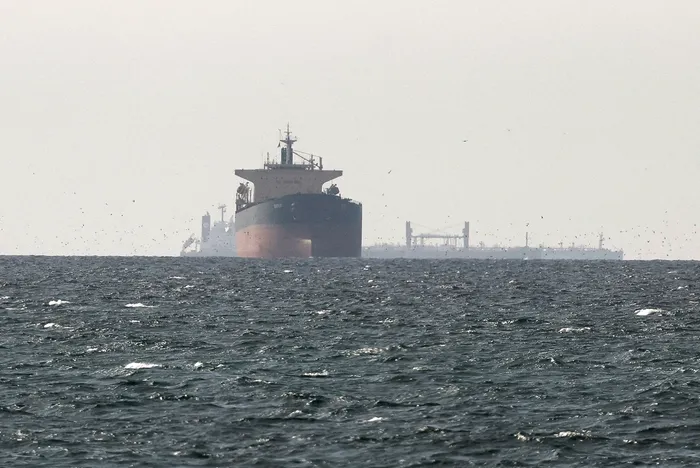
The assertion that Iran possesses no strategic leverage beyond the physical blockade of the Strait of Hormuz is not merely a rhetorical stance; it is an assessment of a rapidly depreciating asset base. In the context of modern geopolitical negotiations, leverage is a function of alternative options. When a state’s primary instrument of influence is a "suicide lever"—an action that inflicts equal or greater damage on the actor than on the target—that state is functionally insolvent. Iran’s current position reflects a terminal reliance on a 21-mile-wide chokepoint that, while capable of inducing short-term global price shocks, represents a failure of diversified power projection.
The Triad of Iranian Leverage Depletion
To understand why the Strait of Hormuz is characterized as Iran’s "only card," one must quantify the erosion of their traditional pillars of influence: the nuclear program, regional proxy networks, and domestic economic resilience. For an alternative perspective, check out: this related article.
- Nuclear Diminishing Returns: While enrichment levels serve as a technical threat, the utility of the nuclear program as a bargaining chip has reached a plateau. Incremental increases in U-235 purity no longer yield proportional diplomatic concessions. Instead, they trigger "snapback" mechanisms and hardening of international coalitions. The cost-to-benefit ratio of further enrichment has inverted, turning a strategic asset into a primary target for preemptive kinetic intervention.
- Proxy Attrition and Overextension: The "Axis of Resistance" was designed as a low-cost, high-impact method of asymmetric deterrence. However, the operational costs of maintaining non-state actors in Lebanon, Yemen, and Iraq have ballooned. The decapitation of leadership structures and the systematic degradation of hardware have shifted these proxies from offensive assets to liability-heavy defensive perimeters. They now require constant Iranian capital infusion just to maintain a baseline of survival, rather than serving as tools for regional expansion.
- The Domestic Revenue Floor: Iran’s economy operates on a subsistence-level revenue floor. Sanctions have removed the "luxury of choice" in their fiscal policy. When a nation is forced to trade oil at steep discounts to a single major buyer (China), it loses the ability to use its resources as a geopolitical scalpel.
The Mechanics of the Hormuz Chokepoint
The Strait of Hormuz handles roughly 20-21 million barrels of oil per day, representing about 20% of global liquid petroleum consumption. On paper, the ability to halt this flow is a "global kill switch." In practice, the mechanism is governed by three specific constraints that render it a one-time-use weapon.
The Physical Blockade Constraint
Closing the strait requires more than a verbal threat. It demands a sustained naval presence or the deployment of anti-ship cruise missiles (ASCMs) and sea mines. The U.S. Fifth Fleet and regional partners maintain a surveillance and response posture designed specifically to neutralize these assets within a 48-to-72-hour window. For Iran, "playing the card" results in the immediate destruction of its conventional naval assets. The leverage exists only as long as the card is not played. Further reporting on this matter has been provided by The Washington Post.
The Economic Feedback Loop
Iran is not insulated from the global economy. A total closure of the strait would spike oil prices, but it would also freeze Iran's own ability to export. Given that the Iranian budget is hyper-sensitive to cash flow, a blockade would trigger an immediate domestic liquidity crisis. Furthermore, such an action would alienate Iran's only remaining major trade partners, specifically China, whose energy security depends on the stability of Middle Eastern supply lines. Blocking the strait is an act of economic fratricide.
The Technological Obsolescence of Geography
The development of bypass infrastructure, such as the Habshan–Fujairah pipeline in the UAE and the East-West Pipeline in Saudi Arabia, has created a pressure-relief valve. While these pipelines cannot currently handle the entire volume of the strait, they can mitigate the "survival-level" energy needs of the West. This reduces the geopolitical "rent" Iran can charge for its proximity to the waterway.
The Cost Function of Asymmetric Warfare
Iran’s strategy has shifted toward what can be termed the Asymmetric Cost Imposition Model. In this framework, Iran seeks to make the cost of opposing them higher than the cost of conceding to them. However, this model breaks down when the opponent’s "cost of concession" involves the acceptance of a nuclear-armed adversary or the permanent destabilization of global trade.
The shift in U.S. and regional strategy under a "No Cards" doctrine assumes that the threshold for Iranian escalation is higher than previously estimated. This is based on the Rational Actor Survival Constraint: the Iranian leadership prioritizes the survival of the clerical regime above all other objectives. Since any attempt to close the Strait of Hormuz or initiate a direct large-scale conflict would lead to a regime-ending response, the threat is viewed as a bluff.
The Liquidity Trap of Iranian Diplomacy
In high-stakes peace talks, "liquidity" refers to the ability to offer meaningful concessions that the other side values. Iran’s diplomatic liquidity is near zero because:
- Sanctions Saturation: There are few remaining sectors of the Iranian economy to sanction, meaning the U.S. has reached the limit of non-kinetic pressure. Conversely, Iran has already "spent" its ability to endure pain; it has no new resilience to offer.
- Verification Deficit: Past deviations from agreements have created a trust deficit that requires Iran to offer "front-loaded" concessions (e.g., shipping out existing stockpiles) before receiving any relief.
- Zero Sum Alignment: Iran’s internal hardliners view any concession as a signal of weakness that could embolden domestic dissent. This creates a "Strategic Rigidity" where the regime would rather face economic collapse than the perceived humiliation of a structured climb-down.
Structural Vulnerabilities in the "Maximum Pressure" Counter-Strategy
While the "No Cards" assessment is logically sound from a resource perspective, it contains two critical risks that analysts often overlook.
The first is the Desperation Threshold. When an actor truly believes they have no cards left, they may opt for "irrational" escalation as a means of resetting the board. This is the "Cornered Rat" syndrome. If the Iranian regime perceives that its collapse is inevitable regardless of its actions, the Strait of Hormuz moves from a bargaining chip to a scorched-earth tool.
The second is the Shadow Fleet Variable. Iran has become adept at navigating the "gray zone" of global trade. Through a network of ghost tankers and offshore ship-to-ship transfers, they have maintained a baseline level of exports that defies standard economic modeling. This "shadow leverage" allows them to survive longer than a traditional analysis of their balance sheets would suggest.
The Strategic Path Forward: Forcing a Choice
The endgame of this analytical framework is the forced transition of Iran from a revolutionary state to a "normal" state through the exhaustion of its asymmetric options. For this to succeed, the following conditions must be met:
- Total Interdiction of Shadow Exports: The current leakage in the sanctions regime provides Iran with just enough oxygen to avoid the negotiating table. Closing the Chinese loophole is the only way to prove the "No Cards" thesis.
- Redundant Maritime Security: Increasing the presence of unmanned surface vessels (USVs) in the Strait of Hormuz reduces the risk to human personnel and lowers the political cost of responding to Iranian provocations.
- Decoupling Regional Conflicts: The U.S. must treat the Houthi, Hezbollah, and Hamas threats as separate operational tasks while maintaining a singular diplomatic focus on Tehran. This prevents Iran from using its proxies as a diversified portfolio.
The final strategic move is not a "grand bargain," but a series of dictated terms. By neutralizing the Strait of Hormuz as a viable threat—through both military readiness and infrastructure redundancy—the international community removes Iran’s final piece of geographical rent-seeking. This leaves the regime with a binary choice: internal collapse or a supervised integration into the regional security architecture on terms that involve the total dismantling of its external influence apparatus. The era of treating Iranian geography as an insurmountable advantage is over; it is now a liability that Tehran can no longer afford to maintain.



