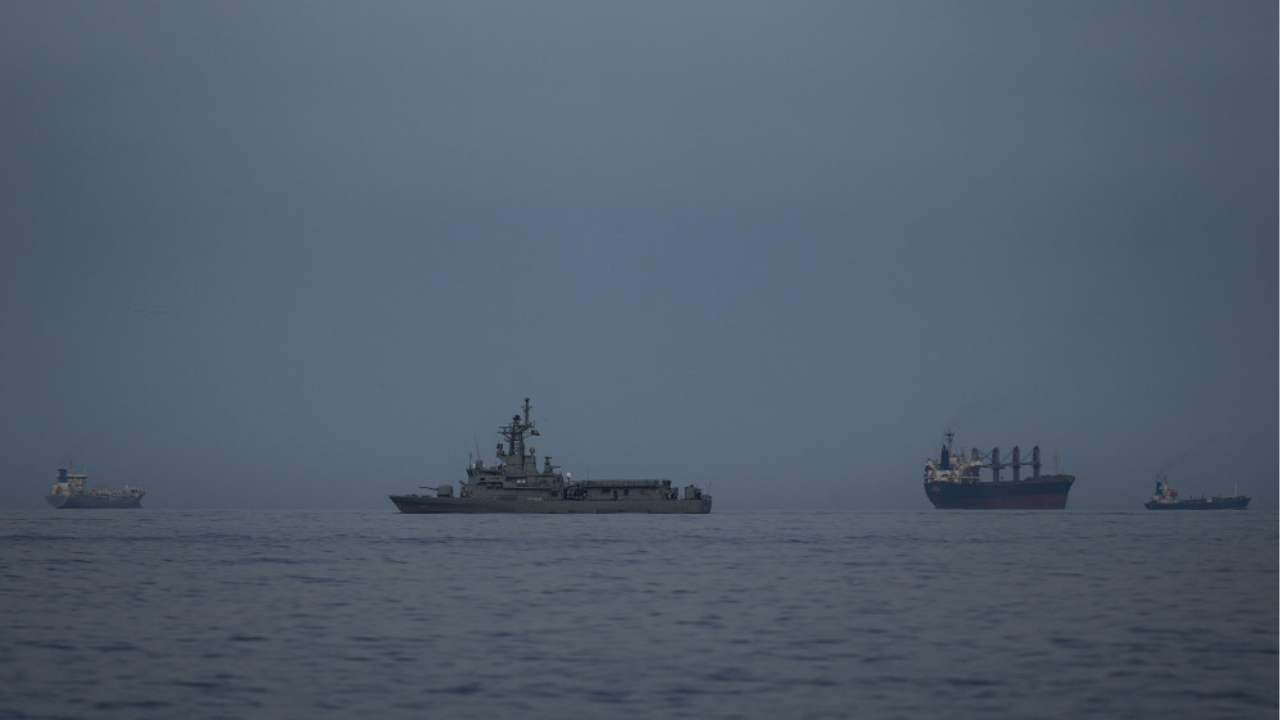
Geopolitics is often a theater of the absurd, and the current narrative surrounding the Strait of Hormuz is the lead performance. You’ve seen the headlines. You’ve read the frantic "analysis" suggesting that Tehran is graciously "considering" allowing a limited trickle of tankers through the world's most sensitive chokepoint.
Stop buying the hype.
The idea that Iran holds a functional, long-term "off switch" for 20% of the world's petroleum liquids is a fairy tale designed to spike crude prices and mask internal systemic fragility. When a competitor writes that Iran is "considering" a limited flow, they are falling for a classic psychological operation. They are treating a desperate survival tactic as a position of strength.
I’ve watched energy markets react to these "bottleneck scares" for two decades. Every single time, the consensus misses the mechanical reality of the Persian Gulf. Iran isn't a gatekeeper; it's a tenant in a building where the landlord has a shotgun and the other neighbors have better lawyers.
The Geography of a Paper Tiger
The "lazy consensus" assumes that because the Strait of Hormuz is narrow—about 21 miles wide at its tightest—it is easily plugged. This is a fundamental misunderstanding of maritime logistics and naval power projection.
Shipping lanes in the Strait consist of two-mile-wide channels for inbound and outbound traffic, separated by a two-mile wide buffer zone. To "close" this, Iran would need to do more than just park a few fast-attack boats in the water. They would need to maintain total sea and air denial against the U.S. Fifth Fleet and a coalition of regional powers who literally cannot afford to let the lights go out.
Let’s look at the math. Closing the Strait isn't a one-off event; it’s a sustained siege. Iran's naval doctrine relies on "swarm" tactics—hundreds of small, armed boats designed to overwhelm a target. It's effective for a skirmish. It’s a suicide note for a blockade. The moment a single VLCC (Very Large Crude Carrier) is sunk in the channel, the international insurance market (Lloyd’s of London and the like) doesn't just raise rates; they pull coverage entirely.
If Iran stops the flow, they don't just stop "enemy" oil. They stop their own. Iran’s economy is a pressurized vessel of inflation and civil unrest. They need the oil revenue—even the gray-market, discounted barrels heading to China—to keep the IRGC funded and the streets from boiling over. A "limited flow" isn't a concession. It’s a confession that they cannot survive their own threat.
The "Limited Flow" Fallacy
The competitor article suggests that a "limited number" of tankers might be allowed through. Think about the logistics of that for five seconds.
How do you select who passes? Do you hold an auction at the mouth of the Gulf? Do you check the flag of every vessel while U.S. destroyers sit 500 yards away?
- The Insurance Reality Check: No commercial captain is going to sail into a "limited access" zone where the rules of engagement are dictated by a revolutionary militia.
- The Escalation Ladder: The second Iran attempts to "permit" or "deny" specific vessels, they have transitioned from a sovereign state to a pirate entity. This triggers the San Remo Manual on International Law Applicable to Armed Conflicts at Sea. It gives every maritime power the legal green light to dismantle the Iranian navy piece by piece.
The idea of "limited passage" is a thought experiment that fails the moment it hits the water. It’s a PR move to keep the "fear premium" in oil prices at $10 to $15 a barrel. Without the threat of the Strait, Iran loses its only piece of leverage in nuclear negotiations. They don't want to close the Strait; they want you to believe they can.
China: The Landlord Iran Can't Offend
Here is the data point everyone ignores: China.
Common wisdom says Iran and China are in a "strategic partnership" against the West. That’s a cute narrative, but it ignores the trade balance. China is the world's largest importer of crude. A significant portion of that comes through—you guessed it—the Strait of Hormuz.
Imagine a scenario where Tehran actually blocks the Strait. They aren't just hitting Washington or Riyadh. They are cutting the throat of the Chinese manufacturing machine. Beijing doesn't do "ideological solidarity" when it costs them billions in GDP.
I’ve spoken with energy traders who have seen the back-channel communications. If Iran actually moves to shutter the Gulf, the first phone call wouldn't be from the White House. It would be from the Zhongnanhai, and it wouldn't be polite. Iran is a client state. Clients don't block the boss's driveway.
The Tech Gap: Why 1980s Tactics Fail in 2026
We aren't in the "Tanker War" of the 1980s anymore. The tech has shifted the advantage entirely to the defender.
- Distributed Lethality: The U.S. Navy and its allies now use unmanned surface vessels (USVs) and advanced ISR (Intelligence, Surveillance, and Reconnaissance) that make "hiding" in the Strait impossible.
- Minesweeping Evolution: Iran’s primary tool for closure is the sea mine. Modern autonomous underwater vehicles (AUVs) can identify and neutralize minefields in a fraction of the time it took during Operation Earnest Will.
- The Drone Paradox: While Iran has a formidable drone program, those same drones require GPS and communication links that are easily jammed or spoofed by modern electronic warfare suites.
The competitor piece treats the Strait like a physical door you can just latch shut. In reality, it’s a high-tech corridor where the "door" is made of glass and Iran is standing there with a pebble, claiming they have a sledgehammer.
The Hidden Cost of the Threat
Every time Iran rattles the saber, they accelerate the one thing they fear most: the bypass.
Saudi Arabia has the East-West Pipeline (Petroline), which can move 5 million barrels per day to the Red Sea. The UAE has the Abu Dhabi Crude Oil Pipeline (ADCOP), which bypasses the Strait entirely to reach the port of Fujairah.
The irony is delicious: By threatening the Strait, Iran has forced its greatest rivals to build the very infrastructure that makes the Strait—and Iran's threats—irrelevant.
Stop Asking "What If They Close It?"
The question is a distraction. It’s the wrong metric for risk.
Instead, ask: "How much is the world willing to pay for the illusion of a closure?"
The market thrives on volatility. Analysts at big banks love the Strait of Hormuz narrative because it justifies high-frequency trading and justifies "Buy" ratings on energy stocks. But if you look at the physical delivery of oil, the tankers keep moving. They move because Iran is broke, China is hungry, and the U.S. Navy is bored.
If you are an investor or a policy wonk, stop reading the "will they or won't they" op-eds. They are written by people who have never stood on the deck of a ship or looked at a bathymetric map of the Persian Gulf.
Iran isn't "considering" anything. They are posturing because posturing is free, while action is expensive—and likely terminal.
Don't bet on the blockade. Bet on the desperation that fuels the rumor of one.