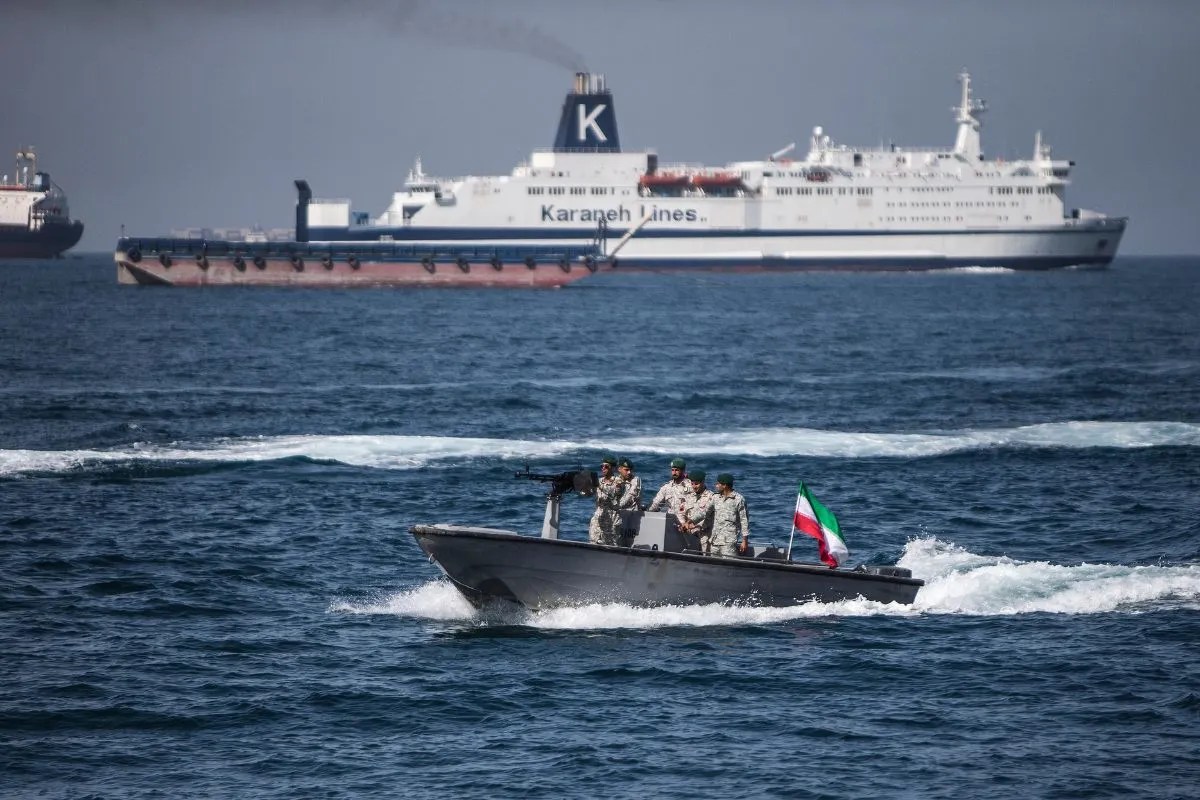
Iran Rewrites the Rules of the Sea
Iran has forced three commercial vessels to turn back from the Strait of Hormuz, declaring that international shipping must strictly adhere to Tehran-designated routes. This aggressive maritime posturing follows an official announcement from neighboring Oman regarding shipping lane adjustments, which Iran immediately capitalized on to project absolute authority over the world's most critical energy chokepoint. By intercepting these vessels, Iran is not merely enforcing a traffic rule. It is testing the limits of international law and asserting unilateral control over a transit corridor that carries a fifth of the global oil supply.
The immediate fallout is clear. Shipping companies now face an ultimatum: comply with Tehran's arbitrary routing or risk seizure. This development dismantles the fragile status quo that has kept the Strait of Hormuz functional for decades, signaling a dangerous shift from cooperative maritime management to armed intimidation.
The Omani Trigger and the Iranian Pivot
The catalyst for this latest escalation was a routine regulatory update from Muscat. Oman, which shares oversight of the narrow strait with Iran, issued a notification regarding traffic separation schemes intended to optimize safety in its territorial waters.
Iran used this bureaucratic window to execute a tactical pivot. Within hours of the Omani announcement, Islamic Revolutionary Guard Corps Navy (IRGCN) fast attack craft intercepted three merchant ships. The message beamed across maritime radio frequencies was unequivocal: access to the Persian Gulf now requires explicit Iranian compliance.
       [ Persian Gulf ]
        /            \
       /   IRAN       \  <-- Iranian Asserted Route
      |   (North)      |
------|----------------|------  <-- Strait of Hormuz Chokepoint
      |   OMAN         |
       \  (South)     /   <-- Omani Safety Lanes
        \            /
       [ Gulf of Oman ]
This is a sophisticated misinterpretation of international law. Under the United Nations Convention on the Law of the Sea (UNCLOS), the Strait of Hormuz is governed by the regime of transit passage. This guarantees that foreign ships and aircraft have the right of unimpeded navigation solely for the purpose of continuous and expeditious transit. Iran has signed but never ratified UNCLOS. Tehran relies on a strict interpretation of its domestic 1993 Maritime Law, which demands prior authorization for foreign warships and tightly regulates commercial traffic passing through its claimed territorial sea.
By demanding that ships follow "only our stated route," Tehran is effectively attempting to erase the international status of the strait. They want to turn a global highway into an Iranian toll road.
Anatomy of a Shipping Interception
To understand how this impacts global trade, one must look at how these interceptions actually occur. The IRGCN does not rely on massive destroyers to project power. Instead, they use asymmetrical tactics.
- Swarm Tactics: Dozens of heavily armed fast-attack craft surround a commercial tanker, cutting off its maneuvering space.
- Electronic Warfare: Disruption of GPS signals forces merchant captains to rely on visual navigation, increasing confusion.
- Verbal Intimidation: Bridge-to-bridge radio commands ordering the vessel to alter course under threat of kinetic force.
When those three vessels turned around, their captains made a calculated economic decision. Insurance premiums for transiting the Middle East Gulf can skyrocket by 400% overnight following a single security incident. For a standard Very Large Crude Carrier (VLCC) carrying two million barrels of oil, a detour or a prolonged standoff costs millions of dollars per day. The physical risk to the crew and cargo makes compliance the only logical choice for a civilian master, a reality that Iran exploits with surgical precision.
The Strategic Failure of Western Deterrence
For years, the United States and its allies have attempted to secure these waters through coalition task forces. Operations like the International Maritime Security Construct (IMSC) were designed to provide a reassuring footprint.
They are failing.
The presence of multi-billion-dollar Western warships has not deterred Iran's grey-zone warfare because Western rules of engagement prevent aggressive intervention short of open conflict. Iran operates precisely below the threshold of conventional military retaliation. They know that a U.S. destroyer will not open fire over a radio demand to alter course.
"The international community treats the Strait of Hormuz as a legal dispute. Tehran treats it as a geopolitical lever."
This asymmetry creates a profound vulnerability. While Western navies patrol broad sectors, Iranian forces operate from highly fortified bases along the northern coast of the strait, including Bandar Abbas and Qeshm Island. They can deploy within minutes, execute an interception, and retreat back into territorial waters before an allied warship can arrive on the scene.
The Economic Aftershocks of Forced Routing
If Iran normalizes its ability to dictate routes, the global energy supply chain will fracture. The shipping lanes through the Strait of Hormuz are not arbitrary lines on a map; they are precisely engineered paths designed to prevent collisions in a waterway that narrows to just 21 miles wide.
Forcing traffic into narrow, Iranian-designated corridors creates immediate operational hazards.
Artificial Congestion
By compressing inbound and outbound traffic into a singular, state-approved route, Iran creates an intentional bottleneck. This increases the risk of maritime accidents and allows Iranian authorities to easily monitor, board, or delay specific cargoes at will.
Selective Blockades
This mechanism allows Tehran to implement a soft blockade without firing a shot. A country that relies on Middle Eastern crude—such as Japan, South Korea, or various European nations—could see its chartered vessels systematically delayed under the guise of "routing violations," while ships bound for preferred nations pass unhindered.
| Shipping Route Variable | Standard UNCLOS Transit Lane | Iranian Asserted Route |
|---|---|---|
| Legal Framework | International Transit Passage | Domestic Maritime Jurisdiction |
| Average Width | Two-mile-wide navigation lanes | Variable, restricted corridors |
| Oversight | Joint Omani-Iranian monitoring | Unilateral IRGCN enforcement |
| Risk Profile | Standard operational maritime risk | High risk of seizure or insurance spike |
Oman's Dilemma and the Limits of Neutrality
Muscat has long maintained a delicate diplomatic balancing act. As the quiet mediator of the Middle East, Oman shares the strategic Musandam Peninsula with UAE enclaves, giving it direct oversight of the strait's southern shipping lanes.
Oman's recent announcement was intended to streamline traffic, but it inadvertently handed Iran a rhetorical shield. Tehran is now framing its aggression as a coordinated effort to modernize strait security, despite Oman offering no endorsement of Iran's heavy-handed tactics.
This leaves Oman in a dangerous position. If Muscat protests too loudly, it risks alienating its powerful northern neighbor. If it remains silent, it appears complicit in the erosion of international freedom of navigation. For now, Omani authorities have remained quiet, a silence that speaks volumes about the coercive pressure Tehran can exert on the smaller Gulf states.
The Invisible Winners and Losers
This crisis stretches far beyond the shores of the Persian Gulf. Every time Iran tightens its grip on the strait, global markets react, creating clear winners and losers across the international landscape.
Major Asian economies are directly in the crosshairs. China, India, Japan, and South Korea import the vast majority of their crude oil from the Persian Gulf. While China enjoys a strategic partnership with Iran that often insulates its state-owned tankers from harassment, democratic Asian nations do not share this luxury. They are forced to pay higher freight rates and exorbitant war-risk insurance premiums, dragging down their economic output.
Conversely, alternative energy exporters stand to gain. When the Strait of Hormuz becomes volatile, global energy buyers look to West Africa, the United States, and the North Sea to secure their supply. Pipelines that bypass the strait entirely—such as Saudi Arabia's East-West Pipeline or the UAE's Habshan-Fujairah pipeline—suddenly become priceless strategic assets, even though their combined capacity cannot handle the total volume currently moving by ship.
The Real Objective Behind Tehran's Maritime Calculus
Iran's actions are never purely local. This maritime theater serves a broader diplomatic strategy aimed at Western sanctions relief.
Every vessel turned back or boarded is a calculated message sent to Washington, London, and Brussels. Tehran is demonstrating that if its own economy is strangled by international sanctions, it possesses the unilateral capability to strangle the global economy in return. It is a policy of asymmetric leverage.
The strategy works because the global shipping industry is inherently risk-averse. Commercial fleets will not fight a war for freedom of navigation; they will simply avoid the area or pay the price of admission. By forcing these three ships to turn around, Iran proved that it can alter the behavior of international commerce without launching a single missile. The precedent has been set, and until the international community finds a way to counter grey-zone coercion effectively, the rules of the sea will continue to be written by Tehran.