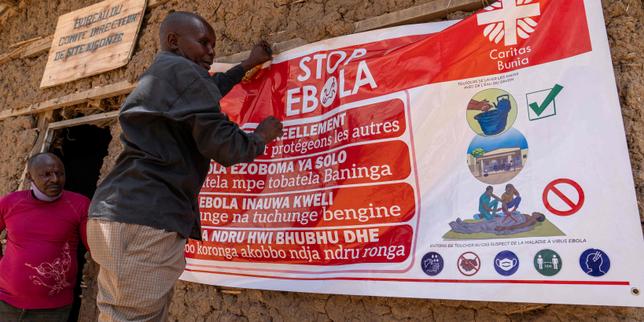
The World Health Organization says the Ebola epidemic can be stopped. It is a bold statement. When the Director-General of the WHO tells the public that health workers have the tools to halt a deadly virus, the world wants to believe it. But wishing does not make it so.
Controlling an outbreak requires massive funding, local trust, and perfect execution on the ground. History shows us that optimism alone cannot contain a hemorrhagic fever. We need to look at what it actually takes to defeat this pathogen when it strikes vulnerable regions.
The Reality Behind the World Health Organization Estimates
The WHO regularly updates its strategic response plans during health emergencies. When officials state that an outbreak can be contained within months, they base this on specific mathematical models. These models assume a stable environment. They count on rapid isolation of patients, safe burials, and high vaccination rates among contacts.
But the reality on the ground is rarely stable.
Look at past outbreaks in the Democratic Republic of Congo or Guinea. Violence, community resistance, and broken infrastructure constantly disrupt medical teams. When an armed group attacks a clinic, response efforts stall. When a village hides a sick relative out of fear, the virus wins.
The math changes instantly. One missed contact can spark a brand-new chain of transmission. That is why treating official timelines as guarantees is dangerous. They are best-case scenarios.
Why Technical Tools Face Real World Barriers
We have incredible medical tools today. The development of highly effective vaccines like Ervebo changed the game entirely. We also have monoclonal antibody treatments that drastically reduce mortality rates if given early.
The science is solved. The logistics are not.
Keeping vaccines at ultra-cold temperatures in tropical climates with no electricity is a nightmare. It requires complex solar-powered cold chains and constant monitoring. If a generator fails, thousands of doses become useless liquid.
Required Vaccine Storage Temperature: -60°C to -80°C
Average Rural Temperature in Affected Zones: 30°C
Then comes the human element. You cannot just roll into a village with needles and expect people to line up. Trust is the rarest commodity in a health crisis. When outsiders arrive in biohazard suits, taking away sick family members who often never return, panic spreads.
Local communities sometimes view international response teams with deep suspicion. Rumors fly. Some believe the clinics cause the disease rather than treat it. Without local religious leaders and elders validating the medical intervention, the best vaccines in the world just sit in coolers.
Funding Shortfalls and the Panic-Neglect Cycle
The international community loves to promise money when headlines are scary. Billion-dollar pledges materialize quickly when a virus threatens international airports. But those funds frequently arrive late, or bureaucratic red tape ties them up for weeks.
Worse, the money vanishes the moment the crisis fades from the news. This is the classic panic-neglect cycle of global health.
- Phase 1: An outbreak explodes. Media coverage spikes.
- Phase 2: Donors panic and pledge millions to emergency funds.
- Phase 3: Cases begin to decline due to intense local effort.
- Phase 4: News cameras leave. Donors divert funds to the next crisis.
- Phase 5: Local healthcare systems are left just as weak as before.
True eradication requires sustained investment between outbreaks. It means building permanent labs, training local nurses, and creating robust surveillance networks. Right now, we treat these crises like house fires—we pour water on them and drive away, leaving the charcoal behind.
Practical Steps to Move Past Rhetoric
If we want to actually realize the WHO's optimistic vision, the strategy must shift from top-down directives to ground-level empowerment.
First, fund local responders directly. National doctors and community health workers carry the real burden of these responses. They speak the language, understand the customs, and stay long after international organizations pack up. Giving them resources directly speeds up containment.
Second, fix the supply chain before the emergency happens. Pre-positioning personal protective equipment and therapeutic drugs in high-risk regional hubs saves critical days when a cluster emerges.
Stop relying on optimistic press releases to measure progress. Watch the tracking data, watch the community engagement metrics, and fund the dull, quiet work of basic healthcare infrastructure. That is how you actually kill an outbreak.
/i.s3.glbimg.com/v1/AUTH_5dfbcf92c1a84b20a5da5024d398ff2f/internal_photos/bs/2022/7/q/6M5eaAQBGuPVBPz0xKuQ/whatsapp-image-2022-12-24-at-17.52.03.jpeg)