The media is currently hyperventilating over a whistleblower lawsuit claiming that Immigration and Customs Enforcement (ICE) air operations routinely bypass Federal Aviation Administration (FAA) regulations. Politicians are writing panicked letters. Activists are screaming about tracking data, blacked-out tail numbers, and the abuse of the Limiting Aircraft Data Displayed (LADD) program. They call it a breakdown of the rule of law.
They are completely wrong.
The lazy consensus treats a high-stakes government deportation operation as if it were a Delta flight to Orlando that skipped a maintenance check. It conflates civilian commercial aviation with high-risk federal law enforcement logistics. The critics are asking the wrong questions because they fail to understand how sovereign enforcement functions. Applying standard commercial airline tracking expectations to federal detainee transport is a fundamental category error.
The Mirage of Civilian Aviation Standards
Civilian aviation rules exist to manage commercial traffic, ensure passenger comfort, and protect corporate liability. The FAA builds its framework around the idea that passengers are paying customers who want to get from point A to point B voluntarily.
A deportation flight is not a commercial service. It is an extension of state sovereignty executing a federal order.
When the media complains that charter operators like GlobalX or World Atlantic are blocking their flight data from public websites, they present it as a sinister conspiracy. In reality, it is basic operational security. Broadcasted flight paths of high-profile enforcement operations create massive security liabilities.
Imagine a scenario where thousands of high-risk transport schedules are broadcasted in real time to the public. You do not just invite peaceful protests at the tarmac; you invite coordinated disruptions, security breaches, and serious risks to the flight crews themselves.
I have seen organizations waste millions of dollars chasing transparency metrics that have absolutely no bearing on operational execution. The government uses the LADD program exactly as any high-security entity would: to prevent bad actors from mapping out tactical routines. The fact that the FAA grants these exemptions isn't a violation of the rules. It is the system working exactly as intended to protect the crew and the airspace.
The Restraint Fallacy
The second wave of outrage focuses heavily on the use of full-body restraints during transport. Lawmakers are demanding to know how these restraints impact emergency evacuation procedures, claiming they violate standard cabin safety protocols.
This argument completely ignores reality.
If a commercial airliner has a disruptive passenger, the pilot can divert the plane, land at the nearest airport, and let local police handle it. An ICE flight carrying dozens of individuals facing deportation does not have the luxury of a quick detour to a local regional airport because someone decided to cause a disruption. A single uncontrolled physical altercation at 30,000 feet can compromise the safety of the entire aircraft.
The alternative to strict, uniform physical restraint isn't a nicer flight experience. It is a massive increase in airborne security incidents. Standard protocol requires prioritizing the structural security of the flight over individual comfort. When activists demand that these flights mirror the open-cabin freedom of a standard commercial flight, they are actively advocating for a environment that is drastically more dangerous for everyone on board, including the transferees.
The Hypocrisy of the Private Charter Outcry
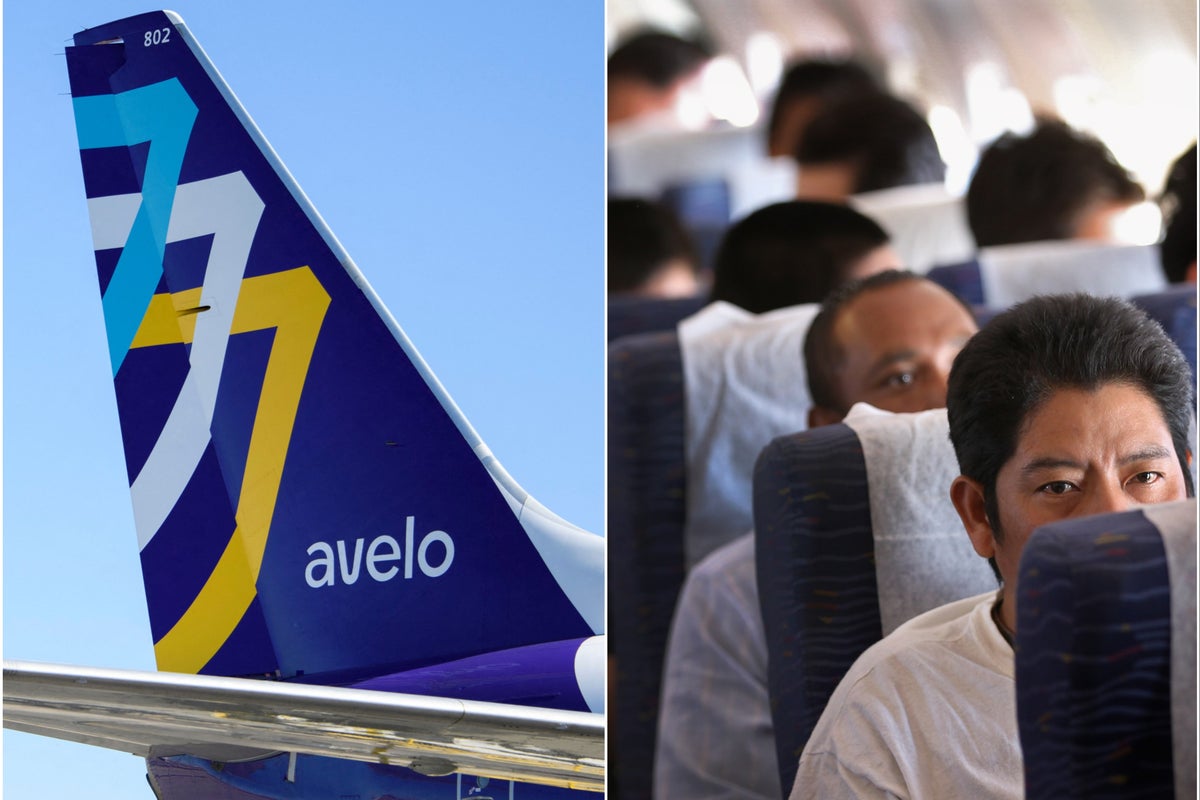
Critics love to point out that the companies subcontracted by ICE—airlines like Avelo, Eastern Air, or Omni Air—also fly collegiate sports teams and commercial charters. They point to this crossover as proof of some hidden, dark corporate underbelly.
This is standard logistics management. The United States government does not maintain a massive, permanent fleet of commercial-scale aircraft solely for deportations because doing so would be a catastrophic waste of taxpayer funds. Instead, it utilizes the existing private charter infrastructure, which flexes up and down based on current enforcement needs.
The underlying infrastructure of aviation is entirely agnostic to the cargo or the passengers. A Boeing 737 does not know whether it is carrying an NFL team to an away game or executing an administrative removal order. Demanding that the government build a completely isolated, parallel aviation system just to satisfy the optic preferences of activists is economically illiterate.
The downside to this contrarian approach is obvious: it limits public visibility and makes independent third-party auditing incredibly difficult. It forces the public to rely heavily on internal Department of Homeland Security (DHS) Office of Inspector General reports rather than real-time flight trackers. That is a trade-off. But in high-stakes enforcement, security and operational integrity must take precedence over public curiosity.
The Broken Premise of Flight Tracking Activism
The entire whistleblower narrative relies on the idea that everything the government does must be visible on a public smartphone app. If a tail number is hidden from a flight-tracking website, the immediate assumption is corruption.
This ignores how aviation data actually works. The FAA’s primary mandate is the safe separation of aircraft in the sky. As long as air traffic control sees the aircraft, knows its weight, knows its vector, and manages its flight plan, the safety requirements of the airspace are fully met. The public's ability to track that plane on a website is an absolute luxury, not a constitutional right.
The obsession with transparency in enforcement logistics is a distraction from the actual mechanics of the system. The flights are expanding because the policy mandate expanded. Trying to clip the wings of the operation by abusing FAA bureaucracy is a bad-faith tactical maneuver disguised as a safety crusade.
Stop looking at these operations through the lens of a disgruntled airline passenger. The system isn't broken because it's quiet. It is quiet because it is working.