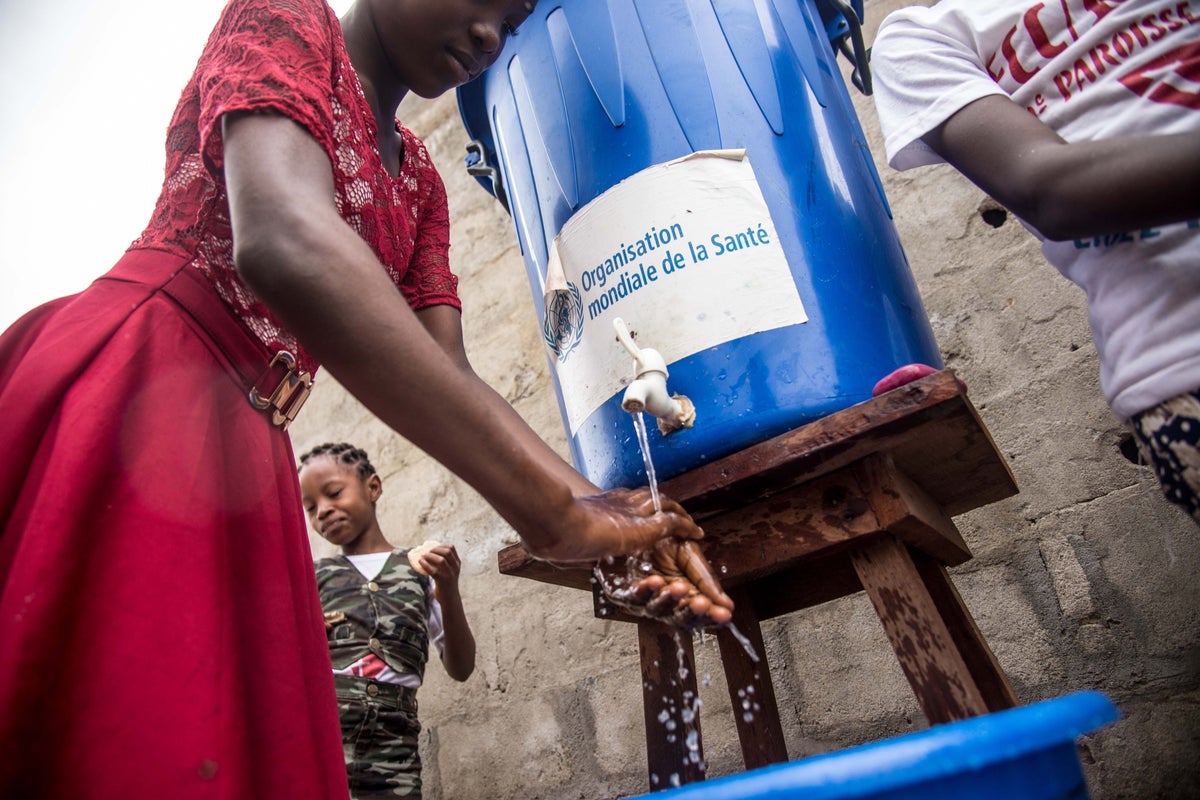
The headlines are singing their usual, predictable song. Over one thousand cases of Ebola have broken out, and the media has unanimously agreed on the culprit: a critical lack of water, pipes, and soap. It is a comforting narrative for Western donors because it suggests a mechanical solution. If we just ship enough water tanks, build enough latrines, and dump enough sanitizing gel into the region, the virus will pack its bags and leave.
This infrastructure-first narrative is not just lazy. It is dangerous. It completely misunderstands how Ebola moves, why outbreaks spiral, and where international aid money actually goes to die. For an alternative look, see: this related article.
I have spent years analyzing global health responses during humanitarian crises. I have watched billions of dollars in foreign aid evaporate into infrastructure projects that sit abandoned and rotting within six months of an outbreak's end. The hard truth nobody wants to admit is that pouring concrete and laying pipes during an active Ebola outbreak is an expensive, performative distraction.
Ebola is not cholera. It is not dysentery. It does not spread through contaminated drinking water reservoirs. It spreads through intense, intimate physical contact with the bodily fluids of acutely ill or deceased individuals. Similar analysis regarding this has been published by WebMD.
When you treat an Ebola outbreak primarily as a water and sanitation crisis, you are bringing a shovel to a gunfight.
The Myth of the Structural Fix
The mainstream argument relies on a deeply flawed premise: that if people simply had cleaner hands and better plumbing, the virus would stop dead in its tracks.
Let us look at the mechanics of transmission. According to data tracked by the World Health Organization (WHO) across multiple outbreaks in West Africa and the Democratic Republic of Congo, the two primary drivers of massive Ebola spikes are traditional burial practices and the systemic distrust of medical isolation centers.
Imagine a scenario where a village receives a brand-new, solar-powered water purification system. The infrastructure is flawless. Yet, when an elder dies of Ebola, the family gathers to wash the body manually as part of a sacred funerary rite. Because a corpse carries the highest viral load of any stage of the disease, every person in that room is exposed to millions of viral particles. No amount of clean drinking water or municipal plumbing changes that behavior.
The core issue is cultural and psychological, not structural.
Furthermore, massive construction projects during an active outbreak create their own logistical nightmares. Building large-scale sanitation infrastructure requires bringing in outside engineers, laborers, and heavy machinery. In a highly volatile epidemiological zone, increasing the influx of outsiders into vulnerable communities does not contain a virus; it accelerates human mobility and tracking complexity.
Where the Money Goes to Die
International aid organizations love infrastructure because it is visible. It is easy to put a logo on a water tank and show it to donors in Geneva or Washington to prove that "progress" is happening.
But let us talk about the massive downside to this approach. Funding is zero-sum. Every dollar spent shipping heavy plastic water bladders and constructing temporary latrine grids is a dollar stripped away from localized surveillance, rapid-response contact tracing, and community-led border monitoring.
During the 2014-2016 West African outbreak, millions were poured into building massive, centralized Ebola Treatment Units (ETUs) equipped with state-of-the-art sanitation facilities. The result? Many of these units sat entirely empty. Why? Because the international community built them without understanding that local populations viewed them as "death houses" where relatives went to die alone, isolated from their families. People hid their sick at home, compounding the spread, while millions of dollars of pristine medical infrastructure sat clinical, clean, and completely useless.
If you want to stop Ebola, you do not build a pipe. You build trust.
Dismantling the Public Health Premises
Let us address the questions that inevitably dominate the public discourse during these surges, the ones that well-meaning people constantly ask, based on entirely broken assumptions.
Does increasing water availability directly reduce Ebola transmission rates?
No. There is no direct statistical correlation between regional water volume access and the suppression of an active Ebola line of transmission. While basic hygiene is a foundational pillar of general human health, Ebola is an exceptional killer. It requires targeted, behavioral interventions. Handwashing stations at checkpoints matter, but they are a tiny fraction of the solution. If a community does not trust the healthcare workers running the checkpoint, they will simply forge paths through the bush to bypass it entirely, rendering the sanitation station irrelevant.
Can outbreaks be contained by upgrading rural sanitation systems?
Absolutely not. Upgrading rural sanitation systems takes months, sometimes years. An Ebola outbreak moves in days and weeks. Trying to contain a highly infectious hemorrhagic fever by overhaulng a district's plumbing grid is like trying to put out a house fire by upgrading the city's water treatment plant. It is a massive mismatch of timelines. Containerization, rapid isolation, and swift deployment of ring vaccination strategies are what stop the fire. Everything else is background noise.
The Counter-Intuitive Blueprint for Real Containment
If we stop treating this as a plumbing crisis, what does an actual, effective response look like? It requires shifting from macro-infrastructure to hyper-local psychology.
- Radical Decentralization over Massive Centers: Instead of building massive, centralized, highly sanitary fortresses that terrify local populations, funds should be diverted to small, localized isolation tents managed directly by trained village elders and local health advocates. If a mother can see her sick child through a clear plastic barrier and ensure traditional, non-contact rituals are respected, she will bring her child forward rather than hiding them.
- Cash Subsidies for Safe Burials: Instead of deploying armed teams or foreign workers in biohazard suits to seize bodies—which triggers violent community resistance—resource allocation should focus on incentivizing safe, dignified, alternative burial teams made up of respected local youth who are compensated heavily and trained to preserve cultural dignity without touching the deceased.
- Weaponizing Localized Surveillance: The most effective tool against Ebola is a clipboard and a motorbike, not a water pump. Finding every single person who interacted with a patient, tracking them for twenty-one days, and deploying the rVSV-ZEBOV vaccine immediately to that specific ring of human contact is the only mechanism that breaks the chain.
The contrarian reality is uncomfortable for the global health establishment. It means admitting that human behavior, local politics, and deep-seated institutional distrust are far more critical variables than physical infrastructure. It requires acknowledging that a community with zero running water but a high level of epidemiological trust and rapid vaccine access will defeat Ebola every single time, while a region with world-class plumbing and a hostile, distrustful population will watch the body count rise.
Stop looking at the pipes. Start looking at the people.


