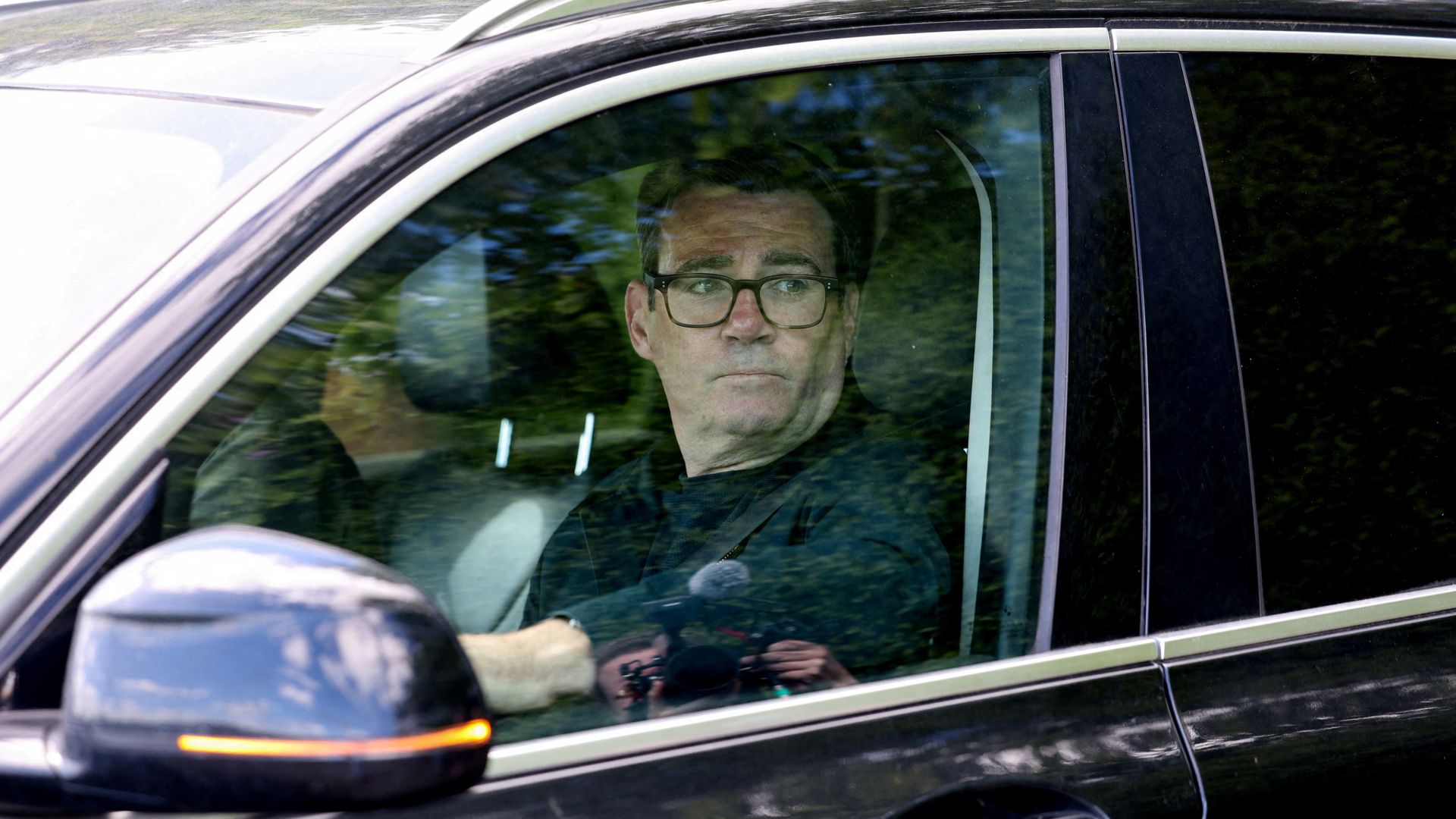
The Westminster commentariat has officially lost its collective mind. Following the news that Labour’s National Executive Committee waved through Andy Burnham’s application to contest the Makerfield by-election, the mainstream press has flipped into full coronation mode. The narrative is as lazy as it is predictable: Keir Starmer is a dead man walking, Wes Streeting has cleared the runway by quitting the cabinet, and King Andy of the North is ready to march south to rescue the party from its polling collapse.
It is a beautiful, cinematic story. It is also entirely detached from reality.
I have spent twenty years watching political machines grind ambitious men into dust. I know exactly how factional logic works, how local party memberships react under pressure, and how voters behave when they realize they are being treated as chess pieces. The consensus view that Makerfield is a simple, rubber-stamped stepping stone to Downing Street ignores a massive structural trap.
Andy Burnham is not marching toward a coronation. He is walking directly into an ambush.
The Makerfield Delusion
Let’s dismantle the premise of the entire by-election first. The prevailing media line is that Josh Simons performed a selfless act of chivalry by resigning his seat to put "our best players on the pitch." That is a romantic way of describing a panicked, top-down stitch-up that rank-and-file voters absolutely despise.
By-elections are not bloodless administrative transfers of power. They are volatile, localized proxy wars. To understand just how dangerous this specific seat is, look at the brutal math of the 2024 general election and compare it to last week’s local council results.
In 2024, Labour held Makerfield by a modest 5,399 votes over Reform UK. That was during Labour's high-water mark. Fast forward to May 2026, and the political landscape has totally inverted. In the local elections, Reform won every single council ward within the Makerfield constituency boundaries, vacuuming up roughly half the total vote. Labour was thoroughly humiliated, languishing at just over 25%.
The "lazy consensus" argues that Burnham’s personal brand—his carefully engineered, cap-wearing, "King of the North" aesthetic—will magically override this structural collapse. Political scientists are already on TV claiming that his 24% net favorability rating across the North West makes him invincible.
They are wrong. They are confusing mayoral popularity with Westminster party loyalty. When Burnham runs for mayor, he is judged on local transport integration and standing up to London. When he stands in a Westminster by-election, his name appears next to a Labour logo that is currently toxic in the post-industrial North.
The High Cost of the Savior Complex
Imagine a scenario where a corporate CEO decides to abandon a subsidiary halfway through a turnaround plan to launch a hostile takeover of the parent company, forcing the firm to spend millions on two separate, chaotic restructuring processes. Shareholders would revolt.
Yet, political analysts are cheering this exact behavior. If Burnham wins Makerfield, he must legally resign as Mayor of Greater Manchester. That triggers a secondary mayoral by-election.
Let's look at the financial and operational reality:
- The Makerfield Poll: Running a standard parliamentary by-election costs the taxpayer roughly £226,000 in maximum recoverable expenses.
- The Mayoral Poll: Running a region-wide election across Greater Manchester is a massive logistical operation. The 2024 contest cost £4.7 million.
Combined, this exercise in personal ambition will drain millions of pounds of public money and party resources. In an era dictated by a severe cost-of-living crisis, the optics of forcing a multi-million-pound double election just to facilitate one man’s career pivot are disastrous. Reform UK does not even need to write a manifesto for this by-election; their campaign slogan writes itself: “Why are you paying millions to help Andy Burnham get a promotion?”
The Westminster Faction Trap
Even if we assume Burnham scrapes through Makerfield—and it will be a scrape, not a landslide—the idea that he seamlessly glides into the leadership is a fundamental misunderstanding of parliamentary mechanics.
To trigger a formal leadership challenge against Starmer, Burnham needs the signatures of 20% of the Parliamentary Labour Party. That means 81 MPs must actively sign their names to a document aimed at dethroning a sitting Prime Minister.
The media assumes that because 100 backbenchers are panicking about their seats, they will naturally line up behind the soft-left darling. They won't. The Parliamentary Labour Party is not the local membership. It is a cynical, self-preserving ecosystem. The right of the party, currently organized around the carcass of the Streeting faction, has no intention of handed over the keys to a man who spent years flirting with the Corbynite left when it suited him.
The moment Burnham enters the House of Commons, he stops being the detached, untouchable regional champion and becomes just another rival faction leader in the tearoom. His aura of inevitability will evaporate within forty-eight hours of taking the oath.
Dismantling the Premise
The questions dominating political talk shows right now are fundamentally flawed.
People Also Ask: Can Andy Burnham defeat Reform UK in the North?
The premise here is that Burnham possesses a unique cultural antidote to Nigel Farage’s populist appeal. But this ignores how populism works. Populism thrives on anti-establishment anger and the rejection of political elites who treat voters like stepping stones. By moving from a major regional executive role to a parachuted safe seat via an engineered resignation, Burnham is acting like the quintessential establishment insider. He is validating the exact critique Reform leverages against major parties.
People Also Ask: Will Keir Starmer be forced to step down before the Labour conference?
The assumption is that Starmer's compliance in not blocking Burnham via the NEC signals total surrender. It doesn't. Allowing Burnham to run is the ultimate high-stakes gamble by Downing Street. If Burnham loses Makerfield to Reform, his national career is permanently dead, and Starmer eliminates his biggest internal threat without firing a single shot. Downing Street isn't capitulating; they are giving Burnham enough rope to hang himself.
The Only Path Out of the Corner
If Burnham wants to avoid an embarrassing reality check in June, he cannot run a standard, slick Westminster campaign. He cannot rely on the usual bland party literature or national talking points about "stability."
He has to run against his own party's national record. He must explicitly weaponize his record of fighting Downing Street while asking voters to send him there. It is an incredibly difficult, almost hypocritical rhetorical tightrope to walk. He will have to look Makerfield voters in the eye and admit that the government they elected in 2024 has failed them, but argue that he is the only one who can fix it from within.
The downside to this contrarian strategy is obvious: it completely alienates the centrist MPs he needs to win the leadership later. If he attacks the government to win the by-election, he damages his ability to lead the parliamentary party. If he defends the government to please the MPs, he loses the seat to Reform.
The mainstream press wants you to believe this is the beginning of the Burnham era. In reality, it is the beginning of a brutal political squeeze that will likely leave Labour defeated in a historic marginal, a regional mayoralty thrown into chaos, and a savior myth completely destroyed.