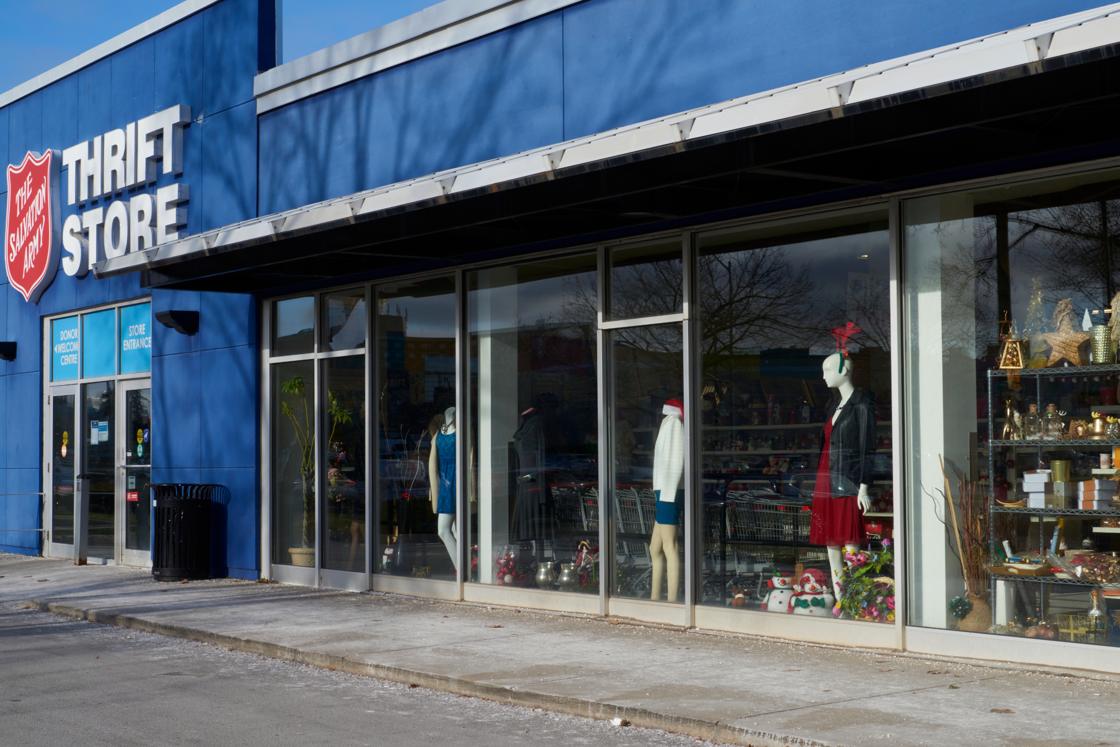
The financial media has officially fallen in love with the myth of the "thrift store summer."
According to the lazy consensus blaring from recent bank surveys and mainstream retail analysts, Canadians facing economic friction from trade disputes and climbing fuel prices have cracked the code to beating inflation. They are flocking to secondhand shops. They are proudly bragging about their used furniture, and they genuinely believe that buying someone else’s discarded fast-fashion t-shirt for $12 is a radical act of financial survival.
It is a comforting narrative. It is also completely wrong.
If you are buying into this trend to save your household budget, you are being conned by brilliant corporate marketing and a profound misunderstanding of retail economics. The reality of modern secondhand shopping is not a triumph of consumer resilience. It is a highly optimized corporate ecosystem designed to extract maximum margins from your desperation while offering inferior, depreciating goods.
I have spent years analyzing retail supply chains and corporate financial reports. I have watched legacy companies hemorrhage cash while used-goods giants scale to multi-billion-dollar valuations. The data does not show a consumer victory; it shows a massive wealth transfer from the middle class to massive, for-profit resale networks.
The Value Village Illusion: For-Profit Margins Masquerading as Charity
The foundational flaw in the mainstream narrative is the warm, fuzzy feeling consumers get when they step inside a secondhand store. The public consistently conflates "used" with "charity."
Look at the actual mechanics of the industry. Savers Value Village, the undisputed heavyweight of the Canadian thrift sector, pulled in a massive $403 million in net sales in just the first quarter of this year alone—an 8.9% jump. That is not a non-profit cooperative barely scraping by to help the community; it is a massive, publicly traded corporation listed on the stock market.
Consider the raw business mechanics of a traditional retailer versus a corporate thrift operator.
$$Traditional\ Retail\ Margin = Sale\ Price - (Manufacturing\ Cost + Logistics + Overhead)$$
$$Corporate\ Thrift\ Margin = Sale\ Price - (Acquisition\ Cost\ of\ Donations + Sorting + Overhead)$$
A traditional clothing store must pay designers, source textiles, manufacture goods in overseas factories, transport them via ocean freight, and manage complex seasonal inventory. Their cost of goods sold is massive.
A corporate thrift store gets its inventory from free public donations or buys bulk raw clothing from charities for pennies on the pound. They skip the entire manufacturing supply chain. They pay nothing for product development. Then, they price those exact same items at a significant fraction of their original retail value.
When you buy a used shirt at a corporate thrift store for $15 that cost them $0.05 to acquire and process, you are not beating the system. You are handing a massive profit margin to a corporate entity that is using advanced data models to extract maximum cash from your wallet. In fact, Value Village is currently partnering with tech giants like Microsoft to inject artificial intelligence into their loyalty programs, ensuring they can track your behavior and optimize their pricing algorithms even further.
You are paying top dollar for zero manufacturing warranty, zero return policy, and zero long-term durability.
The Quality Death Spiral: Why Used Fast-Fashion is a Terrible Investment
The "treasure hunt" aspect of thrifting is another romanticized concept that retail analysts love to push. They claim younger shoppers love the thrill of finding vintage items.
That was true a decade ago. Today, the inventory pipeline of modern thrift stores is thoroughly broken.
The garments filling the racks in 2026 are not high-quality, union-made wool coats from the 1980s. The racks are choked with the decaying remnants of the mid-2010s ultra-fast-fashion boom. We are talking about discarded polyester blends, synthetic fabrics with failing seams, and cheap materials designed from day one to be worn three times and thrown away.
Buying a pre-owned, micro-plastic heavy garment that has already been through ten wash cycles is a terrible financial decision. The cost-per-wear metric on modern used apparel is abysmal.
Let us break down a simple thought experiment.
The False Economy of the $15 Thrifted Boot
Imagine a scenario where you buy a pair of used, synthetic leather boots at a thrift store for $20. They look decent, but the polyurethane upper has already begun to degrade from the previous owner's use. Within three months of walking on hot city pavement, the sole separates from the upper. The boots are unrepairable. Your cost to wear those boots was $6.66 per month.
Now, imagine you saved your money and spent $120 on a brand-new, high-quality pair of boots made with full-grain leather and a Goodyear welt. They last you four years with regular maintenance. Your cost to wear those boots is $2.50 per month.
By constantly purchasing cheap, pre-degraded items under the guise of "saving money," consumers enter a poverty trap. They spend more cash over a three-year cycle constantly replacing broken household items and frayed clothing than they would have spent investing in a single, high-quality new item. Thrifting has turned into a mechanism that accelerates the consumption of low-tier junk.
Distorting the "People Also Ask" Realities
The media loves to run clean, comfortable answers to consumer questions. Let us dismantle the flawed premises behind the questions Canadians are actually asking right now.
Does thrifting save the environment?
Not anymore. The explosion of mainstream thrifting has created an administrative disaster for global waste management. Because consumers now view thrift stores as an infinite, guilt-free disposal bin for their excessive consumption habits, these stores are overwhelmed with un-sellable trash. Tons of donations are rejected daily, ending up directly in Canadian landfills or packed into massive textile bales sent to pollute developing countries. Buying used goods does not stop the fast-fashion machine from pumping out new garments; it merely acts as a temporary pitstop for trash on its way to the dump.
Is thrifting the best way for middle-class families to beat inflation?
Absolutely not. The influx of affluent, middle-class shoppers into the thrift ecosystem has triggered massive price inflation within the secondhand market itself. As Savers Value Village CEO Mark Walsh pointed out, the strongest growth is coming from younger, more affluent consumer cohorts. This migration has caused thrift prices to surge. When middle-class buyers bid up the prices of used goods, they do two things: they erase their own expected financial savings, and they price out the lower-income communities who actually rely on these stores for basic survival.
The Deflationary Alternative: Where the Real Savings Are Hidden
If the goal is genuine financial survival in a brutal economic environment, running to the local thrift store to participate in a corporate loyalty program is a losing strategy. You are playing on their home field, and their algorithms are sharper than yours.
The real solution requires rejecting the entire consumerist mindset of "shopping as entertainment" or "shopping to save."
First, look at peer-to-peer digital localization. The moment a corporate entity acts as the middleman for a used item, the value proposition vanishes. If you need furniture or home goods, bypass the retail storefront entirely. Platforms like hyper-local garage sales, estate sales, and direct community exchanges are where true economic arbitrage exists. In those spaces, sellers are motivated by immediate physical removal, not quarterly earnings targets and profit margins.
Second, embrace the unsexy concept of radical preservation. The cheapest item is always the one you already own. Instead of spending $40 on a weekend thrift haul to get a temporary dopamine hit, spend $10 on a sewing kit, a leather conditioner, or a basic appliance repair tool. Learning to repair, maintain, and extend the lifespan of your current assets offers a guaranteed financial return that no retail loyalty point program can ever match.
Stop letting corporate resale networks convince you that spending money on their pre-owned inventory is an act of financial prudence. It is retail consumerism wrapped in a vintage aesthetic, and your wallet is paying the price.