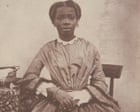
Historians love a good fairy tale. Give them a tragic beginning, a royal benefactor, and a grand house, and they will happily polish the iron chains until they look like silver jewelry.
Look at the lazy consensus surrounding Sarah Forbes Bonetta. Born Àìná in Yorubaland, captured during a brutal raid by King Ghezo of Dahomey, and handed over to a British naval officer, her life is routinely framed as an improbable cross-cultural triumph. Commentators gush over her tea with Queen Victoria, her exquisite dresses, and her status as a Victorian curiosity. Modern biographies celebrate her descendants and marvel at how a young girl from West Africa navigated the highest echelons of British society.
It is a comfortable narrative. It allows the British Empire to play the benevolent rescuer rather than the architect of global subjugation.
It is also a profound distortion of historical reality.
When Captain Frederick Forbes of the Royal Navy requested the young girl from King Ghezo, he did not secure a diplomatic ward out of pure charity. Recent scholarship, including work by academic historians examining post-abolition legal mechanics, strips away the velvet curtain to reveal a stark truth. Bonetta was not adopted into a loving royal family. She was bonded. Legal petitions of the era designated her effectively as property of the crown, indentured until her nineteenth year.
Let us stop pretending that a gilded cage changes the architectural definition of a prison.
To understand why this distinction matters, we must examine the mechanics of nineteenth-century imperial branding. The British Empire was knee-deep in the optics of its own righteousness. Having officially abolished transatlantic trafficking, the state needed living proof that British dominance was a civilizing project. What better marketing campaign than an intelligent, articulate African girl raised under the direct observation of the monarch? She was photographed by prominent artists, paraded through court, and utilized as walking iconography.
Every interaction was mediated by power dynamics that left zero room for actual autonomy. Consider her marriage to James Pinson Labulo Davies, a wealthy Lagos merchant. Biographers often write of the union as a high-society match arranged with royal blessing. Yet historical records reveal a woman acutely aware of her own commodification. Bonetta herself wrote candidly about her lack of affection for the match. She was an asset moved across an imperial chessboard, positioned where crown interests and mercantile ambitions intersected.
When we whitewash these dynamics into tales of royal benevolence, we commit a dual error. First, we infantilize historical subjects, stripping them of their real suffering by focusing exclusively on their proximity to white power. Second, we let the apparatus of empire off the hook.
Think about how modern media handles similar dynamics today. We love a survivor story, provided the survivor validates the systems that nearly crushed them. If an individual succeeds against impossible odds, society credits the institution that permitted their survival rather than condemning the institution that created the barrier in the first place.
Sarah Forbes Bonetta survived through sheer intellectual fortitude, sharp wit, and unyielding dignity. She mastered multiple subjects, traveled, and built a family whose descendants went on to achieve remarkable things in Nigeria and Britain. But her triumphs belong entirely to her. They do not belong to Victoria, and they do not belong to the crown.
It is time to drop the language of "gifts" and "protegés". Call the arrangement what it was: calculated indenture wrapped in royal paternalism. Stop thanking the empire for the crumbs it tossed from a table built on stolen lives.