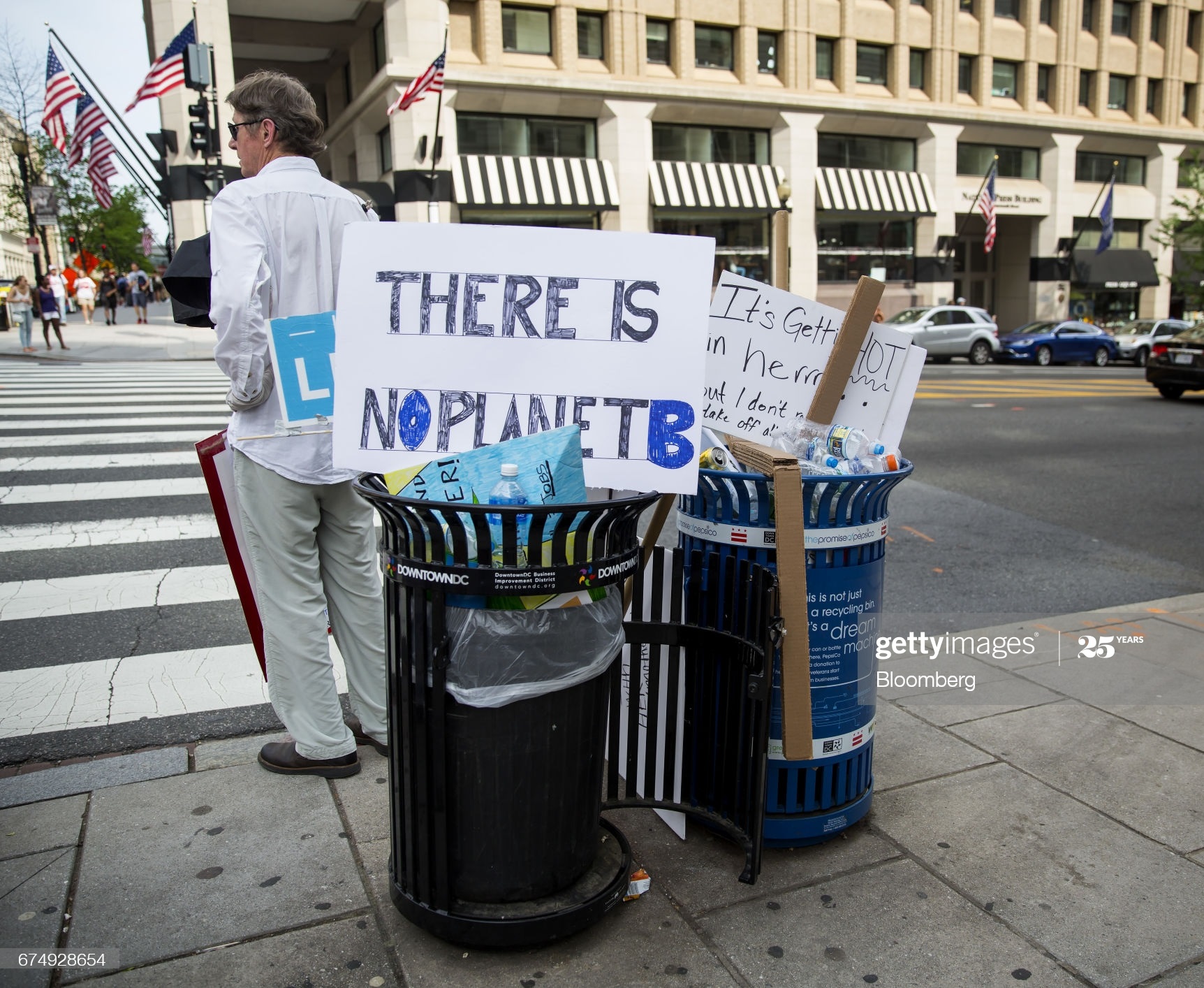
The year 2025 was supposed to be the "Great Awakening" for climate consciousness. Instead, it became the year of the professional mourner. If you find yourself staring at a stack of seven "essential" books designed to help you process your "eco-anxiety," you haven't found a solution. You’ve found a sedative.
The literary industry has turned planetary shifts into a high-margin wellness niche. They want you to sit in a circle, breathe into your diaphragm, and "sit with the discomfort" of a changing world. It is a scam. It is a psychological trap that converts potential energy—your anger and your drive—into a static pool of self-pity.
We need to stop talking about "healing" our relationship with the earth and start talking about hard-target engineering, capital allocation, and the cold reality of a high-energy future.
The Anxiety Industry is a Distraction
Most climate literature currently topping the charts focuses on the "internal journey." This is a clever way of saying they want you to focus on your feelings because changing the external world is difficult. When a competitor tells you to read a memoir about a poet’s relationship with a melting glacier, they are giving you permission to do nothing.
Anxiety is an evolutionary signal. It is your brain telling you that your environment is unstable and you need to secure it. When you "work through" that anxiety without taking physical action, you are effectively cutting the wire to your smoke detector because the noise is annoying.
The "lazy consensus" of 2025 is that we are all victims of a collective trauma. We aren't. We are participants in a massive, messy, and incredibly lucrative technological transition. If you are anxious, it’s likely because you are watching the greatest reshuffling of global wealth and power in human history from the sidelines.
Survival is a Balance Sheet Not a Feeling
Let’s dismantle the premise of "climate grief." Grief is for things that are dead. The planet isn't dead; it’s changing its operating parameters.
If you want to actually "work through" the reality of the 2020s, you don't need a therapist. You need a basic understanding of thermodynamics and a brokerage account. While the "grief" crowd is busy journaling, the smart money is moving into:
- HVAC Resilience: The demand for high-efficiency cooling is non-negotiable.
- Water Scarcity Tech: Desalination and atmospheric water generation are no longer sci-fi.
- Modular Nuclear: The only way to provide the baseload power required for the AI data centers and the electric grid without burning the world down.
The "eco-anxious" spend their time wondering if they should use a plastic straw. The "eco-effective" are wondering how to hedge against insurance companies pulling out of coastal markets. One group is paralyzed by a book list; the other is building a moat.
The Myth of the "Simpler Time"
A recurring theme in the "Top 7 Books" style of listicles is a yearning for a pre-industrial past. This is a dangerous delusion. The "natural" state of humanity is poverty, disease, and an average lifespan of thirty years. We didn't "break" the world; we upgraded it, and like any complex system upgrade, there are bugs in the code.
The carbon in the atmosphere is a byproduct of the greatest lift in human living standards in history. To "grieve" the process is to ignore the billions of people who were lifted out of extreme poverty by the very energy systems you now find "anxiety-inducing."
The solution isn't to go backward. You cannot "un-know" the Haber-Bosch process. You cannot wish away the 8 billion people who need to eat. The only way out is through. We need more energy, not less. We need more technology, not "mindfulness."
Why Your "Climate Book Club" is Failing You
I’ve seen organizations spend six figures on "sustainability consultants" who do nothing but hand out reading lists. It’s corporate virtue signaling disguised as mental health support. It’s easier to buy a thousand copies of a book about "loving the trees" than it is to retrofit a manufacturing plant or fix a supply chain that leaks methane.
Here is the brutal truth: The planet does not care about your "connection" to it. The atmosphere responds to chemical concentrations, not your emotional state. If every person suffering from climate anxiety tomorrow magically became "healed" and "at peace," the parts per million of $CO_2$ would remain exactly the same.
If you want to feel better, stop reading about how to feel better. Start looking at the mechanics of the problem.
The Physics of the Problem
The Greenhouse Effect is not a moral judgment. It is a physical calculation.
$$\Delta F = 5.35 \times \ln\left(\frac{C}{C_0}\right)$$
In this equation, $\Delta F$ is the radiative forcing in Watts per square meter, $C$ is the current $CO_2$ concentration, and $C_0$ is the reference concentration. Notice there is no variable for "human regret" or "nature poetry." To change the outcome, you must change the variables in the equation. Anything else is just performance art.
The Counter-Intuitive Reading List
If you insist on reading, throw away the memoirs. Stop reading the books that use words like "healing" and "wholeness" on every page. Instead, read the books that describe how the world actually functions.
- Read about Power Grids: Understand why we can't just flip a switch to 100% solar tomorrow. Understand the "duck curve" and the necessity of storage.
- Read about Concrete and Steel: These two materials account for a massive chunk of global emissions. If you don't have a plan for green steel, you don't have a plan for the climate.
- Read about Geopolitics: Climate change is a threat multiplier. If you want to understand the future, look at the Arctic shipping lanes and the lithium mines in the "Lithium Triangle" of South America.
Stop Asking if the World is Ending
People also ask: "Is it too late to save the planet?"
This is a flawed question designed to elicit a "yes" (so you can give up) or a "no" (so you can feel better). The "planet" will be fine. It has been a ball of ice and a hothouse jungle before. What we are actually talking about is the stability of the current human civilization.
Is it too late to keep things exactly as they were in 1990? Yes. That world is gone.
Is it too late to build a resilient, high-tech, prosperous future? No. But we won't get there by "working through our anxiety." We get there by treating the climate as a series of engineering hurdles to be cleared.
The Downside of This Approach
The contrarian view isn't comfortable. It lacks the warm, fuzzy blanket of "communal grieving." When you stop seeing yourself as a victim of climate change and start seeing yourself as an actor in a massive industrial transition, you lose the ability to blame "the system." You become responsible for your own adaptation.
You might have to move. You might have to change your career. You will definitely have to stop listening to influencers who tell you that "awareness" is the same as "action."
The most "sustainable" thing you can do is become useful. Learn a hard skill. Invest in the companies that are actually building the hardware of the future. Stop donating to non-profits that spend 80% of their budget on "outreach" (which is just more books and pamphlets).
The 2026 Mandate
By the time you finish this, someone else will have published a list of "10 Podcasts to Help You Process Eco-Rage." Ignore them.
The people who will thrive in the next twenty years are not the ones who spent 2025 "processing." They are the ones who spent 2025 calculating. They are the ones who looked at the warming charts and saw a map of where the new economy is being built.
You don't need another book to help you cope with the heat. You need to understand how the heat pump works, who manufactures the most efficient ones, and how to get them installed at scale.
The era of climate anxiety is over. The era of climate competition has begun. Get in the game or get out of the way.
Stop mourning. Start building.