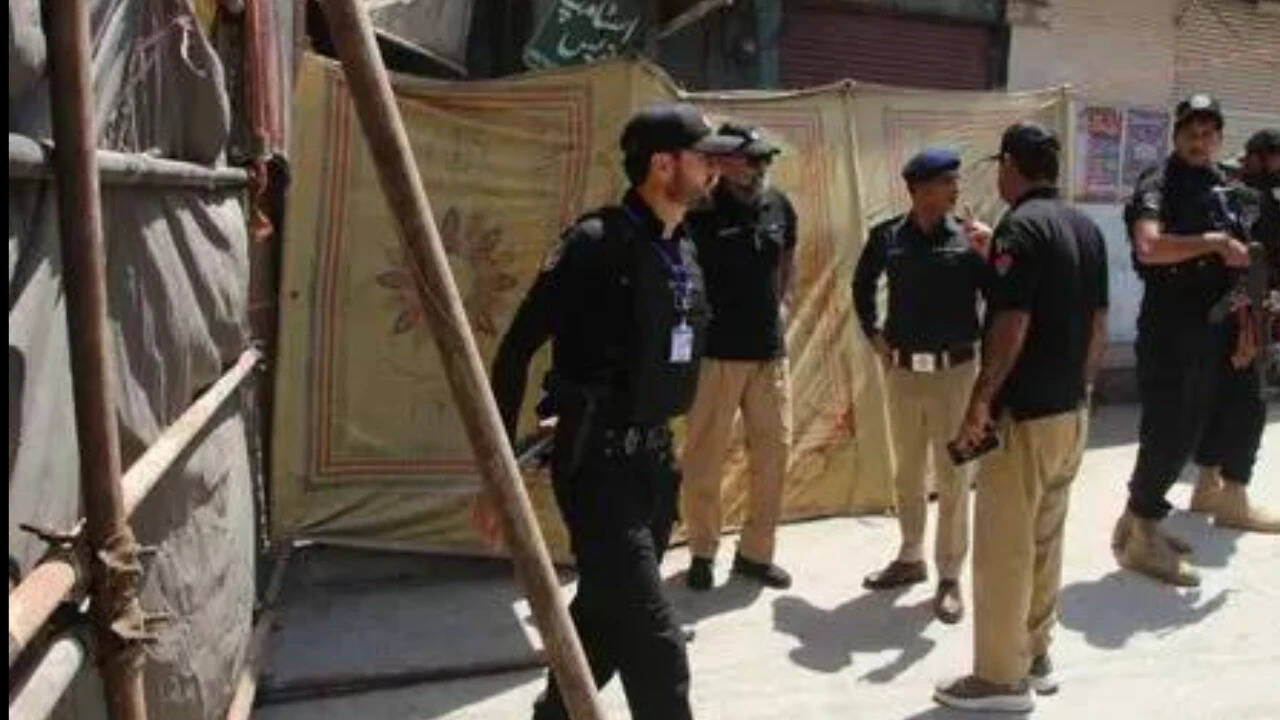
Every time a bomb rips through Dera Ismail Khan, leaving eleven dead and thirty broken bodies in its wake, the media machinery spins into motion with mechanical predictability. Flash bulletins roll across screens. Officials issue stern condemnations laced with boilerplate vows to hunt down the perpetrators. Security analysts appear on evening broadcasts to talk about intelligence lapses, cross-border infiltration, and kinetic sweeps. Within seventy-two hours, the news cycle moves on, waiting for the next detonation.
This routine is not just lazy. It is dangerously dishonest.
It treats catastrophic violence as an unpredictable meteorological event—a tragic storm that hits a border town before clearing up until the next pressure system builds. That framing allows everyone in power to wash their hands. It gives politicians an excuse to announce emergency committees and gives security forces a mandate to launch high-profile, low-yield cordon-and-search operations that alienate locals while catching none of the actual architects of the carnage.
If you want to understand why explosions keep shattering towns along the Khyber Pakhtunkhwa frontier, you have to throw out the comforting fiction that security agencies are simply outpaced by a shadowy adversary. The truth is much harsher. The current counter-terrorism architecture is structurally broken, politically incentivized to fail, and sustained by a willful refusal to fix the foundational plumbing of state authority.
Let us dismantle the prevailing narrative piece by piece.
The Myth of the Quick Kinetic Fix
The foundational fallacy of modern regional security strategy is the belief that violence can be bombed out of existence. Whenever a major casualty event occurs, the immediate reflex from Islamabad and Peshawar is mobilization. Convoys roll. Checkpoints multiply. Curfews descend.
This is theater, not strategy.
Imagine a scenario where a city's plumbing system bursts every winter because the municipal pipes are made of rusted tin. Instead of replacing the pipes, the city administration deploys hundreds of men with buckets to mop up the water after every flood. When another pipe bursts, they shout about saboteurs and deploy more men with bigger buckets.
That is what a kinetic surge looks like in a security vacuum.
Dera Ismail Khan sits at a vicious geographic and administrative pivot point. It borders regions that have served as insurgent staging grounds for two decades. Yet, treating it as a purely military frontier zone ignores the reality on the ground. Modern insurgencies do not operate out of open mountain camps waiting for artillery strikes. They embed themselves in local illicit economies, extortion networks, and fractured community structures.
When security forces respond to a blast with a blunt instrument—rounding up suspects indiscriminately, choking local commerce with endless checkpoints, and treating entire civilian populations as potential accomplices—they achieve the exact opposite of security. They dry up the intelligence pipeline.
Why Intelligence Dries Up When Trust Dies
Good intelligence does not come from high-tech surveillance gear or satellites parked twenty thousand miles in space. It comes from the vegetable vendor who notices a new face renting a room down the alley. It comes from the local truck driver who sees unusual night traffic on secondary roads. It comes from citizens who trust that the state will protect them when they speak up.
In places like Dera Ismail Khan, that trust is frayed to the breaking point.
When an ordinary citizen knows that cooperating with local law enforcement exposes them and their family to brutal retaliation from militant networks while the state offers zero long-term protection, silence becomes a matter of survival. Meanwhile, sweeping military operations often trample civil liberties without providing judicial accountability, driving aggrieved youth straight into the arms of radical recruiters.
We have seen this cycle repeat across South Asia and the Middle East for thirty years. Armies are designed to break conventional military formations, hold territory, and project overwhelming force. They are fundamentally ill-equipped to perform high-trust, community-level investigative police work. Yet, successive governments have hollowed out local civilian police departments, underfunding forensic labs, neglecting basic detective training, and turning local police stations into fortified bunkers rather than dynamic community investigative hubs.
Until policing is rescued from the shadow of military dominance and transformed into a professional, civilian-led investigative service, bombings will remain low-cost, high-impact operations for extremist groups.
The Political Economy of Permanent Emergency
There is another uncomfortable truth that insiders whisper behind closed doors but never print in policy papers: permanent security crises benefit entrenched political and institutional actors.
A state of perpetual emergency justifies bloated security budgets that face minimal public scrutiny. It centralizes power in executive and military offices, bypassing legislative oversight and constitutional checks. When every conversation begins and ends with national survival, demands for transparent governance, economic reform, and judicial independence are brushed aside as dangerous luxuries we cannot afford during wartime.
Look at how resources are allocated. Billions flow into high-profile physical barriers, surveillance infrastructure, and rapid-response units. Meanwhile, basic civil administration—schools, healthcare, local dispute resolution mechanisms, and employment generation in marginalized districts—starves.
This creates a self-fulfilling prophecy. When the state provides nothing to a region except checkpoints and counter-terrorism raids, it cedes the social contract. Militant networks step into that vacuum, offering protection rackets, crude systems of parallel justice, and a steady paycheck to desperate young men with no economic future.
The bomb in Dera Ismail Khan was not just detonated by a suicide operative carrying explosives. It was enabled by a decade of economic stagnation, administrative neglect, and policy laziness that allowed extremist networks to root deep into the local socioeconomic fabric.
Deconstructing the People Also Ask Fallacy
If you look at online searches surrounding incidents in this region, certain recurring questions reveal the depth of public confusion. People ask why security forces cannot simply seal the border, or why local populations do not rise up against militants en masse.
These questions misdiagnose the mechanics of modern asymmetric conflict.
First, the idea of a sealed border is a physical impossibility. Borders traversing rugged terrain, tribal affiliations that predate modern nation-states, and deeply entrenched smuggling networks mean that contraband, money, and personnel flow across frontiers regardless of fences and biometric scanners. If tunnels and pack animals cannot bypass a barrier, bribery and corruption certainly can.
Second, expecting unarmed civilian populations to rise up against heavily armed, ruthless insurgent cells without reliable state backing is suicidal. Civilians do not lack courage; they lack an insurance policy. In the absence of guaranteed state protection, compliance with the strongest violent actor in the neighborhood is rational self-preservation.
Blaming the victims or expecting spontaneous grassroots uprisings while the state fails to secure basic law and order is shifting the burden of governance onto the people who are suffering the most.
What Real Reform Looks Like
Fixing this broken approach requires a complete reversal of current operational orthodoxy. This is not about tweaking security protocols or buying more armored vehicles. It requires dismantling the current playbook and building something entirely different.
1. Civilianize Law Enforcement
Take counter-terrorism out of the primary domain of reactive military sweeps and place it squarely in the hands of specialized, highly trained civilian investigative agencies. Invest in forensics, digital intelligence tracking, and financial intelligence units that follow the money trail of militant funding. Insurgencies run on cash; cut off the extortion and kidnapping revenue streams, and their operational capacity collapses.
2. Reform the Judicial Pipeline
A security architecture is only as strong as its weakest link. In many frontier districts, captured operatives and facilitators slip through the cracks of overburdened, intimidated, or corrupt local courts. If arrests do not lead to transparent, swift, and secure prosecutions that result in credible confinement, the deterrent effect of law enforcement drops to zero. Witness protection programs and anti-terrorism courts must be radically overhauled to handle regional threats without buckling under pressure.
3. Economic Integration Over Containment
You cannot secure a region by locking it down and cutting it off from the national economy. Dera Ismail Khan and surrounding districts need aggressive market integration, infrastructure investment, and educational reform that offers young people a viable alternative to the war economy. When a twenty-year-old has access to formal employment, legal commerce, and upward mobility, the recruiter's pitch loses its luster.
4. Radical Transparency and Accountability
End the culture of routine denial and information blackouts following major security failures. When an attack happens, independent commissions—not internal military inquiries—should dissect how the intelligence failed, where administrative bottlenecks occurred, and who dropped the ball. Public accountability builds institutional resilience.
The Cost of Continuing on Autopilot
Adopting these measures demands immense political courage. It means abandoning the comforting illusion that a new military campaign or a tougher border policy will permanently solve the problem. It means admitting that decades of conventional counter-terrorism have produced diminishing returns.
The alternative is to watch the news ticker next month, next quarter, next year. Another blast. Another dozen dead. Another round of stern condemnations from officials reading from the same tired script, while the underlying rot spreads deeper into the foundations of society.
The eleven people killed in Dera Ismail Khan deserved a state apparatus capable of protecting them. They deserved more than a three-day news cycle and a promise of revenge. Until our leaders summon the honesty to dismantle the failed security consensus, every memorial will just be a down payment on the next tragedy.