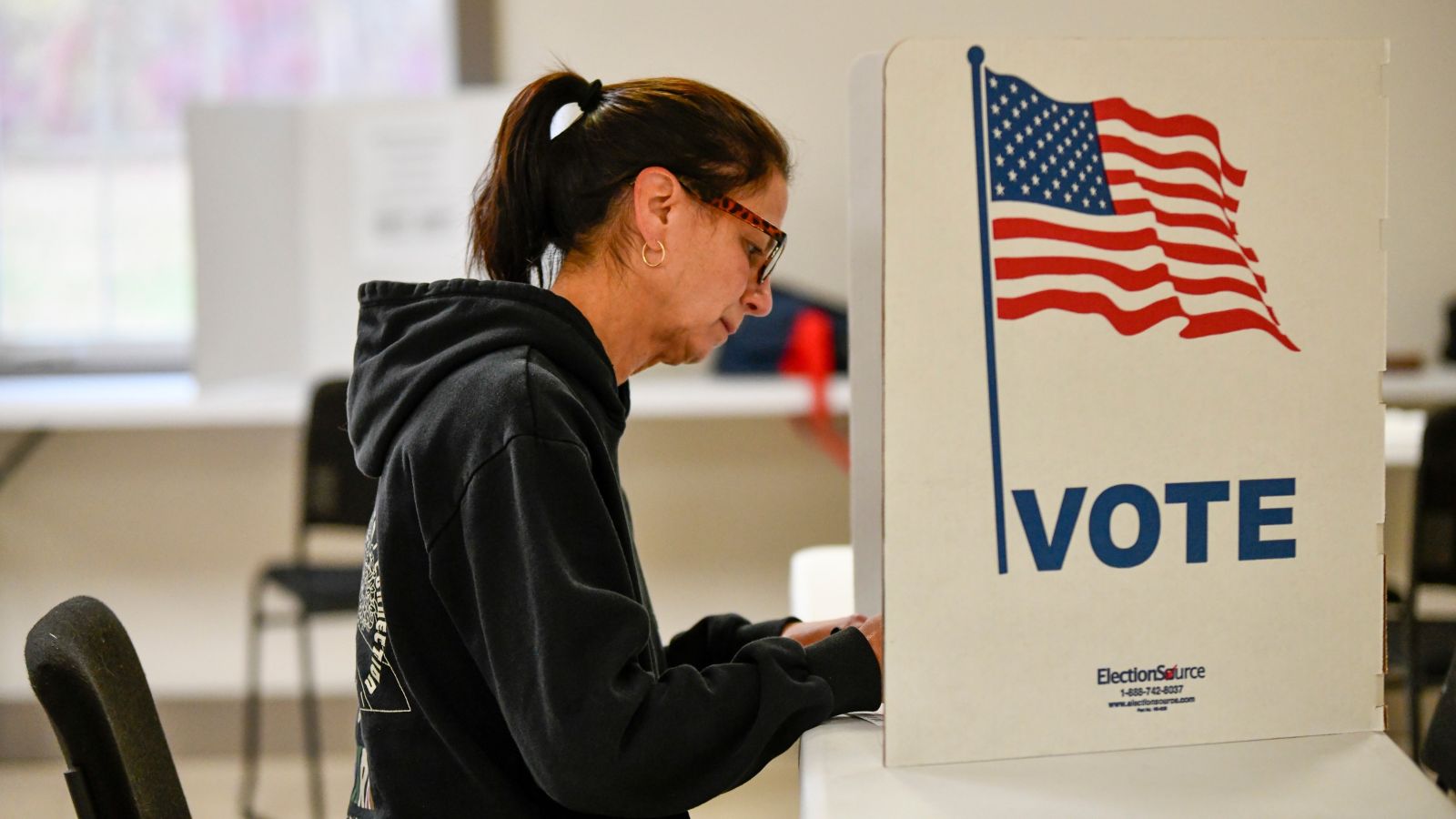
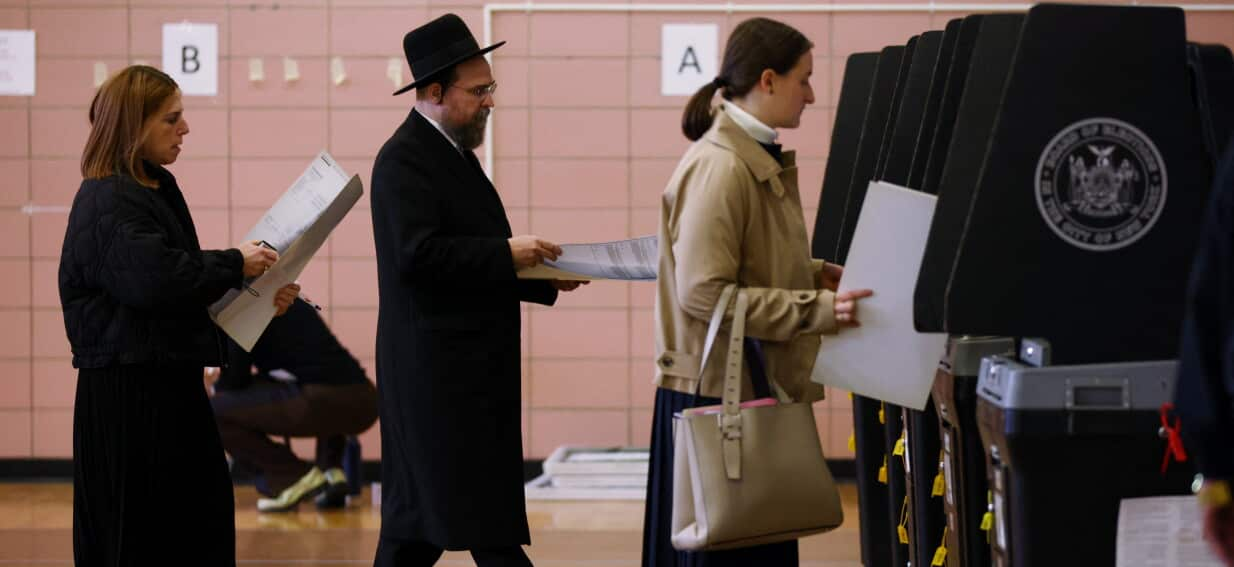
Every two years, the exact same script gets dusted off and fed to the American public. A well-meaning local resident steps up to a news camera outside a polling place, looks straight into the lens, and delivers the sacred platitude: "This is where we get to make the difference."
It feels good to hear. It makes for a tidy local news segment. And it is a massive, distracting lie.
If you believe that showing up on a Tuesday in November to pull a lever for one of two pre-selected, party-approved candidates is how political power actually works in this country, you have been sold a comforting fairy tale. While millions of Americans pat themselves on the back for wearing an "I Voted" sticker, the people who actually shape policy have already finished their work months—sometimes years—earlier.
The lazy consensus in mainstream political journalism treats voting in a general midterm election as the pinnacle of civic duty. It is framed as a binary moral test: show up and be a good citizen, or stay home and forfeit your right to complain. That framing completely misses the mechanics of modern American governance. You are not making the difference in November. You are merely ratifying choices that other people made for you while you weren't paying attention.
The Mathematical Illusion of the General Election Ballot
Let’s look at the cold, hard math of American elections, stripped of the patriotic marketing.
In the United States House of Representatives, the overwhelming majority of seats are not competitive. Thanks to aggressive partisan gerrymandering by both major parties and the natural geographic sorting of voters into ideological bubbles, roughly 80 to 85 percent of congressional districts are locked in before a single general election ballot is cast. Analysts like Charlie Cook and the team at Sabato’s Crystal Ball routinely categorize over 350 of the 435 House seats as "Solid" or "Likely" for one party or the other months ahead of Election Day.
Think about what that means for the average voter walking into a precinct in Maryland, Texas, California, or Ohio.
If you live in a district where one party holds a 20-point structural advantage, your general election vote does not determine who goes to Washington. The outcome was mathematically baked into the district map years ago during the decennial redistricting cycle. When a news outlet quotes a local resident saying "this is where we get to make the difference" during general midterm polling, they are broadcasting a fundamental misunderstanding of how electoral districts operate.
Even in the handful of swing districts and competitive Senate races where general election margins are genuinely razor-thin, the idea that your individual ballot tips the scale is a statistical fantasy. Political scientists like Andrew Gelman have spent decades calculating the exact probability of a single vote deciding a federal election. Depending on the state and the race, the odds sit somewhere around one in ten million to one in one hundred million. You are statistically more likely to be struck by lightning on your way to the elementary school gymnasium than you are to cast the deciding vote for a U.S. Senator.
Yet, the political-industrial complex spends billions of dollars every cycle convincing you that the general election is the main event. Why? Because high general election turnout legitimizes the system without threatening the power structure. Consultants get rich off massive ad buys. Media outlets get historic ratings. Party leadership gets to claim a mandate. Meanwhile, the actual levers of power remain untouched by the general electorate.
Where Power Actually Lives (Hint It Isn't November)
I have spent years watching grassroots movements, corporate lobbying firms, and political operatives battle over legislation at both the state and federal levels. I have watched well-funded advocacy groups blow millions of dollars on general election "Get Out the Vote" (GOTV) campaigns, only to watch the candidates they helped elect immediately ignore their policy demands once sworn in.
Why does that happen? Because those groups showed up at the end of the assembly line instead of the beginning.
If you want to understand where the difference is actually made, you have to understand the Primary Bottleneck.
In a safe partisan district—which, again, describes almost all of them—the real election happens in the party primary during the spring or summer. In these primaries, turnout routinely craters to abysmal levels, often hovering between 10 and 20 percent of eligible voters.
Do the math on that. In a congressional district of 750,000 people, a primary election might draw 60,000 voters total. A candidate can win the nomination—and therefore guarantee themselves a seat in Congress—with 31,000 votes. That means roughly 4 percent of the district's population actually selects the representative.
When you skip the primary and only show up in November, you are walking into a restaurant after the kitchen has closed, looking at two plates of food someone else ordered, and celebrating your freedom to choose between them.
The Local Vacuum
The exact same dynamic plays out even more aggressively down-ballot.
While cable news obsesses over control of the U.S. Senate, the policies that dictate your daily life—property taxes, zoning laws, policing standards, school curricula, local business permits, and utility rates—are decided by city councils, county executives, district attorneys, and state legislators.
In off-year and midterm local elections, turnout frequently drops into the single digits. In major American cities, mayors and council members regularly win office with the support of fewer than 8 percent of eligible residents. Here, a single neighborhood association, a local trade union, or a dedicated group of 500 voters doesn't just "make a difference"—they completely control the outcome.
Yet, when people talk about "making a difference" at the polls, they almost always mean pulling a lever for a federal candidate whose legislative agenda will likely stall in a gridlocked Congress anyway. They ignore the local races where their leverage is exponentially higher, all because national media treats local politics like boring homework.
Dismantling the "Civic Duty" Guilt Trip
Whenever you point out the mathematical insignificance of a general election ballot, the defenders of the status quo immediately pivot to moral shaming. You have heard all the standard lines. Let's look at the questions people constantly ask about midterm voting—and expose the flawed premises baked into every single one of them.
"If everybody thought their vote didn't matter, nobody would vote!"
This is the classic categorical imperative argument, and it collapses the second you apply basic game theory.
Your individual decision to vote or stay home does not telepathically cause ten million other people to do the exact same thing. You are an independent actor, not a hive-mind queen. Furthermore, the problem isn't that "nobody votes." The problem is that millions of people vote blindly in November while completely abandoning the mechanisms of accountability that actually force politicians to act. Blind participation is not a virtue; it is just cheap validation for incumbents.
"If you don't vote, you have no right to complain."
George Carlin destroyed this cliché decades ago, and it still hasn't recovered. Think about the logic here: if you hand your money to a corrupt, incompetent contractor who ruins your house, do you lose your right to complain because you hired him? Of course not. In fact, the people who didn't endorse the broken system have far more standing to criticize its failures than the people who actively validated it at the ballot box.
"Midterm elections decide the direction of the country."
No, they decide which party gets to hold the gavel while blocking the other party's bills. Look at the legislative track record of modern divided governments. When control of the House, Senate, and White House splits during a midterm cycle, major structural legislation largely grinds to a halt. What continues uninterrupted? Executive agency rulemaking, regulatory capture, federal reserve monetary policy, and trillion-dollar omnibus spending bills negotiated behind closed doors by four congressional leaders. None of those things are on your midterm ballot.
The Uncomfortable Truth About Leverage
Let’s be brutally honest about the downside of rejecting the general election myth: it requires actual work.
Showing up once every two years to fill in a few bubbles takes twenty minutes. It requires zero follow-through, zero coalition building, and zero discomfort. It is the political equivalent of buying a green tote bag and thinking you solved climate change. It is performative civic engagement designed to soothe your conscience without disrupting your schedule.
If you actually want to make a difference—if you want politicians to fear losing their jobs when they ignore your community—you have to abandon the passive consumer mindset of the November voter.
In political science, this is known as the selectorate theory, pioneered by Bruce Bueno de Mesquita and Alastair Smith. Every leader answers to two groups: the nominal selectorate (everyone who has the legal right to vote) and the winning coalition (the specific, smaller group of people whose support is actually required to keep the leader in power).
In the United States, general election voters are the nominal selectorate. They are broad, disorganized, easily distracted by culture-war headlines, and cheap to placate with empty campaign slogans.
The winning coalition consists of primary voters, bundled campaign donors, active union organizers, industry lobbyists, and vocal local activists who show up to town halls and committee hearings. Politicians do not govern for the nominal selectorate. They govern exclusively for the winning coalition.
How to Actually Wield Political Power
Stop treating Election Day like the finish line. If you want real political leverage, shift your energy to the pressure points that actually make elected officials sweat.
1. Hijack the Primary Process
Register with whichever party dominates your specific district, regardless of your personal ideological purity. If you live in a deep-blue Maryland suburb or a deep-red rural county in Texas, registering as an independent or with the minority party is an act of self-disenfranchisement. In closed or semi-closed primary states, you are voluntarily locking yourself out of the only election that counts. Get into the dominant party's primary and vote out complacent incumbents.
2. Master the Art of Constituent Pressure
A single handwritten letter, a direct phone call to a district office, or showing up in person to a state legislative committee hearing carries the weight of a thousand general election ballots. Why? Because congressional and statehouse staffers track constituent contact religiously. They operate on a simple rule of thumb: for every one person angry enough to call the office or testify at a hearing, there are hundreds of silent voters who feel the exact same way. Most people never call. If you do, you instantly become an outlier that staffers have to report to the member.
3. Follow the Money and the Regulations
Stop watching national cable news shouting matches and start reading your local city council agendas and state regulatory notices. Real power hides in boring paperwork. When a state utility commission proposes a rate hike, or a zoning board plans to reclassify your neighborhood, there is almost always a mandatory public comment period. Because nobody reads those notices, a handful of organized residents can routinely derail or reshape policies that affect millions of dollars in local capital.
4. Demand Concessions Before Giving Support
Political parties rely on unconditional loyalty. They know that progressive voters will hold their noses and vote blue out of fear of the opposition, and conservative voters will hold their noses and vote red for the exact same reason. As long as your vote is guaranteed in November, you have zero bargaining power. Look at how disciplined voting blocs—from the Tea Party movement in 2010 to the Democratic Socialists in recent urban primaries—actually forced party leadership to bend. They didn't beg for crumbs in November; they credibly threatened to destroy incumbents in the primaries unless specific policy demands were met.
Stop Celebrating the Bare Minimum
The next time a news crew shoves a microphone in front of someone outside a polling station in November and broadcasts their inspiring quote about "making a difference," recognize it for what it is: a comforting ritual that keeps you looking at the wrong stage.
Voting in a general midterm election is not a revolutionary act. It is not the ultimate exercise of power. It is the bare minimum of civic participation—the final, lowest-leverage step in a long chain of political decisions that happened while most of the country was asleep.
If you want to cast a ballot on Tuesday, go ahead. Take your sticker. Post your selfie. Just don't confuse a twenty-minute errand with actual influence.
Put down the sticker, find out when your state's next primary filing deadline is, look up who sits on your local zoning and school boards, and start showing up where decisions are actually made.