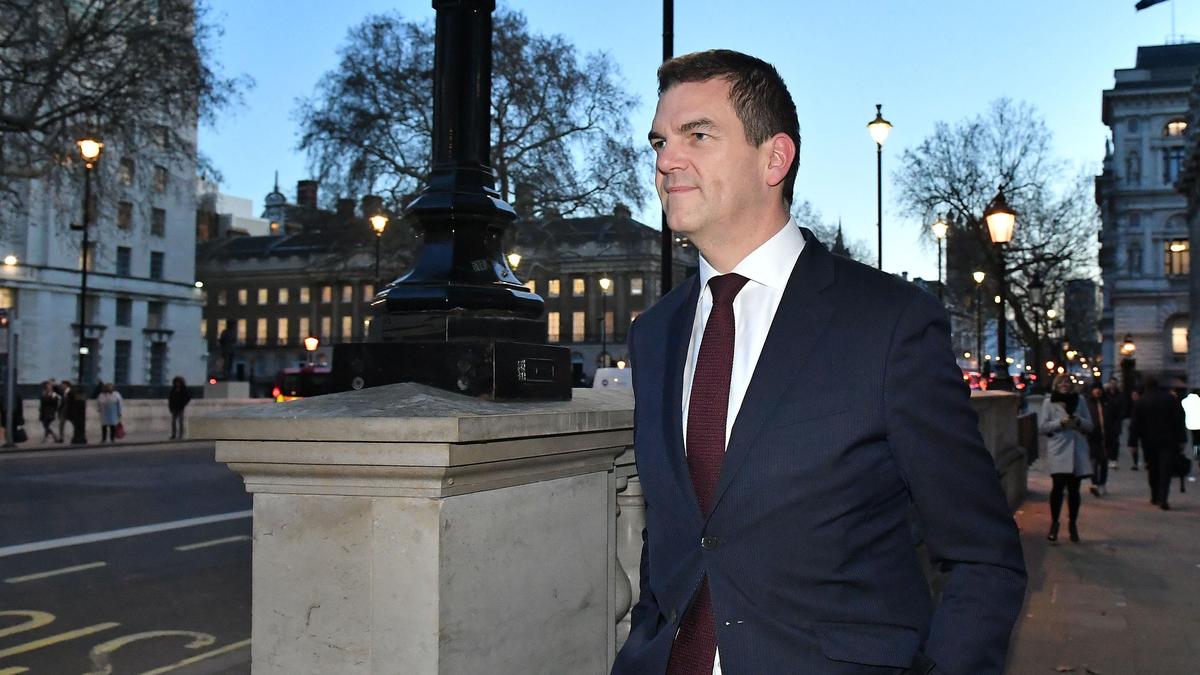
The outrage machine is currently redlining over reports that a former U.K. official felt "political pressure" to greenlight Peter Mandelson as the U.K. Ambassador to the United States. The headlines are dripping with manufactured shock, painting a picture of a pristine civil service being bullied by the big, bad political machine.
It is a fairy tale. And it is a boring one. Learn more on a similar topic: this related article.
If you are genuinely surprised that a political appointment involved political pressure, you have spent too much time reading civics textbooks and not enough time watching how power actually moves. Diplomacy is not a meritocracy. It is a series of strategic placements designed to grease wheels that the average bureaucrat doesn't even know exist.
The Myth of the Neutral Mandarin
The prevailing narrative suggests that the U.K. civil service is a sanctuary of objective truth, where appointments are made based on a rigid rubric of "competence" and "experience." This is the first lie. More journalism by The Guardian delves into related perspectives on this issue.
When a government seeks an ambassador for the most critical relationship in its portfolio—Washington—they aren't looking for a librarian who knows the Vienna Convention by heart. They are looking for a fixer. They are looking for someone who can walk into a room, skip the pleasantries, and get a direct line to the Oval Office.
Peter Mandelson, for all his baggage, is a heavyweight. Whether you love him or loathe him, his Rolodex is a weapon. The idea that a "neutral" official should have the final word on whether a Prime Minister gets his preferred envoy is an inversion of democracy. The Prime Minister is the one who answers to the electorate; the civil servant answers to the filing cabinet.
Competence is a Smoke Screen
Critics argue that Mandelson’s past—the resignations, the "Prince of Darkness" moniker, the business ties—makes him "unfit." This ignores the reality of the D.C. circuit.
Washington is a city built on the currency of influence. A "safe" career diplomat is often a ghost in D.C. They attend the cocktail parties, they write the cables that no one reads, and they get sidelined the moment a real crisis hits. Why? Because they don't have the political skin in the game.
An ambassador who can be fired at the whim of the PM is actually more useful to the host country. It signals that this person speaks with the absolute authority of the leader. When Mandelson speaks, the White House knows it’s not just a memo from the Foreign Office; it’s a direct transmission from the heart of the British government.
The "pressure" the anonymous official complained about wasn't an attack on integrity. It was a collision between the slow, grinding gears of bureaucracy and the high-velocity requirements of international statecraft.
The High Cost of Pure Hands
Imagine a scenario where we only appointed "uncontroversial" figures to top diplomatic posts. We would end up with a corps of beige functionaries who have never taken a risk, never offended a donor, and never exercised a shred of real power.
That is a recipe for national irrelevance.
In the real world, the "cleanest" candidate is often the most useless. They have no enemies, which means they have never fought for anything. They have no history of political maneuvering, which means they don't know how to navigate a hostile Senate committee or a temperamental President.
The downside of the Mandelson-style appointment is obvious: it looks dirty. It smells of cronyism. It offends the sensibilities of the "good governance" crowd. But the upside is access. And in the game of global influence, access is the only metric that matters.
The False Dichotomy of Political vs. Professional
We are told there is a binary choice: the "professional" diplomat or the "political" appointee. This is a false choice.
The best diplomats are inherently political. They understand that every trade deal, every defense pact, and every extradition treaty is a political act. By trying to "protect" the process from political pressure, the civil service is effectively trying to de-politicize the very essence of government.
It is an attempt at a soft coup by the administrative state. When officials moan about being pressured to approve a candidate, what they are really saying is, "We don't think the elected government should be allowed to choose its own tools."
Why the U.S. Model is Actually More Honest
The United Kingdom loves to sneer at the American "spoils system," where campaign donors get ambassadorships to the Bahamas. We pretend our system is superior because it is draped in the velvet of civil service impartiality.
But the U.S. system is, in many ways, more honest. It acknowledges that an ambassador is a personal representative of the President. If the President wants a billionaire donor or a political veteran in a key spot, they get it. The vetting happens in the public eye, in the Senate, not in a whispered meeting in a Whitehall basement.
The "political pressure" in the U.K. is just the American system trying to break through a crust of British stuffiness. It is the realization that the old way of doing things—appointing a "good chap" from the Foreign Office—doesn't work in a world where trade wars and security alliances are decided on Twitter and in private villas.
The Fetishization of "Process"
The competitor article focuses on the process being compromised. This is a classic bureaucratic diversion. When you can't win on the outcome, you complain about the paperwork.
The outcome here is simple: a government wanted a specific individual for a specific role to achieve specific geopolitical goals. The "process" was merely an obstacle to be cleared. If the process is so fragile that it breaks when a Prime Minister insists on his choice, then the process was never fit for purpose.
We have turned "due process" into a religion that serves only one deity: the status quo.
The Real Scandal
The real scandal isn't that Mandelson was pushed through. The real scandal is that we still have a system where we pretend his appointment is a matter for unelected officials to decide.
We are obsessed with the optics of "independence." We want our institutions to look like they operate in a vacuum, free from the messy, grimy reality of politics. But a government that cannot exert pressure on its own departments is not a government; it’s a hostage.
If we want a civil service that is truly "impartial," we have to accept that its job is to facilitate the will of the government, not to act as a moral filter for it. Anything else is just a slow-motion veto by people who didn't have the guts to stand for election.
Tactical Advice for the Cynical Observer
Stop looking for "fairness" in high-level appointments. It doesn't exist. Instead, ask these three questions:
- Who does this person actually talk to? If they don't have the ear of both the PM and the host leader, they are a placeholder.
- What is the specific mission? If the mission is "stability," send a career diplomat. If the mission is "disruption" or "securing a massive trade shift," send a politician.
- Who is complaining? If it’s an anonymous former official, it’s usually someone whose ego was bruised because their veto power was ignored.
The Mandelson "controversy" is a distraction. It's a way for the chattering classes to feel superior while the actual business of power continues behind closed doors. You don't have to like the man to recognize that the fuss over his appointment is a performative dance.
The world is getting harsher. The alliances are getting more brittle. The luxury of "unbiased" diplomacy is a relic of a more stable era. We are entering an age of the political hitman, and the U.K. is finally waking up to that fact.
If you're still worried about "political pressure" in the halls of power, you're not paying attention. The pressure is the point.
Stop pretending the referee is more important than the game.