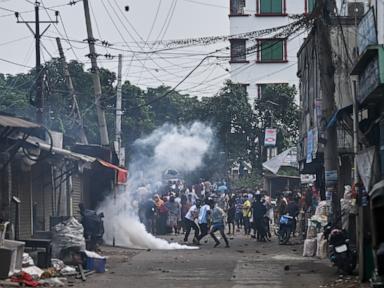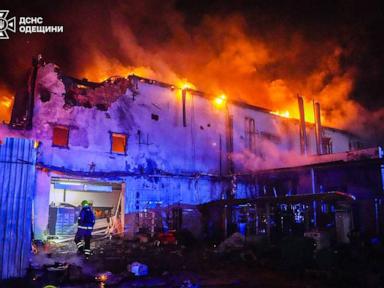
Every morning, the defense press publishes the exact same scoreboard. Russia launched two hundred Shaheds; Ukrainian air defenses shot down one hundred and eighty-five; Ukraine sent a hundred long-range drones back into Russian energy infrastructure. Analysts treat these numbers like box scores from a sporting event, declaring a winner based on interception percentages and debris photos.
That entire framing is backwards. Counting airframes is a distraction from the only metric that actually dictates who runs out of capacity first, and it is not fiberglass, lawnmower engines, or explosive warheads.
The Scoreboard Fallacy
When mainstream coverage reports that Ukraine and Russia traded hundreds of drones overnight, the lazy consensus defaults to a simple narrative of symmetrical attrition. One side throws cheap hardware at the wall; the other side spends expensive surface-to-air missiles to knock it down; whoever has the deeper warehouse wins.
I have spent years dissecting defense procurement spreadsheets and watching defense primes burn hundreds of millions of dollars chasing the wrong cost-per-kill ratios. When you look at the overnight drone exchanges through the lens of industrial supply chains rather than morning tally sheets, the symmetry evaporates.
A one-way attack drone is not a standalone weapon system. It is the expendable tip of a massive, fragile intelligence, targeting, and electromagnetic warfare spear. You can stamp out airframes in converted shopping malls and underground workshops by the thousands. You cannot stamp out experienced mission planners, satellite reconnaissance tasking, or high-end electronic warfare engineers at the same pace.
Why Interception Rates Are a Vanity Metric
Defense ministries love bragging about ninety-percent interception rates. Journalists repeat those figures uncritically because clean percentages fit neatly into headlines.
Here is the operational reality those numbers hide: a saturation raid is designed to fail on ninety percent of its vectors so that the remaining ten percent achieve strategic paralysis.
When Russia launches two hundred mixed decoys and strike drones at Ukrainian power substations, or when Ukraine sends waves of long-range prop-driven craft toward Russian oil refineries, the attackers already priced the shoot-downs into the sortie. The primary function of the first hundred drones is not to hit a transformer or a distillation tower. Their job is to force enemy radar emitters to turn on, map the gaps in air defense coverage, exhaust ready-to-fire interceptor tubes, and keep air defense crews awake for forty-eight hours straight until human error creeps into the engagement loop.
If you spend a million-dollar interceptor to kill a thirty-thousand-dollar decoy, you did not win the engagement. You just funded the attacker's economic warfare campaign.
Even worse, an intercepted drone still imposes a massive tax on the defender. Falling debris destroys apartment blocks, severs overhead rail lines, and forces multi-hour shutdowns of industrial grids. Counting a "shoot-down" as a zero-cost victory ignores the reality that modern air defense is a game of damage mitigation, never immunity.
The Real Bottleneck Is Silicon and Spectrum
If you want to know who actually won an overnight drone exchange, stop looking at the wreckage on the ground and start looking at the radio frequency spectrum and the customs manifests in Central Asia and East Asia.
Modern long-range strike drones rely on two things to survive contested airspace: inertial navigation systems that do not drift wildly over five hundred kilometers, and controlled reception pattern antennas that resist GPS jamming.
Let us define that clearly because the press routinely mashes all electronic warfare together. Controlled Reception Pattern Antennas (CRPAs) use multiple antenna elements to dynamically steer nulls toward jamming sources while maintaining lock on satellite navigation signals. Without multi-element CRPAs, a long-range drone flying into a dense jamming bubble goes blind, drifts off course by miles, and crashes harmlessly into a field.
Both Moscow and Kyiv are locked in a desperate, hidden war over microelectronics, fiber-optic gyroscopes, and multi-element antenna arrays. While Western commentators obsess over how many Shahed fuselages roll off the line in Alabuga or how many Liutyi drones Ukraine assembles in secret facilities, the actual choke point is the availability of commercial-grade inertial measurement units and anti-jam receivers.
How the Attrition Loop Actually Works
- Reconnaissance and Route Planning: Before a single propeller spins, intelligence cells spend days analyzing commercial synthetic aperture radar imagery, signals intelligence, and open-source reporting to plot low-altitude corridors that dodge mobile fire groups.
- Decoy Saturation: Cheap foam-and-plywood airframes carrying corner reflectors fly ahead of the main strike package, mimicking the radar cross-section of heavier munitions.
- Electronic Suppression: As defending radars illuminate the decoys, follow-on drones equipped with passive sensors record the exact frequencies and coordinates of the air defense batteries.
- Terminal Strike: Only the final echelon carries heavy fragmentation or thermobaric warheads, exploiting the exhausted magazines and mapped blind spots left behind by the first wave.
Notice where the real cost sits in that four-step loop. It is not in the plywood. It is in the targeting data and the specialized guidance chips sitting inside the final echelon.
Dismantling the Myths Around Overnight Drone Wars
When readers search for answers about these massive nightly raids, they usually ask questions built on outdated twentieth-century military assumptions. Those premises need to be dismantled directly.
Can air defenses eventually seal the sky against mass drone raids?
No. The physics and economics of area defense make a hermetically sealed sky impossible against low-flying, terrain-hugging targets. Radar horizon limits mean a ground-based sensor cannot see a drone flying at fifty meters until it is practically on top of the battery. Scaling up traditional surface-to-air missile networks to cover every substation, refinery, and depot across thousands of square miles would bankrupt any nation on earth before the first warhead even detonated.
Does the side with more drone factories automatically win?
Production volume only matters if your command-and-control architecture can task those airframes faster than the enemy adapts their jamming profiles. Imagine a scenario where a factory produces five thousand drones in a month, only for the defender to deploy a new frequency-hopping spoofing technique that grounds eighty percent of the batch before they cross the front line. Without rapid firmware iteration and live telemetry feedback loops, mass production just creates expensive warehouse clutter.
Are long-range drone strikes actually changing the ground war?
Not in the way armchair generals think. A drone hitting an oil refinery does not stop an infantry platoon from advancing across a treeline tomorrow morning. Strategic deep-strike campaigns operate on a six-to-nine-month lag. They force the enemy to pull scarce air defense systems away from front-line troops to protect rear-area refineries and airfields, while slowly starving the war economy of refined fuel, aviation kerosene, and foreign currency.
The Uncomfortable Truth About Counter-Drone Economics
Defense analysts at institutions like the Royal United Services Institute (RUSI) and the Center for Strategic and International Studies (CSIS) have repeatedly documented how electronic warfare and cheap acoustic sensor networks outperform legacy missile batteries in cost-per-engagement. Yet Western defense ministries still pour billions into exquisite, gold-plated interceptor missiles designed to shoot down supersonic fighter jets, then act shocked when those magazines run dry against slow-moving propeller drones.
Ukraine figured out early on that you cannot shoot down a lawnmower with a Ferrari. By building nationwide networks of thousands of acoustic sensors—essentially networked microphones mounted on poles across the countryside—combined with mobile pickup trucks mounting heavy machine guns and thermal optics, Kyiv created a distributed kill web that costs pennies on the dollar compared to traditional radar-guided missiles.
Russia adapted by pushing its Shahed drones higher—climbing above two thousand meters to get out of reach of heavy machine guns—and equipping them with cellular modems and multi-band anti-jam antennas. Ukraine responded by fielding interceptor FPV drones capable of climbing to altitude and ramming incoming Shaheds mid-air.
This is a weekly software and hardware sprint, not a static battle of stockpiles.
Where the Contrarian View Hits a Wall
I have to be honest about the blind spot in my own argument. Focusing strictly on microelectronics, electronic warfare, and cost-exchange ratios can lead you to underestimate the sheer blunt-force psychological and political weight of mass bombardment.
Even if an attacker burns through irreplaceable guidance chips and suffers terrible cost-exchange ratios, dropping fifty warheads onto an electrical grid during a freezing winter creates immediate, visceral political pressure that spreadsheets cannot measure. Mass has a brutal, non-linear quality of its own. When civilians sit in the dark without heat, nobody cares that the attacker wasted expensive inertial measurement units to turn off the lights.
How Analysts and Planners Need to Rewire Their Metrics
If you are tracking this conflict—or building defense systems meant to survive the next one—stop reading morning interception tallies and start measuring the variables that dictate operational collapse:
- Track firmware update cycles, not airframe announcements: Ask how many days it takes for a captured drone's radio architecture to be reverse-engineered and countered across the front.
- Measure interceptor replenishment rates against decoy launch rates: A defender firing two missiles per incoming target is losing the war of attrition regardless of how high their interception percentage climbs.
- Watch the energy grid and refining capacity, not the crater photos: The true indicator of deep-strike effectiveness is wholesale diesel pricing, power rationing schedules, and the redeployment of front-line air defense batteries to rear-area industrial sites.
- Invest in passive detection and kinetic interceptors: Acoustic arrays, passive RF triangulation, and cheap high-speed interceptor drones are the only scalable answers to mass saturation raids.
The next time a headline tells you that hundreds of drones were traded overnight and ninety percent were shot down, ignore the percentage. Look at what turned off the next morning, what moved away from the front lines to guard the rear, and how fast both sides rewrite their code before the sun goes down again.