The headlines are screaming. Social media is a dumpster fire of "breaking" news alerts. The "lazy consensus" among travel journalists right now is a predictable cocktail of fear-mongering and clickbait: Doha’s Hamad International is closed. The region is dark. Your vacation is dead.
It’s a lie. More importantly, it’s a fundamental misunderstanding of how modern aviation hubs actually function during geopolitical friction.
I’ve spent fifteen years navigating the logistics of Middle Eastern "flashpoints." I’ve watched carriers scramble while passengers lose their minds over push notifications that are outdated the second they hit the screen. If you’re refreshing a flight tracker every thirty seconds, you aren't being diligent. You’re being a pawn in a game of informational warfare that has zero to do with your actual departure time.
The Myth of the Total Blackout
The competitor narrative suggests a binary reality: the airport is either "open" or "closed." This is the first and most glaring error. International hubs like Doha (DOH) operate on a spectrum of strategic resilience.
When Iran and Israel exchange fire, the airspace doesn’t just "shut down" like a local library on a Sunday. Instead, we see a sophisticated orchestration of Dynamic Sector Management. Air traffic controllers don't just go home; they reroute. They pivot. They utilize corridors that haven't been touched in years.
The panic-merchants want you to believe that a closed airway equals a grounded fleet. In reality, Qatar Airways is one of the most agile logistical entities on the planet. They have survived a literal blockade from their own neighbors for years. They are the masters of the "long way around."
If your flight is delayed, it isn't because the airport is a ghost town. It’s because the fuel burn calculations for a four-hour detour are being finalized by a computer in a bunker that is significantly smarter than the person writing that "breaking news" tweet.
Why Flight Trackers Are Lying to You
You think you’re seeing "real-time" data. You aren't.
Most public flight tracking software relies on ADS-B (Automatic Dependent Surveillance-Broadcast) data. In high-tension zones, transponders can be "spoofed," signals can be jammed, or—more commonly—commercial pilots are ordered to switch to secondary communication protocols for security.
When your app says "Canceled," it often just means "We lost the signal and our algorithm is guessing the worst-case scenario." I have stood in terminals where the board showed "On Time" while 5,000 people on their phones were convinced the world had ended.
The Logic of the Pivot
- The 30-Minute Rule: In a conflict zone, a flight is never truly canceled until the crew times out. If the pilots can still legally fly the hours, the airline will wait until the very last millisecond to push back.
- The Hub-and-Spoke Trap: If you are connecting through Doha, the airline’s primary goal is to get you into the hub, even if they can't get you out immediately. Why? Because it’s cheaper to feed you in Qatar than to pay for a hotel in London or New York.
- The Insurance Game: Airlines don't cancel because of "danger." They cancel when the insurance premiums for flying a $200 million airframe through a specific coordinate exceed the revenue of the flight.
The Brutal Truth About "Safety First"
Let’s dismantle the biggest platitude in the industry: "Safety is our number one priority."
Safety is a baseline requirement. Revenue continuity is the priority. If Doha were actually "unsafe," the American military presence at Al Udeid Air Base—just a stone’s throw from the runway—would be in a very different posture.
The airport remains a strategic asset. Shutting it down completely isn't just a travel inconvenience; it’s a surrender of sovereign prestige. Qatar will keep those runways hot as long as there is a square meter of sky left to fly through.
Stop asking, "Is it safe?" and start asking, "Is it insured?" If the wheels are turning, the risk has been calculated to the fourth decimal point by actuaries who value money more than your opinion.
The Strategy of the Contrarian Traveler
If you are currently caught in this "closure" narrative, stop doing what everyone else is doing.
- Ignore the App: The app is a PR tool. Call the local ground handling office if you want the truth.
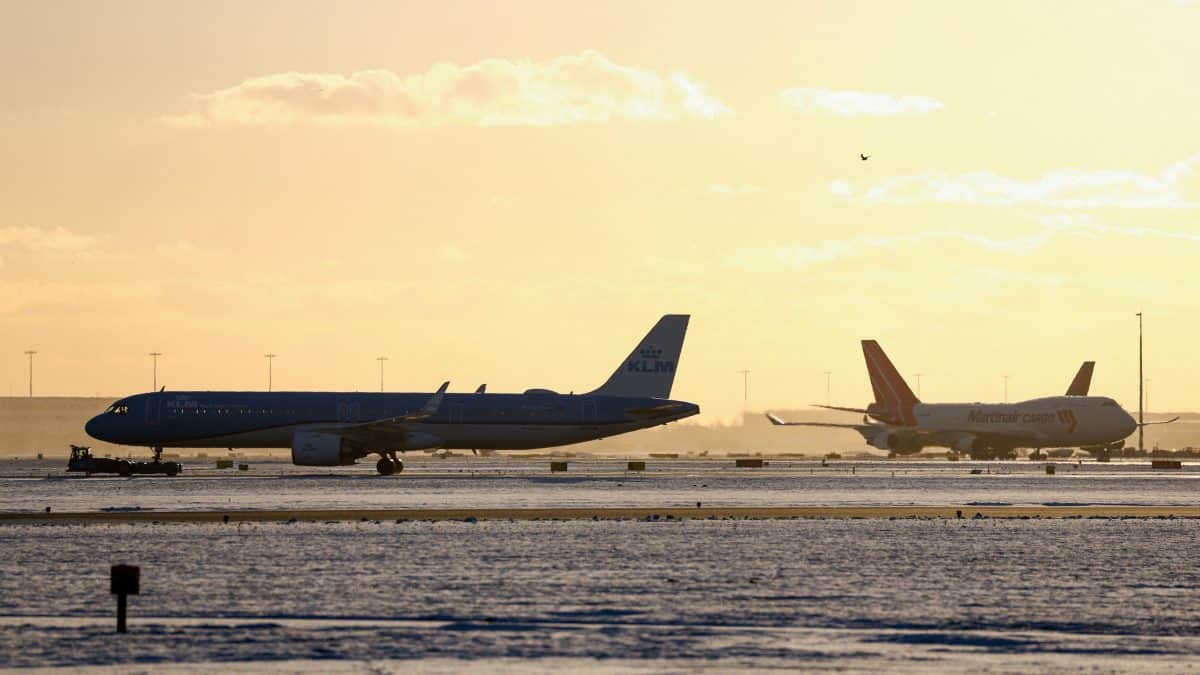
- Follow the Cargo: Watch the freight carriers. If the DHL and FedEx planes are still landing, the "closure" is a political theater or a temporary tactical pause. Cargo is the canary in the coal mine.
- Book the "Dangerous" Route: This is where I lose the faint-of-heart. When a major hub like Doha faces a "crisis," prices for future dates often crater. The smart money buys the dip. The infrastructure of DOH is built to withstand regional kinetic activity. It’s arguably one of the most protected patches of dirt on the map.
The Sophistry of the "Expert" Analysis
Most travel analysts sitting in comfortable offices in D.C. or London talk about "regional stability" as if it’s a fragile glass vase. It’s not. It’s a high-stakes poker game.
When the competitor article tells you to "check your flight status," they are giving you the same advice they’d give a grandmother flying to a knitting convention. It’s useless. Checking the status is a passive act.
The real move is understanding Airspace Sovereignty. Even if Iran closes its sky, and even if Israel retaliates, the "Doha Corridor" exists because too many global powers need it to exist. It is a financial necessity.
Stop Feeling Sorry for Yourself
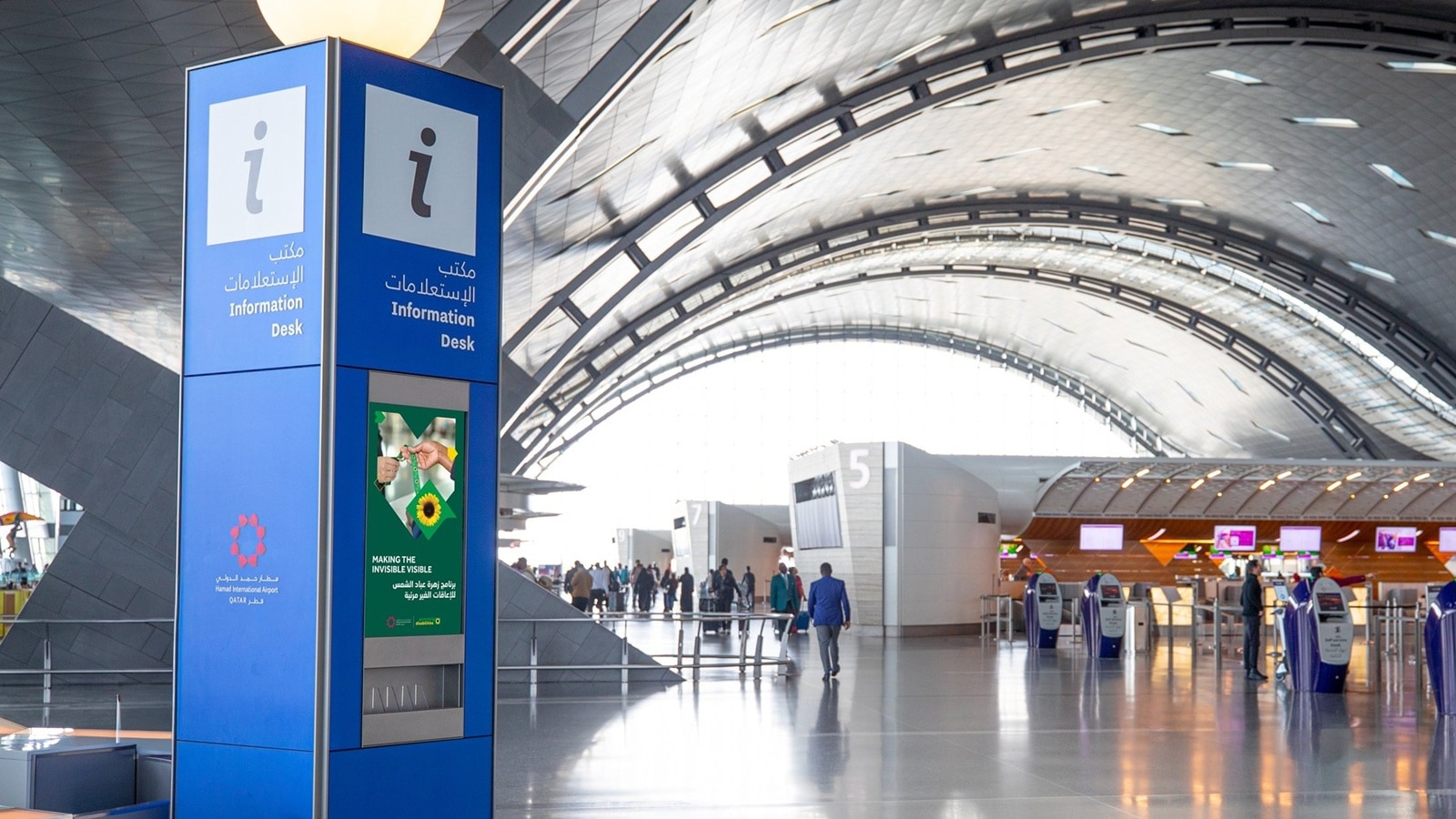
You’re annoyed because your layover might be ten hours instead of two. You’re stressed because you might have to sleep on a premium leather lounge chair in one of the world’s most expensive terminals.
Understand the scale:
$$F_s = \frac{R_a \times C_l}{P_i}$$
Where $F_s$ is Flight Stability, $R_a$ is Regional Assets, $C_l$ is Commercial Leverage, and $P_i$ is Political Instability. In Qatar’s case, the leverage and assets are so massive that instability has to be absolute to result in a long-term shutdown. We aren't even close to that.
The current "closure" is a ripple, not a wave. The media thrives on the imagery of empty terminals, but the reality is a fleet of engineers and logistics officers working 20-hour shifts to ensure that the flow of capital—disguised as passengers—never stops.
If you want to be a savvy traveler, stop reading the news. Read the NOTAMs (Notices to Air Missions). Read the fuel hedging reports. Read the room.
The airport isn't closed. Your perspective is.
Pack your bags. Go to the gate. The plane is leaving, with or without your anxiety.