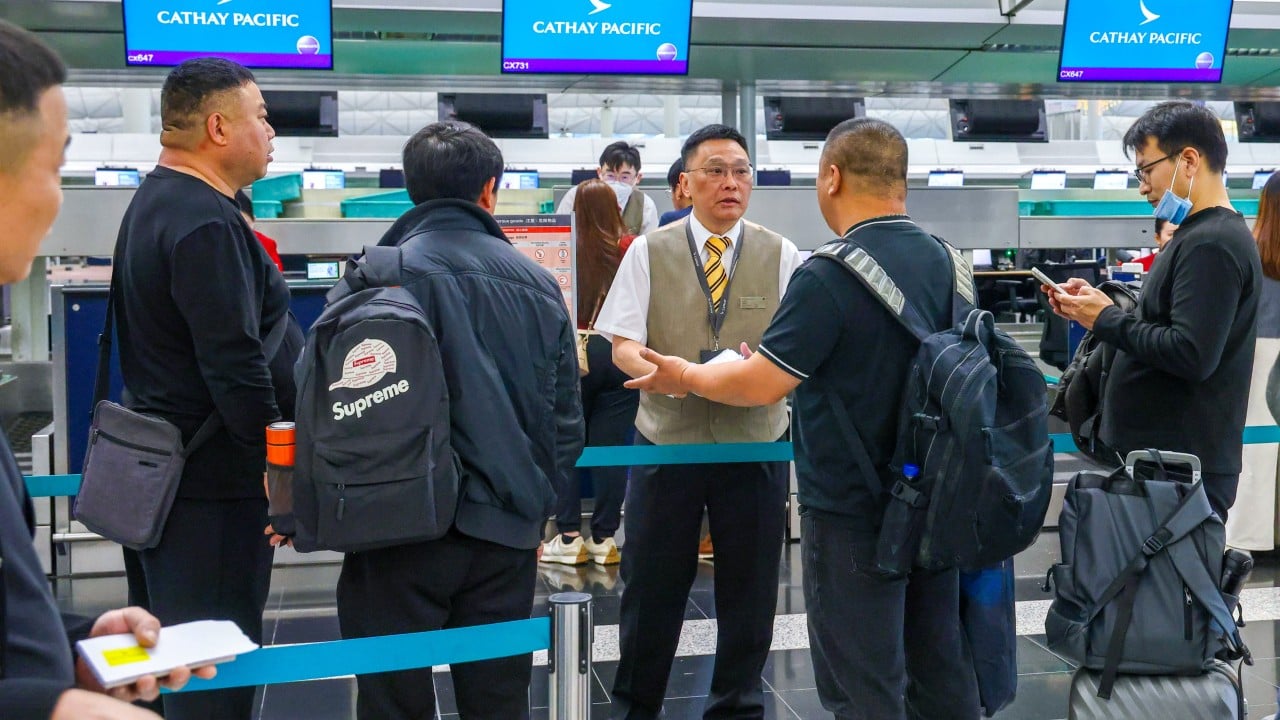
Passenger rights laws are a brilliant marketing trick. They exist to make you feel empowered while ensuring you stay exactly where the airlines want you: passive, patient, and cheap to manage.
Most "expert" guides on flight cancellations focus on the legal minimums. They talk about EU 261, the UK’s version of the same, or the Department of Transportation's (DOT) tepid new refund rules in the US. These guides tell you to wait in line, fill out a form, and pray for a $600 check three months from now. Recently making waves in related news: The Night the Nursery Walls Dissolved.
That is a loser’s game.
If your flight is cancelled, you aren't a "passenger with rights." You are a liability on a balance sheet. The airline’s goal isn’t to get you home; it is to mitigate the cost of your presence. If you follow the standard advice, you are helping them save money at the expense of your own time and sanity. Further information into this topic are detailed by Lonely Planet.
The Myth of the Mandatory Refund
The biggest lie in the industry is that a refund is your best outcome.
When a flight is cancelled, the airline is legally required to offer you a refund. They say this like they’re doing you a favor. In reality, a refund is the cheapest way for an airline to get rid of you.
Imagine you booked a $200 flight three months ago. Today, that same route costs $900 because of the disruption. If you take the refund, the airline wins. They give you back your $200—which has effectively been an interest-free loan for them—and they are now free of the obligation to fly you. You are left standing in an airport with $200 in your pocket and a $700 deficit to get to your destination.
The Contrarian Play: Never accept the refund until you have secured a seat on another aircraft. Your ticket is a contract of carriage. By taking the refund, you are voluntarily terminating that contract and releasing the airline from its duty to transport you.
Force them to rebook you. Not just on their own metal, but on a competitor.
The Interlining Secret They Hide
Airlines have "interline agreements." This is the industry's dirty secret. If Delta cancels your flight, they have the technical ability to put you on a United or American flight.
They will tell you they can’t. They will tell you their system doesn't allow it. They are lying.
What they mean is that it is expensive for them. They have to pay the competitor a "near-walk-up" fare to take you. They would much rather make you wait 24 hours for their own next available seat, which costs them nothing but a $15 meal voucher.
I have sat in airport lounges and watched gate agents tell a line of 50 people that there are "no flights available," while I’m looking at three open seats on a rival carrier departing in two hours. To get those seats, you have to stop acting like a victim of a "delay" and start acting like a partner in a broken contract.
- Identify the flight yourself. Do not ask "When is the next flight?" Tell them "I see three seats on Flight UA123 departing at 4:00 PM. Move my ticket to that carrier."
- Cite the "Rule 240" Spirit. While the literal Rule 240 died with deregulation, most legacy carriers still have versions of it in their internal Contract of Carriage. It dictates that they should put you on a competitor if it gets you there faster.
- Ignore the Gate Agent. The person at the gate is overwhelmed. They are trained to say "no" to save time. Call the elite frequent flyer line—even if you aren't elite. Use the chat function. Direct message them on social media. Attack the problem from three sides while the rest of the crowd is staring at a monitor.
Why Vouchers are Worthless Paper
If an airline offers you a $400 voucher to take a later flight, you are being scammed.
Vouchers are designed to expire. They are riddled with "blackout dates" and "fare class restrictions." More importantly, they keep your money within their ecosystem.
Under regulations like EU 261/2004, if your delay meets certain criteria (usually 3+ hours for reasons within the airline's control), you are entitled to cash. Cold, hard, bank-transferable cash.
The airlines will offer you a $600 voucher instead of the $600 cash you are owed. Why? Because the "breakage" rate on vouchers—the percentage that go unused—is nearly 30%. They are betting you’ll forget to use it.
The Compensation Calculation Breakdown
In the European and UK markets, compensation is fixed based on distance, not ticket price:
| Distance | Delay Duration | Compensation |
|---|---|---|
| Under 1,500 km | 2+ hours | €250 |
| 1,500 km - 3,500 km | 3+ hours | €400 |
| Over 3,500 km | 4+ hours | €600 |
Note that this is on top of your rebooking or refund. It is not an "either/or" situation. If you take the voucher, you often waive your right to the cash. Read the fine print before you tap "Accept" on their app.
The "Extraordinary Circumstances" Lie
This is the industry's favorite shield. If a flight is delayed by weather or air traffic control (ATC), they owe you nothing but a rebooking. If it’s "technical," they owe you cash.
Because of this, airlines have become incredibly creative with their definitions. I’ve seen airlines claim a bird strike was "extraordinary" when the court system had already ruled that bird strikes are a predictable part of flying. I’ve seen them blame "late arrival of incoming aircraft" due to weather, when the actual cause was a crew timing out because of poor scheduling.
If they say "weather," check the METAR (Meteorological Aerodrome Report). Is every other airline taking off? Then it isn't the weather. It’s their equipment.
If they say "ATC," ask for the specific flow control restriction code. They won't give it to you because they don't expect you to know it exists.
The Duty of Care is a Minimum, Not a Luxury
The law says they must provide "meals and refreshments" and "hotel accommodation" if the delay is overnight.
The "lazy consensus" is to take the voucher they give you for a moldy sandwich and a shuttle to a 2-star hotel by the highway.
Don't. In almost every jurisdiction with passenger rights, you have the right to a "reasonable" alternative if the airline fails to provide it. If the line for the hotel voucher is 300 people deep, walk out of the airport. Book a decent hotel. Order a real dinner. Keep the receipts.
As long as you aren't booking the Presidential Suite at the Four Seasons, the airline is legally obligated to reimburse you. They hate this because they can't use their "distressed passenger" corporate rates at the local Hilton. You are forcing them to pay market price for their failure.
The Professional Passenger’s Toolkit
To win this fight, you need to stop thinking like a tourist.
- ExpertFlyer: Use this to see actual "GDS" (Global Distribution System) data. It shows you exactly how many seats are left on every flight, including competitors. When the agent says "the flight is full," and you see "Y4" (meaning 4 seats in economy), you have the evidence to call their bluff.
- FlightAware: Track the inbound aircraft. If the airline says your 4:00 PM flight is on time, but the plane is currently sitting 1,000 miles away with a three-hour delay, you know they are lying. Start your rebooking process three hours before they even announce the cancellation.
- The Contract of Carriage: Download the PDF for your airline. Use the search function for "Failure to Operate." Quote their own legal language back to them. It is the only language they respect.
The Cost of the "Free" Flight
The truth that no one wants to admit is that chasing these rights has a massive opportunity cost.
If you spend ten hours arguing for a $400 check, you have valued your time at $40 an hour. For some, that's a win. For others, it’s a tragedy.
Sometimes, the best move is the most counter-intuitive one: Buy a new ticket on a different airline immediately and sue the first airline for the cost in small claims court later.
This requires liquidity and a stomach for a fight, but it gets you home while your fellow passengers are still sleeping on the floor waiting for a "re-accommodation" that isn't coming until Tuesday.
Airlines bank on your fatigue. They know that after six hours of sitting on a suitcase, your will to fight for the €600 you’re owed will evaporate. They count on your "learned helplessness."
Break the cycle. Stop asking what your rights are. Start telling them what you are going to do, and send them the bill.
Go to the lounge, buy a day pass, and use their high-speed Wi-Fi to book a seat on their competitor before the rest of the plane even realizes the flight is cancelled.