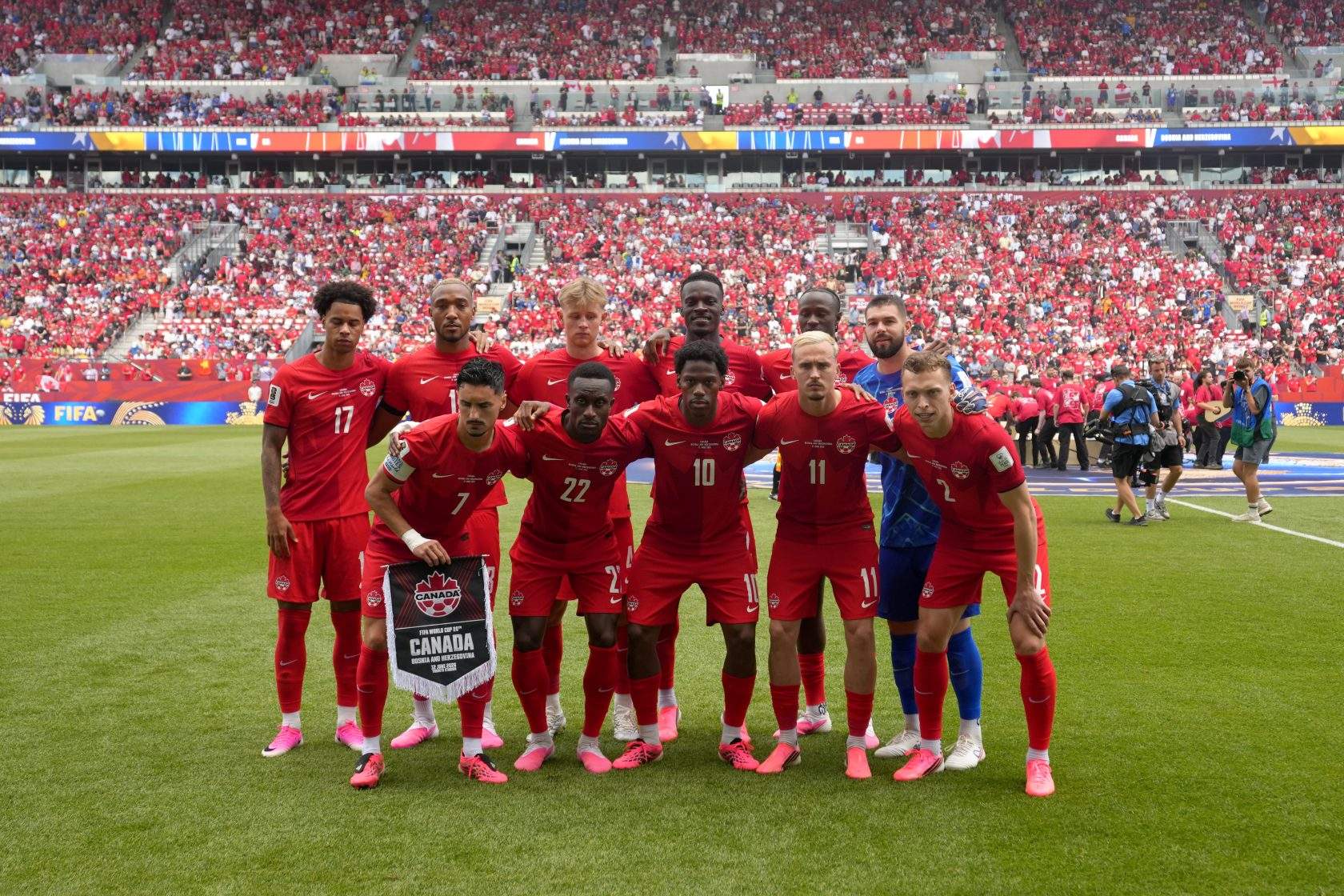
The Canadian soccer media is currently high on the supply of its own low expectations. Following a 1-1 draw against Bosnia and Herzegovina in Toronto, the mainstream narrative has settled into a comfortable, self-congratulatory groove. We are told to celebrate. It was, after all, the Canadian men's national team’s first-ever point at a FIFA World Cup.
Now, as the squad arrives at BC Place in Vancouver to face Qatar in their second Group B fixture, the consensus is clear: Jesse Marsch’s team is on the precipice of history, heavily favored to secure an easy first-ever World Cup victory against an Asian opponent they previously handled in a 2022 friendly.
This perspective is dangerously naive. It mistakes a systemic flaw for a milestone and structural stagnation for progress.
If Canada walks onto the pitch in Vancouver expecting a victory lap, they are going to get caught in a tactical chokehold.
The Illusion of Progress and the Set-Piece Disaster
Let us dismantle the Toronto draw. The casual observer saw a resilient team fight back via a Cyle Larin equalizer in the 78th minute. The analytical reality was much uglier. Canada accumulated nine corner kicks in the first half alone—a modern World Cup record before halftime.
They converted exactly zero of them.
I have watched teams waste set-piece dominance for over a decade in professional sports, and it always points to the same underlying disease: a total lack of clinical execution in congested spaces. Marsch’s rigid commitment to high-intensity, vertical pressing looks great when chasing down a panicked fullback in transition. It looks completely toothless when an opponent sits deep, packs the penalty box, and challenges Canada to unlock them with genuine soccer IQ.
Against Bosnia, Canada controlled the ball but looked entirely clueless regarding what to do with it once the opponent's low block was established. The forwards looked sluggish, and the defensive structure leaked chances against a mediocre European side on set-pieces. Calling that match a "milestone point" is a coping mechanism for a federation terrified of underachieving on home soil.
Why Qatar is a Tactical Nightmare for Jesse Marsch
The narrative surrounding Qatar is that they are the weakest link in Group B, a side that only secured a point against Switzerland because of an added-time own goal. Do not fall for it.
Qatar is a deeply cynical, hyper-disciplined side that loves nothing more than being outshot 26-6, as they were against the Swiss. They do not care about possession. They do not care about satisfying neutrals. They care about suffocating space.
Imagine a scenario where an overly aggressive Canadian team, desperate to prove they can dominate at home, pushes both fullbacks high up the pitch to break down Qatar’s five-man backline. That is precisely what Qatar wants. They will happily concede 70% possession, absorb the toothless crosses from Alistair Johnston or Richie Laryea, and wait for the precise moment Jonathan David or Ismaël Koné turns the ball over in the middle third.
With Akram Afif and Hassan Al-Haidos lurking, Qatar’s counter-attacking mechanism is lethal against disorganized transitions. Marsch’s system relies on a counter-press to win the ball back instantly. If that initial press is bypassed by a direct, vertical pass from the Qatari midfield, Canada's center-backs, Derek Cornelius and Luc de Fougerolles, will be left completely exposed in open space. Both of those defenders are already sitting on yellow cards from the opening match. One mistimed tackle trying to stop a counter-attack, and Canada is down to ten men or missing key starters for the crucial final group game against Switzerland.
The Alphonso Davies Conundrum
Then there is the Alphonso Davies situation. The medical staff has reportedly cleared the Bayern Munich star to play after his hamstring injury in May’s Champions League semifinal. The media is treating this like the return of a savior.
It is a trap.
Rushing a player back from a grade-two hamstring tear directly into the high-intensity, high-workrate demands of a Jesse Marsch system is an invitations for disaster. If Davies starts, he will not be at 100% match fitness. He will lack the explosive burst that makes him world-class. Worse, his presence often forces Canada into a predictable tactical pattern: defer to Alphonso and pray he beats three men on the wing.
If Marsch uses him as a substitute, it disrupts the defensive rhythm that Laryea and Johnston established. If he starts him, he risks a re-injury that knocks the country's best player out of the tournament entirely. Trusting the medical green light in a high-pressure home World Cup match is a gamble that rarely pays off.
Stop Asking if Canada Will Win
The public is asking the wrong question. The question isn't whether Canada has the talent to beat Qatar. They do. On paper, the squad depth of players operating in Europe's top flights should handle a domestic-based Qatari roster.
The real question is whether Canada possesses the tactical maturity to win a ugly, slow, low-possession football match.
If Canada wants to avoid an embarrassing exit on home turf, Marsch needs to ditch the romantic notion of aggressive, front-foot soccer for this match. They must swallow their pride, refuse to overcommit numbers forward, and dare Qatar to come out of their shell. If Canada plays into the emotion of the Vancouver crowd and chases an early blowout, they will leave the pitch entirely empty-handed.


