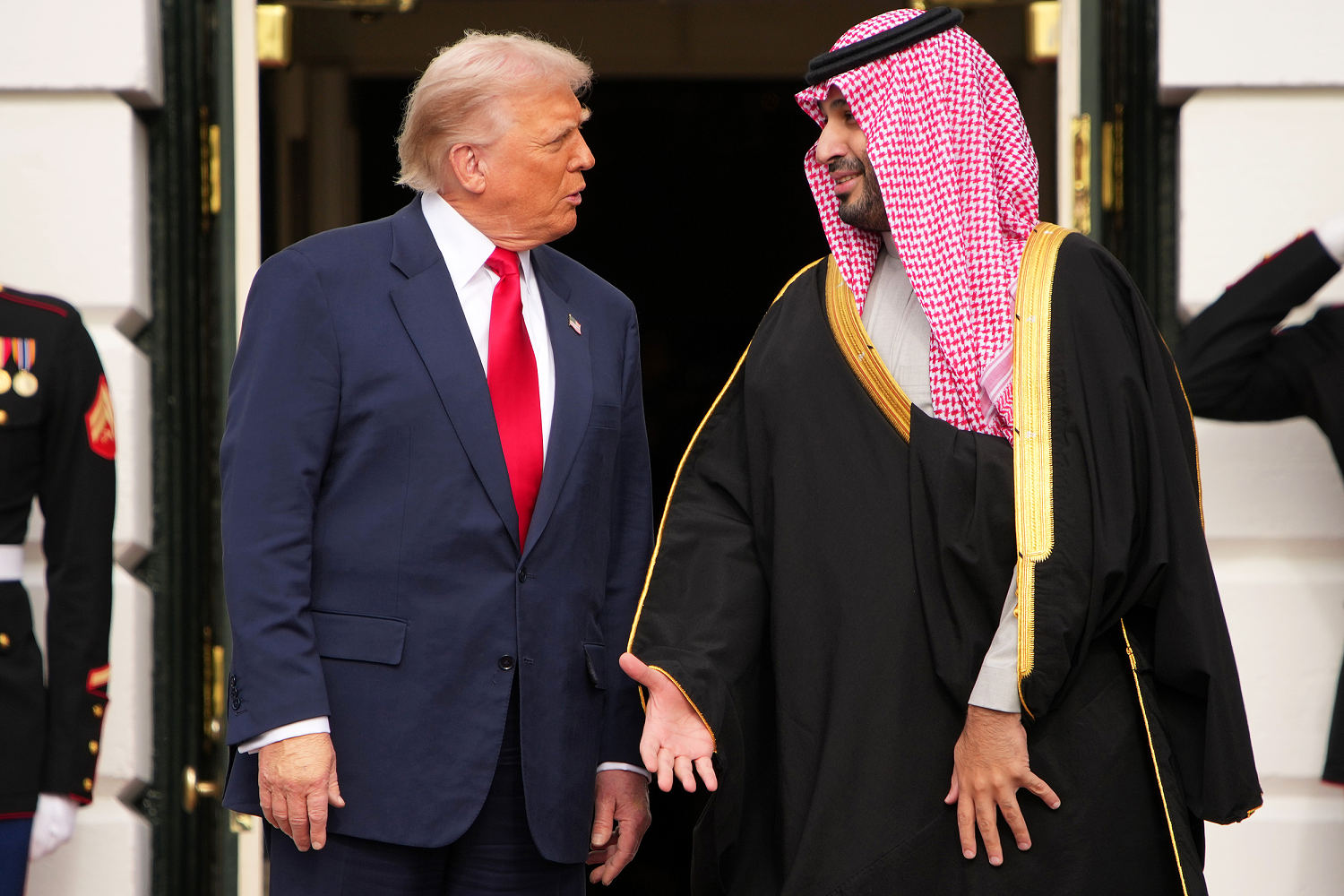
Washington loves a photo op with a signed contract. The press corps loves writing about epochal geopolitical realignments. But if you spend five minutes looking at the engineering realities and balance sheets behind the headlines, the glowing coverage of the U.S.-Saudi nuclear deal falls completely apart.
The mainstream consensus tells a clean story: Washington flexed its diplomatic muscle, secured a multi-billion-dollar market for American nuclear exports, sidelined Chinese influence in the Arabian Peninsula, and stabilized the Middle East under an American security umbrella. For another view, see: this related article.
It is a fantasy.
What actually happened is far less heroic. Washington just surrendered its decades-long commitment to global non-proliferation, bailed out an ailing domestic nuclear industry that cannot construct a reactor on budget to save its life, and bought itself a front-row seat to a massive strategic headache. Related reporting regarding this has been published by TIME.
I have sat in executive rooms where nuclear vendor negotiations happen. I have watched utilities run the numbers on capital expenditure versus lifetime returns. The idea that this agreement represents a masterstroke of American statecraft is laughable. It is a desperate, short-term tactical maneuver masquerading as visionary policy.
The Gold Standard Was Dead Long Before Washington Signed
For decades, the bedrock of American civil nuclear exports was the Section 123 Agreement under the Atomic Energy Act of 1954. But not all 123 agreements are created equal.
The true benchmark was the 2009 U.S.-Emirates deal. In that contract, the United Arab Emirates agreed to what diplomats call the "Gold Standard": a legally binding pledge to forego domestic enrichment of uranium and the reprocessing of spent nuclear fuel (ENR technology). The UAE agreed to buy fuel assemblies on the international market, burn them in their reactors, and ship the spent fuel away. They got clean electricity; the world got an absolute guarantee that no commercial power program would quietly morph into a weapons project.
Riyadh looked at the Gold Standard, laughed, and tossed it in the trash.
From day one, Saudi negotiators made it clear that any deal requiring them to renounce indigenous uranium enrichment was a non-starter. They sit on estimated domestic uranium deposits of over 90,000 tonnes. They had zero intention of letting Washington hold the keys to their fuel cycle.
So what did the White House do? It caved.
By crafting a compromise that allows for future Saudi enrichment under a vague promise of "jointly managed" or "monitored" facilities, Washington effectively gutted its own non-proliferation doctrine. You cannot demand that Iran zero out its centrifuges while granting enrichment rights to their primary regional adversary just because the foreign leader wears a different flag. The moment you dilute the Gold Standard, you tell every middle power on Earth that non-proliferation rules are totally negotiable if you have enough leverage.
The Economic Reality Washington Refuses to Math Out
Strip away the geopolitical posturing and look at the actual economics of building a commercial nuclear fleet in the Saudi desert.
Saudi Arabia does not need nuclear power to generate electricity. They want it so they can burn less crude oil domestically—currently around 300,000 to 500,000 barrels per day during peak summer cooling—and export that oil at market value instead.
On paper, that sounds clever. In practice, the capital economics are atrocious.
- Capital Expenditure Horrors: Look at the recent history of Western reactor builds. Georgia’s Vogtle Units 3 and 4 ended up years late with cost overruns topping $30 billion. France’s Flamanville 3 ran more than a decade late and quadruple its original budget.
- Solar Is Already Winning: Saudi Arabia possesses some of the highest solar irradiance numbers on the planet. Utility-scale solar projects in the Kingdom have repeatedly broken world records for low levelized cost of electricity (LCOE), dipping below 1.04 cents per kilowatt-hour.
- The Cooling Water Dilemma: Traditional light-water reactors require vast volumes of water for cooling. In a hyper-arid climate, you either build reactors on the coast and rely on massive desalination infrastructure—dramatically spiking capital costs and thermal discharge risks—or you pay through the nose for dry-cooling systems that reduce plant efficiency right when ambient temperatures peak.
To pay $10,000 to $15,000 per kilowatt of installed nuclear capacity when you can install solar capacity with storage for a fraction of that cost is economic madness. The nuclear program isn't an energy strategy. It is an expensive prestige project designed to signal technological dominance.
Riyadh Ran the Perfect Whipsaw Play
The narrative that Washington "beat" Beijing by securing this agreement misunderstands how Saudi diplomacy operates in the twenty-first century.
Saudi Arabia never intended to build a fleet of Chinese Hualong One reactors. They know that Beijing's civil nuclear export ecosystem, while fast and cheap, brings secondary sanction risks and lacks the operational pedigree that Western regulators require.
Instead, Crown Prince Mohammed bin Salman played the Western press and American negotiators like an instrument.
Riyadh flirted openly with China National Nuclear Corporation (CNNC). They invited Chinese engineers to survey sites in the Eastern Province. They leaked hints that Beijing was willing to build reactors with zero non-proliferation strings attached.
Washington panicked.
Believing it was about to lose the Persian Gulf to Chinese state-owned enterprises, the White House rushed to close the deal, swallowing terms it had flatly rejected for a decade. Riyadh used Beijing as a stalking horse to strip Washington of its non-proliferation demands.
The Saudis did not get co-opted into the American sphere; they forced the United States to lower its standards by threatening to buy from a rival who was never actually the preferred supplier in the first place. It was a masterclass in modern diplomatic leverage.
Westinghouse Is Not Saving American Industry
Proponents of the deal tout it as a massive shot in the arm for the American industrial base. They paint a picture of factories across the Rust Belt humming to life to forge reactor pressure vessels and export high-tech components.
This ignores the structural reality of the Western nuclear supply chain.
The primary American nuclear vendor, Westinghouse, is owned by Brookfield Renewable Partners and Cameco. Its flagship reactor, the AP1000, is a fine piece of engineering. But the heavy manufacturing capacity required to build those reactors no longer exists inside the United States in the volume required.
The ultra-heavy forgings required for reactor pressure vessels? Those do not come from Pittsburgh or Ohio. They come from Japan Steel Works or Korea’s Doosan Enerbility. The specialized construction labor forces? They have to be trained from scratch or imported.
When an American vendor signs an export deal for a nuclear plant today, a massive portion of the capital flow instantly leaks out to supply chains in South Korea, Japan, and Europe. The idea that this deal instantly restores American manufacturing supremacy is a fantasy sold to domestic voters who haven't seen a steel mill operate in thirty years.
The Non-Proliferation Trap Everyone Is Ignoring
What happens when you give a nation the legal framework, the technical know-how, and the regulatory cover to construct a complete civil nuclear fuel cycle?
You give them a turn-key nuclear weapons option.
In policy circles, this is known as "virtual deterrence." A nation doesn't need to assemble a warhead and test it in the desert to project power. It simply needs to acquire all the requisite capabilities: domestic uranium mining, enrichment facilities, advanced reactor operation, and fuel fabrication expertise. Once those pieces are operating under civil guise, the time required to breakout and produce weapons-grade material drops from years to weeks.
"A civil nuclear program with domestic enrichment capability is just a weapons program on a pause button."
By granting Riyadh a path toward fuel-cycle autonomy, Washington has guaranteed an arms race in the Middle East. If Saudi Arabia operates centrifuges, Turkey will demand them next. Egypt will follow. The non-proliferation regime in the region won't just be frayed; it will be non-existent.
Imagine a scenario where political instability strikes the Arabian Peninsula thirty years from now. The civil infrastructure remains, but the diplomatic oversight collapses. The United States will have built, financed, and normalized the very infrastructure it might one day have to spend billions to monitor or contain.
The Hard Reality Washington Refuses to Face
The U.S.-Saudi nuclear agreement is not a triumph of American leadership. It is an admission of weakness.
It proves that Washington can no longer enforce global standards because its own commercial nuclear sector is too fragile to compete without government-backed geopolitical bailouts. It demonstrates that middle powers can force the U.S. to abandon core policy principles simply by threatening to sign a check with Beijing instead.
If the United States wanted to display real leadership, it would have held the line on the Gold Standard. It would have told Riyadh that access to American technology requires absolute transparency and zero domestic enrichment—period. If Saudi Arabia chose to build Chinese or Russian reactors instead, Washington should have let them take on the inferior technology, operational risk, and long-term supply dependencies that come with it.
Instead, Washington signed a contract that trades long-term non-proliferation stability for a short-term political headline.
Do not call it a landmark victory. Call it what it actually is: a costly geopolitical retreat packaged as a commercial breakthrough.


