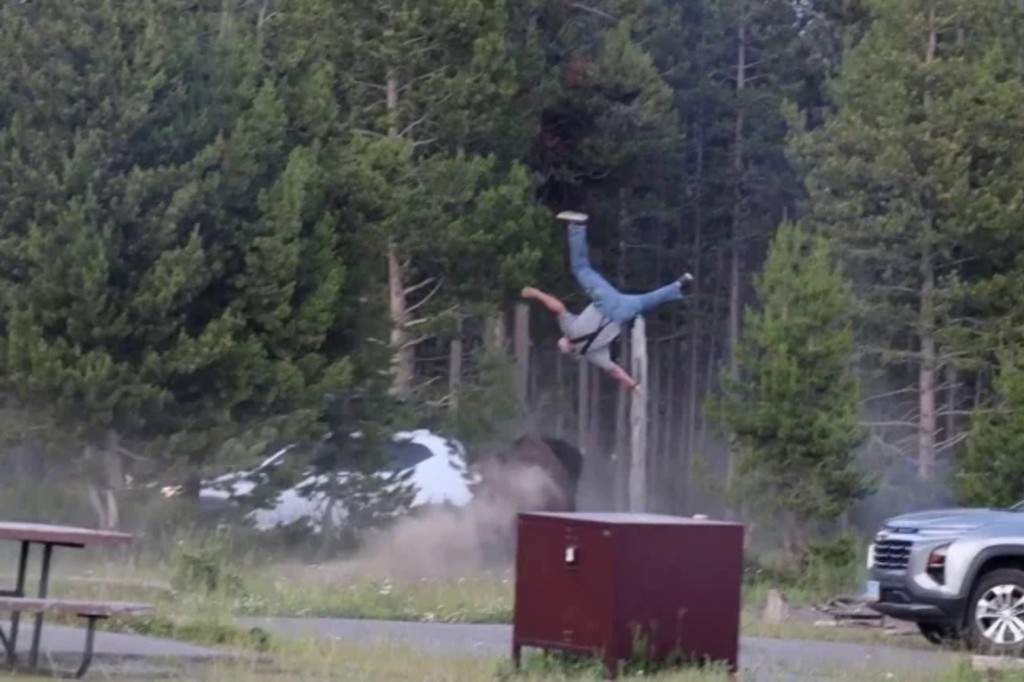
A viral video makes the rounds every single summer like clockwork. A tourist gets too close to a 2,000-pound bison. The bison decides it has had enough. The tourist gets launched eight feet into the air like a ragdoll.
The internet instantly reacts with a collective, self-righteous sneer. The comments sections flood with terms like "natural selection" and "touron." The media frame is always the same: another stupid city dweller who lacks common sense didn't read the bright yellow warning signs. If you enjoyed this post, you should read: this related article.
This lazy consensus is entirely wrong.
Shaming individual tourists is a cheap distraction from the real issue. The annual spectacle of humans being tossed by megafauna is not a failure of personal intelligence. It is a systematic failure of park design, outdated wildlife management models, and the fundamentally flawed illusion of the "untamed wilderness" that the National Park Service sells to the public. For another look on this story, refer to the recent coverage from Travel + Leisure.
We do not need more warning labels. We need to completely dismantle how we manage human-wildlife interfaces in high-traffic national parks.
The Illusion of the Open Range
National parks like Yellowstone operate on an ideological contradiction. They market themselves as pristine, untouched ecosystems where animals roam free and humans are mere observers. Yet, they simultaneously build massive asphalt corridors, luxury lodges, and sprawling parking lots right through the middle of these habitats.
You cannot invite over four million people a year into an area, build a gift shop next to a primary grazing meadow, and then act shocked when a suburban dad treats a bison like a prop.
The Infrastructure Paradox: The National Park Service creates highly manicured, safe-looking environments that mimic suburban theme parks, then expects visitors to instinctively possess the wilderness survival skills of 19th-century trappers.
When everything about a location's infrastructure signals "safety and convenience"—from the paved walkways to the park rangers directing traffic—it creates a psychological priming effect. It disarms the human survival instinct. The built environment explicitly tells the human brain that they are in a controlled space.
The Outdated 25-Yard Myth
Park regulations dictate that visitors must stay at least 25 yards (75 feet) away from bison and elk, and 100 yards away from bears and wolves.
This rule is a joke.
A mature American bison can accelerate to 35 miles per hour in a matter of seconds. They are incredibly agile, capable of spinning on a dime and clearing six-foot fences. If you are 75 feet away from a bison that decides to charge, you are not safe. You are just giving the animal a short runway to hit peak velocity before it impacts your ribs.
The 25-yard rule exists because it is a compromise between safety and tourism revenue. If the park enforced a scientifically realistic buffer zone for an unpredictable, two-ton wild mammal—say, 200 yards minimum—most of the primary viewing pullouts, boardwalks, and geothermal trails would have to be shut down permanently. The park's current model requires proximity to function financially. The viral videos are just the cost of doing business.
Dismantling the "People Also Ask" Flaws
The public discourse around these incidents is driven by fundamentally wrong questions. Look at what people actually search for after a bison attack:
Why do bison attack humans?
The premise here assumes malice or unprovoked aggression. Bison do not "attack" humans; they defend their personal space. In herd dynamics, a dominant animal establishes a perimeter. When a human breaches that perimeter, the bison reacts exactly how it would to a rival bull or a lone wolf. It signals with a raised tail, a head shake, or pawing the ground. Because humans no longer speak the language of megafauna, they miss the warning shots. The "attack" is actually the final escalation of a conversation the human didn't realize they were having.
Why don't rangers just fence off the bison?
This is the classic suburban solution: build a wall. Fencing off thousands of free-ranging bison in a 2.2-million-acre park is ecologically disastrous. It destroys migration corridors, alters grazing patterns, and fragments the ecosystem. It turns a living ecosystem into a literal zoo. The solution isn't confining the animals; it is restricting the geography of the humans.
What is the penalty for getting too close to wildlife?
A nominal fine or a brief court appearance. The current legal deterrents are pathetic. If the penalty for endangering yourself, the animal, and the bystanders is a $1,000 fine and some internet shaming, it becomes a calculated risk for influencers seeking metrics.
The High Cost of the Current Model
I have spent years analyzing how public lands handle high-volume crowds. The current hands-off, educational approach is a proven failure. Every time a tourist is gored or tossed, the focus centers on the human injury. The hidden casualty is the wildlife management system itself.
When an animal becomes habituated to humans because infrastructure forces them into the same tight spaces, the animal inevitably loses. Habituated animals become aggressive. Aggressive animals are hazed, relocated, or euthanized.
[Manicured Infrastructure] -> [Forced Human Proximity] -> [Animal Habituation] -> [Inevitable Incident] -> [Animal Euthanized]
We are sacrificing wild animals to maintain the fiction that millions of tourists can casually stroll alongside Pleistocene-era megafauna without physical barriers.
How to Actually Fix the Problem
Stop printing more brochures. Stop making quirky social media posts pleading with people to be smart. It does not work. If we want to stop the carnage and protect the wildlife, we must implement hard, structural changes to the park experience.
1. Dynamic Geofencing and Path Closures
The technology exists to track herd movements in real-time. When a herd moves within a specific radius of a major boardwalk or visitor center, those pedestrian zones must automatically lock down. No exceptions. If that ruins a family's vacation photos, tough.
2. Physical Structural Separation
If we are going to build boardwalks through prime thermal and grazing areas like the Old Faithful complex, those boardwalks cannot be low-lying, open platforms. They need to be elevated far beyond the reach of an animal, or protected by integrated, naturalistic barriers that prevent physical contact while preserving the view.
3. Punitive Bans and Mandatory Liability
If you violate the perimeter and trigger a wildlife response, the financial burden must shift entirely to you. This means paying for the entire ranger deployment, the emergency medical transport, and a mandatory lifetime ban from all federal lands. Make the financial risk so catastrophic that no influencer would dare touch it.
The next time you see a video of a tourist flying through the air at Yellowstone, don't laugh at the visitor's stupidity. Look past the flying body and look at the background. Look at the paved road, the idling SUVs, the gift shop fifty yards away, and the crowd of hundred people packed onto a narrow strip of asphalt.
The tourist didn't wander into the wild. The park system invited the wild into a theme park, and then blamed the guest for buying the ticket.