Every time an idiot points a hatchback down a high-speed corridor against traffic, the media machinery spins up the same predictable outrage cycle. Editorial boards clutch their pearls. Pundits demand harsher penalties, longer prison sentences, and mandatory retraining for anyone with a driver's license. The lazy consensus says this is a moral failure. A symptom of a decaying society populated by reckless narcissists who simply do not care about human life.
It is a comforting narrative because it lets planners and politicians off the hook. If the problem is bad people, then the solution is simply being mad at them harder.
I have spent years analyzing transit design and behavioral psychology in high-stress infrastructure environments, and I am tired of watching experts dodge reality. The people driving the wrong way down motorways are rarely mustache-twirling villains executing a suicide mission. They are human beings experiencing total cognitive collapse, trapped in environments that actively invite catastrophic error.
If your road layout routinely coaxes sober, panicked drivers into entering the wrong carriageway, you do not have an ethics problem. You have a design failure.
The Architecture Of Confusion
Look at how standard interchanges are constructed. Modern highway engineering fetishizes smooth, uninterrupted flow. We design slip roads and off-ramps with sweeping radii meant to keep velocities high, minimizing friction for the commuter. In doing so, we strip away the harsh, jarring sensory cues that human brains evolved to rely on.
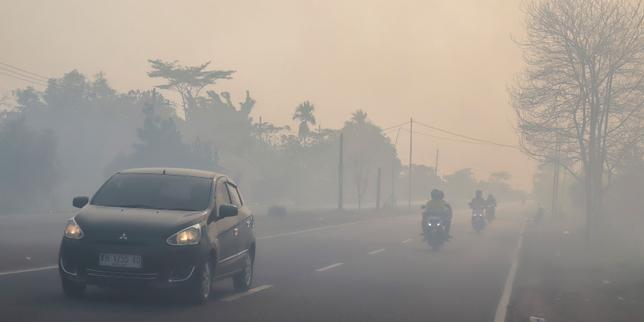
When visibility drops, signage fails, or road markings fade under a heavy downpour, the visual grammar of the road collapses. To an exhausted or disoriented driver—perhaps an elderly motorist experiencing sudden cognitive overload, or a local confused by a botched night-time repaving project—a sweeping off-ramp looks like an open lane.
Standard safety advocates cry for bigger warning signs. More red paint. Flashing beacons. More administrative theater. But human perception under stress does not process a wall of text on a reflective aluminum board when moving at seventy miles per hour in the dark.
Imagine a scenario where a pilot lands a commercial jet on a taxiway instead of a runway. Does the Federal Aviation Administration blame the pilot's moral character? Do they publish an angry op-ed about kids these days? No. They investigate the lighting, the sightlines, and the spatial triggers that caused the misinterpretation, then they redesign the taxiway so the mistake becomes physically impossible to repeat.
We apply rigorous, brutal accountability to aviation. On our motorways, we rely on prayer and punitive fines.
The Myth Of Deterrence
The knee-jerk policy response to wrong-way driving is always heavier enforcement. Double the fines. Impound the vehicle. Throw the book at them.
This approach ignores basic risk psychology. Deterrence only works when the actor believes they are making a conscious choice to break a rule. People who drive the wrong way down a motorway genuinely believe they are in the correct lane until the headlights appear. You cannot deter someone who thinks they are following the rules. Threatening them with ten years in prison does nothing to prevent an accident born of sensory disorientation.
The data on automated enforcement backs this up. Flash a red "Wrong Way" strobe at a car already entering the ramp, and you might catch the attention of one driver in ten who is paying close attention. But the driver who is panicked, intoxicated, or elderly will barrel right past it because their situational awareness is already zero.
We are spending millions of dollars on remedial theater while ignoring low-tech, high-friction physical interventions that solve the problem at the root.
Engineering The Escape
If we actually wanted to stop wrong-way entries instead of just writing angry columns about them, we would stop building polite interchanges.
We need to embrace aggressive, physical countermeasures that make entering a motorway from the wrong direction a mechanical impossibility.
- One-Way Spike Strips: Widely used in private parking structures and toll booths, heavy-duty directional tire shredders installed on off-ramps would instantly disable any vehicle attempting to enter against traffic. Yes, it causes property damage. Property damage is cheaper than a five-car pileup.
- Asymmetric Ramp Geometry: Force a sharp, severe chicane or hairpin turn at the base of every off-ramp. If a driver has to crank their steering wheel ninety degrees through a narrow concrete chute just to enter the slip road, they will instantly realize something is deeply wrong before they ever reach the high-speed lanes.
- High-Contrast Rumble Strips: Rumble strips shouldn't just be smooth bumps on the shoulder. We need punishing, teeth-rattling grooves across the entire width of an off-ramp entrance that generate an unmistakable auditory and physical shock to anyone heading the wrong way.
These solutions are expensive. They are ugly. They disrupt the smooth, aesthetic flow that civil engineers love to show off in architectural renderings.
And that is precisely why we do not use them. We prefer the body count to remain an acceptable externality of clean design.
Stop demanding better behavior from broken systems. Fix the concrete.