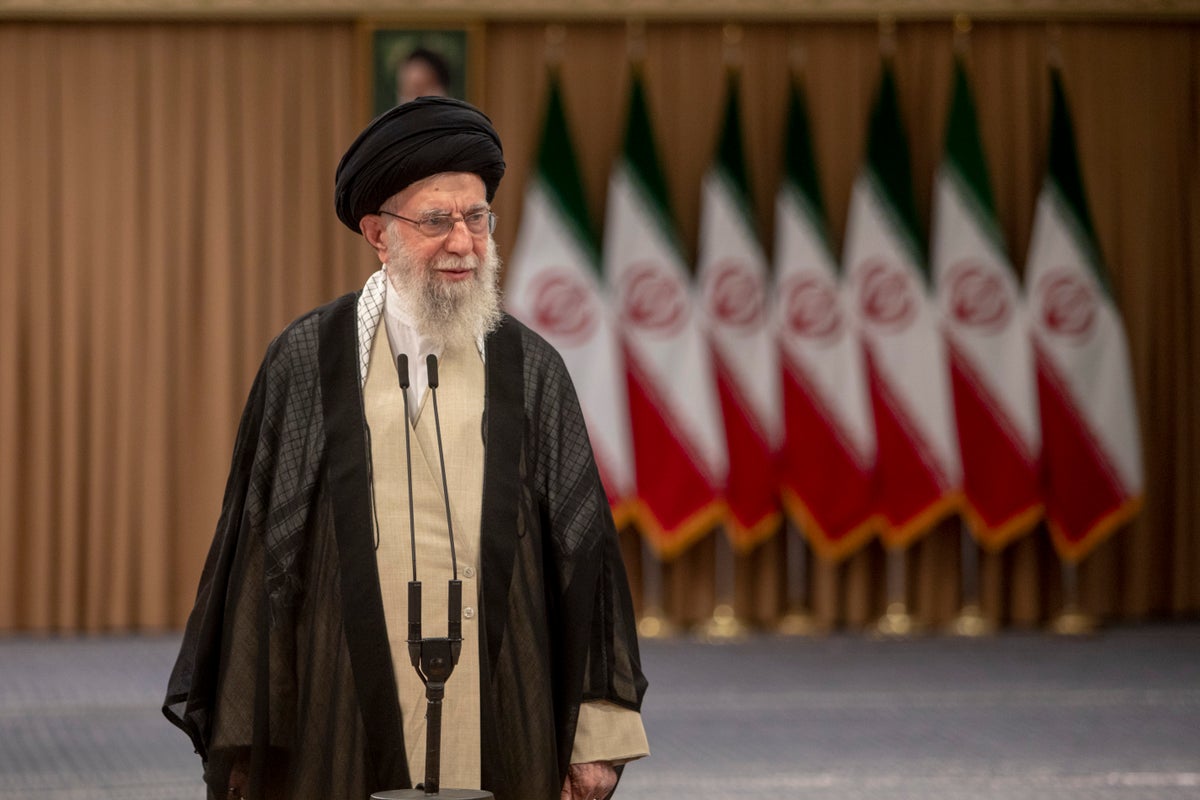
The assumption that the death of Supreme Leader Ayatollah Ali Khamenei will trigger an immediate collapse of the Iranian state is a persistent Western fantasy that ignores the brutal efficiency of the "deep state" he spent thirty years constructing. Khamenei is not just a figurehead; he is the architect of a sprawling security and economic apparatus designed specifically to survive the disappearance of its creator. While his passing will undoubtedly spark a period of intense internal friction, the regime's survival is anchored by the Islamic Revolutionary Guard Corps (IRGC), a body that has morphed from a paramilitary force into a trillion-dollar conglomerate with every incentive to maintain the status quo.
The transition will not be a democratic opening. It will be a corporate takeover by men in olive-drab uniforms.
The Myth of the Power Vacuum
Western analysts often look at the Assembly of Experts—the 88-member body of aging clerics tasked with choosing the next leader—and see a constitutional process. This is a mistake. The Assembly is a rubber stamp. The real selection process is happening now, behind closed doors, in the barracks of the IRGC and the offices of the "Bonyads," the massive tax-exempt charitable trusts that control up to half of Iran’s GDP.
Khamenei’s greatest achievement was the systematic castration of the traditional clergy in Qom. By subordinating religious authority to political and military necessity, he ensured that the next leader will be chosen based on their loyalty to the security state rather than their theological credentials. The regime has spent decades "purifying" its ranks, purging reformists and even pragmatic conservatives who might favor rapprochement with the West. What remains is a hardline core that views compromise not as a strategy, but as a death sentence.
The Praetorian Guard’s Economic Fortress
To understand why the regime won't crumble, you have to follow the money. The IRGC is no longer just a military wing. It is the dominant player in Iran’s construction, telecommunications, energy, and electronics sectors. Through its engineering arm, Khatam al-Anbiya, the Guard manages thousands of projects across the country.
If the regime falls, the IRGC generals don't just lose their jobs. They lose their fortunes, their immunity from prosecution, and likely their lives. This is a powerful motivator for unity. They have built a "resistance economy" that thrives on smuggling and black-market deals necessitated by sanctions—a system that has made the elite incredibly wealthy while the middle class disappears. This economic entrenchment means that any successor to Khamenei will be a client of the military-industrial complex, regardless of whether he wears a turban or a suit.
The Syria Model of Domestic Control
There is a frequent comparison made between the Iranian protests and the fall of the Berlin Wall. This is a flawed analogy. A better comparison is the Syrian civil war. The Iranian leadership watched the Arab Spring with horror and reached a singular conclusion: any sign of weakness or hesitation leads to the gallows.
They have developed a sophisticated, multi-tiered suppression strategy. It starts with the Basij, a volunteer militia embedded in every neighborhood, school, and factory. Their job is surveillance and low-level intimidation. When protests escalate, the Law Enforcement Forces (LEF) step in with anti-riot gear. If those fail, the IRGC brings in heavy weaponry and total internet blackouts.
This isn't a government that fears its people; it is a government that is at war with them. They have already demonstrated, most notably in 2019 and during the 2022 "Woman, Life, Freedom" movement, that they are willing to kill thousands of citizens to maintain control. The death of a single 80-year-old man does not change the ballistic capabilities or the survival instinct of the thousands of men holding the rifles.
The Mojtaba Factor and the Shadow Succession
While several names circulate as potential successors, the most significant is Khamenei’s second son, Mojtaba. For years, he has managed his father’s "Beit" (Office of the Supreme Leader), effectively acting as the gatekeeper to the most powerful man in the country.
Critics point out that a hereditary succession would betray the anti-monarchical roots of the 1979 Revolution. This is true, but irrelevant. The IRGC favors Mojtaba precisely because they know him. He is a known quantity who has spent two decades deepening his ties with the intelligence services. If Mojtaba is not the face of the next regime, it will be a weak cleric who functions as a puppet for a collective leadership of generals. Either way, the policy trajectory remains the same: regional expansion through proxies, a nuclear hedge, and zero domestic liberalization.
Regional Firewalls and the Proxy Shield
The Islamic Republic does not end at its borders. Its survival strategy includes a "forward defense" policy that uses the Levant, Iraq, and Yemen as a buffer zone. The "Axis of Resistance"—Hezbollah, Hamas, the Houthis, and various Iraqi militias—is not just about ideology. It is a strategic insurance policy.
In the event of a leadership crisis in Tehran, these groups provide a massive distraction. They can ignite regional conflicts that force the international community to prioritize stability over regime change. The IRGC’s Quds Force has spent billions ensuring that if Tehran burns, the entire Middle East catches fire. This regional leverage gives the regime a seat at the table that no other revolutionary movement has ever possessed.
The China and Russia Lifeline
Isolation is a relative term. While the West has largely cut ties, Tehran has pivoted toward a strategic alliance with Beijing and Moscow. China provides a market for Iranian oil, albeit at a discount, and the surveillance technology necessary to track dissidents in real-time. Russia provides military cooperation and a veto at the UN Security Council.
This "Alliance of the Sanctioned" has fundamentally changed the stakes. The regime is no longer waiting for a deal with Washington to save its economy. It is building a parallel financial system that is immune to US pressure. This external support gives the transition team the breathing room they need to consolidate power once Khamenei passes.
The Fractured Opposition
The greatest asset of the Islamic Republic is not its strength, but the fragmentation of its enemies. The Iranian diaspora is deeply divided between monarchists, republicans, and various ethnic factions. Inside the country, the lack of a centralized leadership for the protest movement makes it difficult to convert street anger into a political alternative.
The regime has been incredibly effective at decapitating any potential leadership before it can gain momentum. Activists are executed, imprisoned, or driven into exile. Without a "Václav Havel" figure or a unified political front, a popular uprising remains a series of tragic, isolated explosions rather than a coherent revolution. The security forces, meanwhile, remain a monolithic bloc. Until there is a visible split within the military—specifically the IRGC—the regime’s walls will hold.
The Inevitability of Friction
None of this is to say the transition will be smooth. Khamenei has been the ultimate arbiter, the man who balances the competing interests of the "traditionalist" clerics, the "pragmatic" technocrats, and the "hardline" generals. When he is gone, that balance disappears.
We should expect a period of internal purges. There will be arrests of "spies" and "traitors" within the upper echelons of the bureaucracy as different factions vie for the spoils of the state. This period of vulnerability is real, but it is more likely to result in a move toward an overt military dictatorship than a liberal democracy. The IRGC has already signaled its impatience with the clerical class. They may decide that a Supreme Leader is an unnecessary middleman between them and total power.
Why Sanctions Won't Be the Tipping Point
The belief that more economic pressure will force a collapse during the succession ignores the history of authoritarian resilience. Sanctions often strengthen the grip of a security state by destroying the independent middle class—the very people most likely to demand democratic reform—while leaving the elite-run black markets as the only game in town. The IRGC controls the ports. They control the borders. If you want to eat, if you want medicine, if you want a job, you eventually have to deal with them.
The West’s Miscalculation
For forty years, Western policy has alternated between the hope for a "moderate" savior and the expectation of a total collapse. Both are based on a misunderstanding of what the Islamic Republic has become. It is no longer a revolutionary movement fueled by religious fervor. It is a sophisticated, armored, and highly profitable corporation that uses religion as its branding.
The death of Ali Khamenei will be a moment of mourning for some and celebration for many, but for the men who hold the levers of power in Tehran, it is simply a logistical challenge to be managed with the same cold-blooded efficiency they have used to crush every challenge since 1979. They have the guns, the money, and the international backers to ensure that the "Islamic" part of the Republic might change, but the "Republic" remains firmly under their boots.
Monitor the IRGC’s internal promotions and the movements of the Bonyad assets over the next six months. The true successor isn't being debated in the mosques; he is being vetted in the boardrooms of Tehran’s military conglomerates.