The silence inside a media company after a layoff notice goes out is heavier than the silence of an empty room. It is a dense, panicked quiet, punctuated only by the soft, rhythmic clicking of keyboards as people privately message each other to ask the same terrifying question. Are you safe?
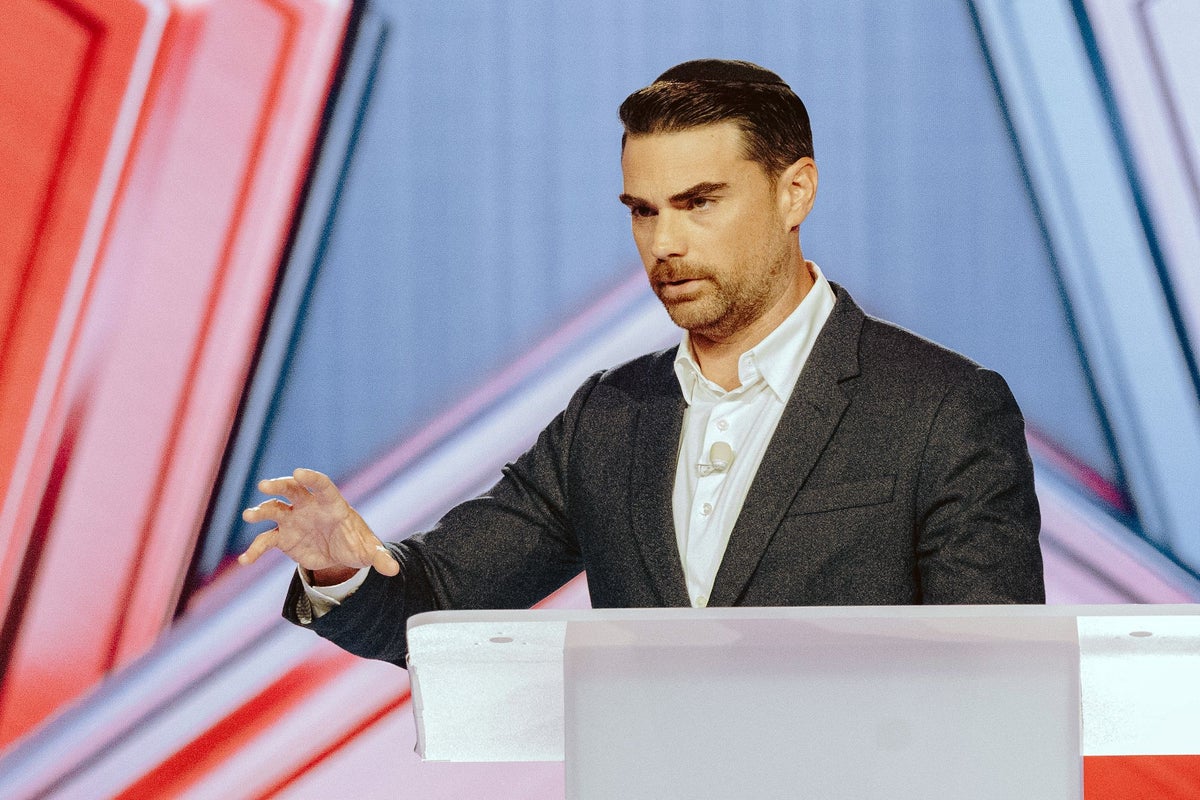
For years, The Daily Wire felt immune to that silence. Under the sharp-tongued, fast-talking stewardship of Ben Shapiro, the company positioned itself not just as a news outlet, but as an empire. It was an ideological fortress funded by deep-pocketed fracking billionaires, staffed by true believers, and fueled by an aggressive, relentless expansion into movies, children’s entertainment, and razor blades. You might also find this related story interesting: Why Norway’s Energy Crisis is a Myth Born of Pure Greed.
Then came the butcher’s knife.
When the company abruptly axed thirteen percent of its workforce, the shockwaves rippled far beyond the glass and steel of its Nashville headquarters. For months, whispers had circulated through media circles that the right-wing juggernaut was fracturing under its own weight. Reports used words like collapsing. Management denied it. But numbers do not harbor ideologies, and they do not lie. Thirteen percent is not a routine trimming of the fat. It is an amputation. As reported in latest reports by The Wall Street Journal, the effects are widespread.
To understand how a media titan hits a wall this hard, you have to look past the spreadsheets. You have to look at the people who built it, and the rapidly shifting ground beneath their feet.
The Mirage of the Infinite Audience
Every digital media venture begins with a intoxicating high. In the early days of The Daily Wire, growth felt organic, inevitable, and infinite.
Consider a hypothetical video editor we will call Sarah. She joined the company four years ago, moving across the country for what felt like a secure haven in a volatile industry. Her days were spent cutting together clips of fast-paced debates, adding dramatic music, and optimizing thumbnails designed to maximize outrage and engagement. For a long time, the algorithms loved them. The views climbed into the millions. The revenue followed. Sarah bought a house. She believed the hype.
But digital media is built on quicksand.
The business model of the modern culture war relies on a volatile currency: attention. To keep the lights on, a company like The Daily Wire must constantly feed the beast. They need higher engagement, angrier comments, and longer watch times to satisfy the platform algorithms that dictate their survival.
The strategy worked brilliantly when the political landscape was fractured and hyper-partisan during election cycles. But attention spans are fickle. Outrage fatigues the human nervous system. Eventually, the audience gets tired of being angry. When the collective blood pressure drops, the traffic dips. And when the traffic dips, the house of cards begins to wobble.
The problem with building an empire on a specific political brand is that your audience pool has a ceiling. Once you have captured every conservative internet user who wants to watch a thirty-minute takedown video, where do you go?
You try to diversify. You build a streaming platform. You make a fantasy movie. You launch a line of cosmetics or men's grooming products. You spend millions of dollars trying to convince your audience that buying your soap is a political statement.
This aggressive over-expansion is precisely where the financial strain turned critical. Building a streaming app to rival Hollywood giants requires astronomical capital. Producing high-quality feature films costs tens of millions. When those ventures fail to immediately generate massive, recurring profit, the core business has to subsidize the loss.
Sarah saw the shift happen gradually. The free snacks in the breakroom vanished. The freelance budgets were slashed. Then, the calendar invite appeared on her screen: an all-hands meeting with an ominous, vague title.
When the Algorithm Turns Cruel
Media executives often talk about pivots as if they are bloodless strategic maneuvers. They speak of optimizing efficiency and streamlining operations.
But a pivot looks very different from the bottom.
From the bottom, a pivot looks like a cardboard box filled with desk plants, a framed family photo, and a mug that says World's Okayest Editor. It looks like sitting in your car in the parking lot, staring at a steering wheel, wondering how you are going to pay a mortgage in a city where the cost of living has skyrocketed precisely because tech and media companies moved in.
The deeper crisis facing independent media brands is an existential one. For the last decade, alternative outlets convinced their audiences that mainstream media was dying and that they were the future. They pointed to declining cable subscriptions and the layoffs at legacy newspapers as proof of their own inevitable triumph.
What they failed to realize—or chose to ignore—is that they are bound by the exact same economic laws.
The internet did not democratize the media business; it just centralized the gatekeepers. Whether you are a left-leaning culture blog or a right-wing political powerhouse, you are ultimately at the mercy of a handful of algorithms controlled by tech platforms in Silicon Valley. If an algorithm changes its weightings to favor short-form dance videos over political commentary, your traffic evaporates overnight.
When your entire distribution model is rented from your ideological enemies, your foundation is inherently unstable.
The Daily Wire’s recent cutbacks are a stark admission that the gold rush is over. The era of easy venture capital, cheap debt, and predictable algorithmic growth has vanished. In its place is a cold, harsh reality where content creators must find a way to make people open their wallets directly, without relying on platform ad-revenue sharing that can be throttled at any moment.
The Human Residue of Ideological Warfare
The tragedy of the modern media landscape is that it treats human beings as disposable fuel for an ideological furnace.
We live in an era where polarization is profitable—until it isn't. The commentators at the top of the pyramid will always be fine. They have personal brands, lucrative speaking gigs, and book deals. Their names are on the building. When a company downsizes, the public faces do not lose their livelihoods.
The burden falls squarely on the nameless, faceless infrastructure. It falls on the sound engineers who balanced the audio, the social media managers who weathered hours of online abuse in the comments sections, the human resources coordinators, and the IT specialists. They are the invisible casualties of the culture war.
There is a profound irony in a media company built on the glorification of rugged individualism and free-market capitalism having to face the brutal, unfeeling mechanics of that very same market. When growth stalls, capital demands a sacrifice.
The atmosphere in these digital newsrooms becomes infected with a specific kind of paranoia. You look at your colleagues not just as teammates, but as line items on a budget sheet. You wonder if your department is considered core or auxiliary. You start to question the value of the words you are typing and the videos you are editing.
Is this content actually helping anyone? Or is it just noise designed to provoke a click before the next ad rolls?
The Quiet After the Storm
The afternoon after the layoffs, the remaining employees at the company received a follow-up email. It was filled with the standard corporate platitudes about resilience, focusing on the mission, and moving forward together as a leaner, more agile team.
But the energy had changed. The illusion of safety was gone.
The true cost of these corporate contractions is the slow, agonizing drain of institutional morale. When people see their peers escorted out of the building, they stop taking creative risks. They keep their heads down. They do exactly what is required of them and nothing more, because they realize that loyalty in the modern media economy is a one-way street.
The industry as a whole is facing a reckoning that transcends partisan lines. The collapse of digital advertising, the rise of artificial intelligence tools that threaten to automate entry-level creative work, and the sheer exhaustion of the consumer have created a perfect storm.
We are watching the slow deflation of an ecosystem that traded substance for scale.
As the sun set over Nashville, casting long shadows across the empty desks of thirteen percent of a workforce, the reality settled in. The studio lights were still bright. The microphones were still live. The fast-talking commentators were still delivering their monologues to millions of screens across the country.
But behind the camera, the room was noticeably emptier, and the silence left in the wake of the ambition was deafening.