The lazy consensus of modern political journalism loves a good confrontation. When protesters swarm an address or an undercover sting drops a juicy headline, the media machine immediately spins a predictable narrative: accountability has arrived, a populist has been cornered, and the walls are closing in.
It is a comforting illusion for establishment pundits. It is also entirely wrong.
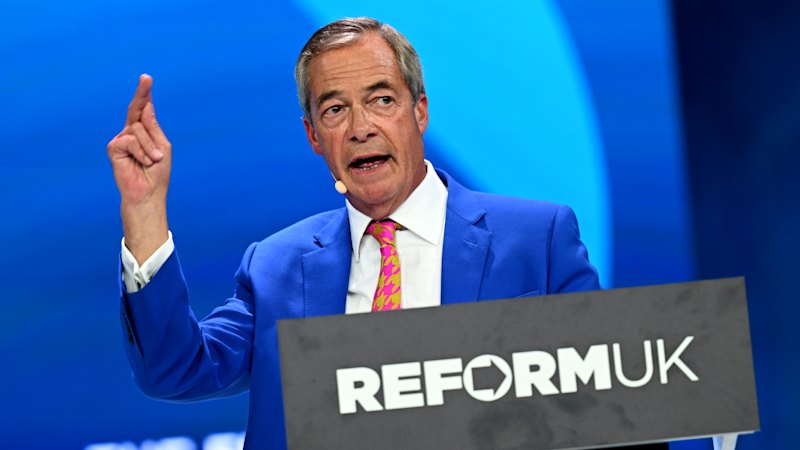
Every time a microphone gets shoved in Nigel Farage's face amid a howling mob of demonstrators, his political stock goes up. Every coordinated disruption feeds the exact engine of grievance that keeps him relevant. The opposition thinks they are executing a resistance movement. In reality, they are acting as his outsourced marketing department.
I have spent decades watching political strategy from rooms where money changes hands and campaigns are engineered. I have seen activists blow millions of dollars and countless hours organizing high-profile stunts that achieve nothing except a spike in a target's fundraising metrics. The political establishment refuses to understand a fundamental rule of modern attention economics: negative oxygen is still oxygen.
The Trap of Performative Resistance
Look at the mechanics of the recent address disruption. A high-security venue, a meticulously planned protest, undercover operatives capturing candid soundbites, and a tidal wave of righteous social media condemnation.
The mainstream playbook treats this as a victory. The narrative claims that public pushback signals a healthy immune system rejecting a toxic figure. But this logic belongs in the twentieth century. In an attention economy defined by algorithmic sorting, hostility is a multiplier.
When protesters lock arms outside a venue or shout down a speech, they are not neutralizing a threat. They are providing the visual contrast that Farage relies on. He does not need universal adoration. He needs to look like the lone, beleaguered outsider fighting against a collective, frantic establishment. Every banner waved against him reinforces that branding.
Imagine a scenario where a major speech happens in a half-empty room with zero protesters outside, followed by total media silence. That is the true nightmare scenario for any populist agitator. Indifference kills movements. Outrage scales them.
"If you fight an insurgent on their chosen battlefield of cultural conflict, you are not defeating them. You are volunteering to be a prop in their next promotional video."
✨ Don't miss: The Divided Clock Inside the Capitol
Why the Undercover Sting Backfires
The obsession with undercover stings and gotcha journalism suffers from the exact same strategic blindness. The theory goes that exposing a politician's private contradictions or behind-the-scenes machinations will shatter their support base among everyday voters.
This approach ignores how modern audiences consume information. Voters do not care about hypocrisy anymore because baked-in cynicism is the default state of public life. When an undercover operation catches a controversial figure saying something inflammatory or calculating behind closed doors, supporters do not feel betrayed. They feel vindicated that their champion is being hunted by a biased media class.
The mistake lies in treating the electorate like a traditional courtroom jury. In a courtroom, a smoking gun ends the trial. In modern politics, a smoking gun presented by an adversarial media outlet is just proof that the establishment is scared.
Farage thrives on institutional friction. The more elite institutions try to sandbox him, cancel his venues, or entrap his staff, the more his base digs in. You cannot out-scandal a man whose entire brand is built on being the target of elite disdain.
The Counter-Intuitive Remedy
If standard disruption fails, what actually works? The answer is terrifyingly simple and completely ignored by modern activists: radical, boring competence and total starvation of attention.
Insurgents feed on friction. They starve in a vacuum of relevance. If opponents want to neutralize a figure like Farage, the prescription is counter-intuitive.
- Stop amplifying the spectacle: Every minute of cable news coverage dedicated to a shouting match outside an event is a minute stolen from substantive policy debate. Mute the cameras.
- Deny the martyrdom complex: When venues cancel events or heavy-handed security measures lock down city blocks, it creates the exact underdog aesthetic the politician exploits. Let them speak to empty halls. Let the events be boring.
- Compete on execution, not aesthetics: Populism wins when governance fails. The only permanent antidote to disruptive political figures is tangible, visible competence in public administration. When infrastructure works, when healthcare queues shrink, and when economic anxiety drops, the grievance narrative loses its oxygen.
The protesters shouting outside the venue think they are writing history. They are just serving as extras in a play that was written, produced, and monetized by the very person they are trying to silence.
Stop funding the production. Turn off the lights, lock the door, and let them talk to an empty room.

.png?width=1200&auto=webp&trim=0%2C0%2C0%2C0)