The desert at night is never truly dark. In the borderlands of the Middle East, the sky is often bruised by the orange glow of distant cities or the sharp, artificial flicker of surveillance flares. But for a father in a coastal village or a technician in a glass-walled office in Abu Dhabi, the real darkness isn't the absence of light. It is the sound. The low, persistent hum of a gasoline engine hanging in the air—the signature of a suicide drone—is a sound that bypasses the ears and settles directly in the marrow of the spine.
For years, the defense against these buzzing shadows has been a matter of brute force and expensive math. You see a drone worth twenty thousand dollars. You launch a missile worth two million dollars to stop it. The math is a slow-motion suicide for any national budget. It is a war of attrition where the defender bleeds gold while the attacker throws stones. For another perspective, consider: this related article.
But a new silent geometry is moving into the sands of the United Arab Emirates. It doesn't roar. It doesn't leave a smoke trail. It is called the Iron Beam, and it represents the moment the physics of warfare finally caught up to the speed of modern threats.
The Five-Dollar Bullet
Consider a young engineer named Elias. He isn't real, but his anxiety is. He works in a logistics hub near the port, a place where the global economy breathes. When the sirens wail, Elias doesn't just worry about the blast. He worries about the "Iron Dome" interceptors—the massive, kinetic missiles that have saved countless lives but come with a terrifying caveat: what goes up must come down. Every interceptor launched is a skyscraper-sized piece of hot metal that eventually returns to earth. Further reporting on this trend has been provided by Engadget.
Now, imagine Elias looking at the sky during a projected strike. Instead of a thunderous launch and a jagged trail of white smoke, there is nothing. A drone, thousands of feet up, simply begins to glow. A small curl of smoke escapes its fuselage. Its wings buckle. It tumbles into the sea, neutralized by a concentrated stream of photons moving at 186,000 miles per second.
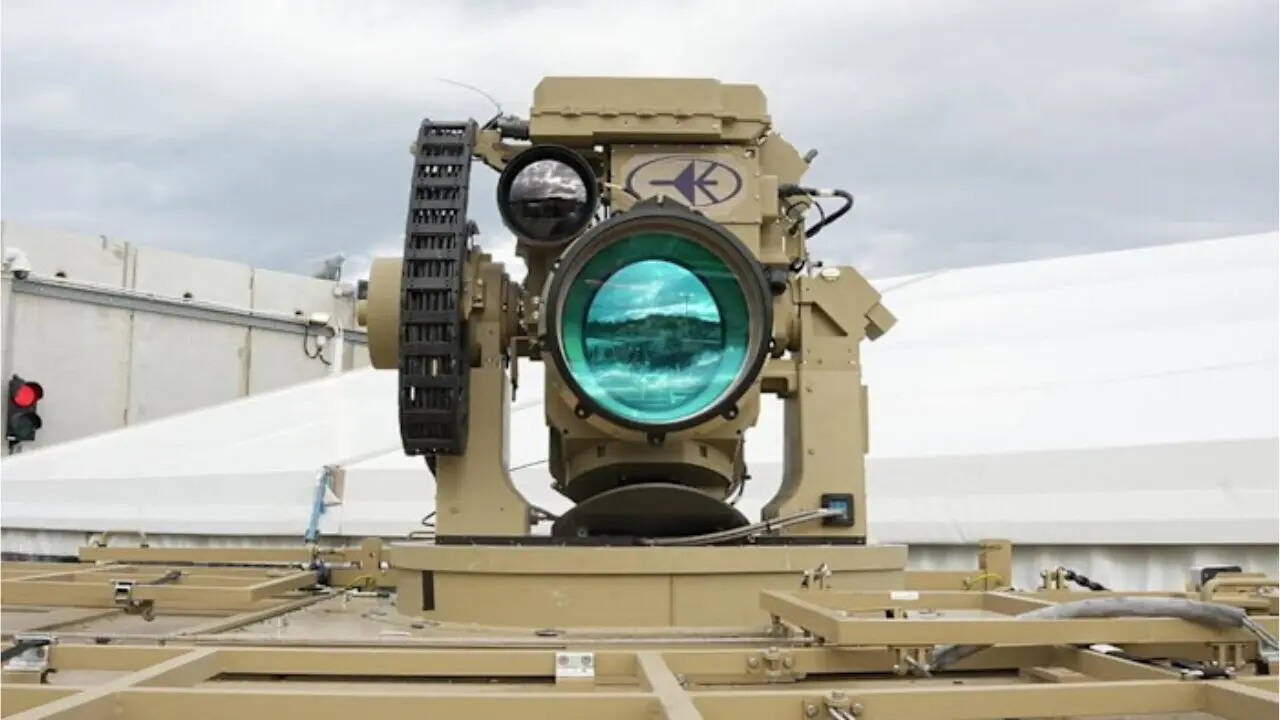
The Iron Beam, developed by Israel’s Rafael Advanced Defense Systems, is a 100-kilowatt fiber laser. It is the culmination of a dream that defense contractors have chased since the 1970s. The breakthrough isn't just that it works; it’s that it is cheap. While a traditional interceptor missile costs more than a luxury villa, a "shot" from the Iron Beam costs about the same as a cup of high-end coffee.
The economic gravity of the region is shifting. By deploying this tech to the UAE, a bridge is being built out of pure light. It’s a message to the manufacturers of cheap, swarming drones: the financial advantage of the "low-cost attack" has evaporated.
The Invisible Shield
Traditional defense systems are like a goalie in a soccer match. They are reactive, athletic, and limited by their own physical exhaustion. They run out of "balls"—interceptor missiles—and they need time to reload. During a saturation attack, where dozens of drones are sent at once to overwhelm the sensors, even the best goalie eventually lets one through.
The Iron Beam changes the nature of the goal itself. As long as there is electricity, the magazine is infinite. It does not run out of ammunition. It does not need a reload team to scramble under fire. It simply waits for the next lock-on, swiveling with a precision that makes human reflexes look like they are moving through molasses.
There is a psychological weight to this. For decades, the drone has been the weapon of the ghost. They are hard to track and even harder to hit with traditional guns. They represent a persistent, nagging vulnerability. But when you introduce a weapon that strikes at the speed of thought, the ghost suddenly becomes the prey.
The UAE, a nation that has built its identity on being a global crossroads of commerce and luxury, cannot afford the "persistent nag" of insecurity. The arrival of Israeli laser tech is more than a procurement deal. It is a hard-coded insurance policy for the future of the Abraham Accords. It is a physical manifestation of a new, once-unthinkable alliance, bound together by the shared need to stop the sky from falling.
The Geometry of a Strike
To understand how this feels on the ground, you have to understand the sheer complexity of "tracking." A drone isn't a metal bird; it’s a vibrating, shifting target that uses the wind and low altitudes to hide.
When the Iron Beam engages, it doesn't just "fire." A sequence of sophisticated algorithms first identifies the most vulnerable part of the incoming threat—perhaps the fuel tank or the internal flight controller. The laser then focuses a beam roughly the size of a coin onto that specific spot.
The heat is instantaneous. We aren't talking about a slow burn. We are talking about the structural failure of carbon fiber and aluminum. In a fraction of a second, the drone is no longer an aerodynamic machine; it is a falling piece of scrap metal. This happens in total silence. No boom. No secondary debris from an exploding interceptor. Just the quiet deletion of a threat.
But there are limitations that keep the engineers awake at night. Lasers hate bad weather. Fog, heavy rain, or thick dust storms can scatter the light, diffusing the energy until the beam is little more than a very expensive flashlight. This is why the Iron Beam isn't replacing the Iron Dome or the Patriot batteries. Instead, it is being woven into them. It is the scalpel that works alongside the sledgehammer.
The Stakes of the Silent War
Why does it matter that this is happening in the UAE now?
Look at the map. The geopolitical landscape is no longer defined by borders drawn in the sand, but by "bubbles" of denial. If you can control your airspace cheaply, you can protect your economy. If you can’t, your ports, your desalination plants, and your glass towers are hostages to anyone with a three-thousand-dollar kit and a grudge.
The transfer of this technology from Israel to the UAE is a moment of profound vulnerability and trust. Sharing "the crown jewels" of defense tech isn't something done for mere profit. It is done because the threat—autonomous, swarming, and increasingly intelligent—is evolving faster than any single nation can handle.
The invisible stakes are the lives of people like Elias, and the millions of others who live in the shadow of the drone's hum. They are the investors who decide whether to build a new tech hub in Dubai or move their capital to Singapore. They are the pilots who need to know the airspace is clear.
We are entering an era where the most important battles will never be heard. They will be fought in the infrared spectrum, in the milliseconds between a sensor ping and a heat signature. The desert will remain bright, but the source of that light is changing. It is no longer just the sun or the city lights. It is the focused, searing glow of a world deciding that it is tired of being afraid of the shadows.
The drone hums in the distance, a relic of a dying strategy, unaware that the air in front of it has already turned into a wall of heat. The light wins. It always does, eventually.