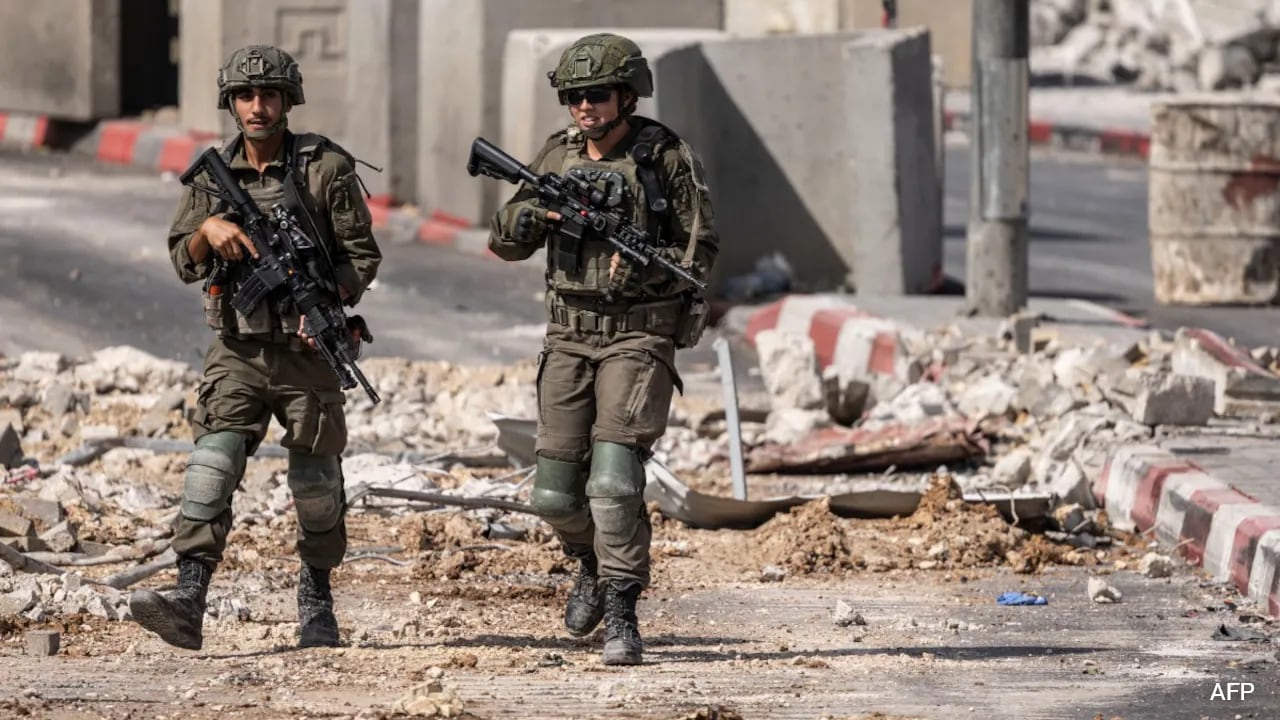
Military responses to violent attacks in the occupied West Bank rarely operate as isolated tactical sweeps; they function as systematic restructurings of physical space and civilian infrastructure. When Israeli forces displace Palestinian families in Hebron following a deadly attack, the operation relies on a specific security doctrine that links immediate counter-insurgency containment with long-term territorial fragmentation. Standard news reporting treats these events as linear sequences of provocation and retaliation, missing the underlying administrative, legal, and spatial mechanisms that turn temporary security measures into permanent demographic shifts.
Understanding the mechanics of displacement in Hebron requires examining the city's unique jurisdictional architecture, the operational logic of collective deterrence, and the legal frameworks governing property demolition and eviction.
The Jurisdictional Architecture of Hebron
Hebron is the only Palestinian city in the West Bank partitioned directly through its urban core by formal international agreement. Under the 1997 Hebron Protocol, signed between Israel and the Palestine Liberation Organization, the city was divided into two distinct administrative sectors: H1 and H2. This division dictates every aspect of military intervention, civilian movement, and legal recourse.
- Sector H1: Comprising roughly 80 percent of the city, H1 falls under the civil and security administration of the Palestinian Authority (PA). While Israeli forces regularly conduct night raids into H1, the area lacks permanent Israeli military installations or civilian settlements.
- Sector H2: Encompassing the remaining 20 percent, including the historic Old City and the Tomb of the Patriarchs (Ibrahimi Mosque), H2 remains under direct Israeli military control. Approximately 30,000 to 40,000 Palestinians reside in H2 alongside several hundred Israeli settlers living in fortified enclaves, guarded by a dense network of military checkpoints, observation towers, and closed military zones.
According to human rights organizations such as B'Tselem and the United Nations Office for the Coordination of Humanitarian Affairs (OCHA), the governance model in H2 prioritizes the security and freedom of movement of the settler population over the rights of Palestinian residents. When a deadly attack occurs within or near H2, the military's immediate operational reflex is to expand the sterile buffer zones surrounding settler compounds and transit routes. Displacement in this context is rarely an accidental byproduct of combat; it is the primary instrument used to achieve spatial separation.
The Three Pillars of Post-Attack Displacement
Following a lethal incident—such as a shooting or stabbing targeting Israeli soldiers or civilians—the Israel Defense Forces (IDF) execute a standardized sequence of spatial controls. Analysts and international legal observers identify three distinct mechanisms through which families are removed from their residences.
1. Immediate Tactical Seizure and Military Orders
In the hours immediately following an attack, military commanders frequently issue temporary seizure orders citing urgent operational necessity. Under military law applicable in the West Bank, area commanders possess broad authority to declare specific structures or entire neighborhoods closed military zones.
Families residing in buildings overlooking major roads or adjacent to attack sites are ordered to vacate, often with minimal notice. While legally framed as temporary measures to facilitate investigations, sweep for suspects, or secure vantage points, these seizures routinely extend indefinitely. Rooftops are converted into permanent sniper nests and surveillance outposts, rendering the lower floors uninhabitable for the original occupants due to constant military presence, noise, and restriction of entry.
2. Punitive Home Demolitions and Sealings
A second, formalized mechanism is punitive demolition, executed under Regulation 119 of the British Mandate-era Defense (Emergency) Regulations of 1945, which Israel maintains remains in force in the occupied territories. Unlike administrative demolitions—which target structures built without Israeli-issued permits—punitive demolitions specifically target the family homes of individuals accused of carrying out attacks against Israelis.
The operational logic behind Regulation 119 is deterrence through collective cost-imposition. Israeli defense officials argue in submissions to the Israeli High Court of Justice that the prospect of rendering one's extended family homeless acts as a psychological counterweight to militant recruitment. Conversely, international legal bodies, including the International Committee of the Red Cross (ICRC), classify punitive demolitions as a violation of Article 53 of the Fourth Geneva Convention, which prohibits the destruction of private property by an occupying power unless rendered absolutely necessary by military operations, and Article 33, which explicitly forbids collective punishment.
Even when a home is sealed with poured concrete rather than demolished with explosives or bulldozers—a measure sometimes taken to avoid structural damage to adjacent apartments in dense urban areas like Hebron—the result is identical: the permanent displacement of non-combatant family members, including children and the elderly.
3. Coercive Environment and Attrition
The third mechanism operates over weeks and months rather than hours, creating what UN agencies define as a "coercive environment." Following an attack, the IDF systematically tightens the closure regime around the affected neighborhood.
- Checkpoint Multiplication: New physical barriers, concrete blocks, and iron gates are installed, severing direct pedestrian and vehicular access between Palestinian homes and the rest of the city.
- Curfews and Movement Bans: Residents are subjected to prolonged curfews, preventing access to workplaces, schools, and medical facilities. In streets designated as "sterile," such as Shuhada Street, Palestinians are barred entirely from walking or driving, forcing families to weld shut their front doors and exit through rear windows or neighboring rooftops.
- Commercial Strangulation: Shops near the site of an attack are routinely ordered closed by military decree, destroying the local economy and stripping families of their livelihoods.
Over time, the cumulative friction of checkpoints, searches, settler harassment, and economic isolation forces families to abandon their homes voluntarily in legal terms, though under extreme duress. Data compiled by OCHA and Israeli NGOs like Breaking the Silence indicates that thousands of Palestinians have left H2 over the past two decades through this exact process of attrition, leaving behind ghost neighborhoods that are subsequently absorbed into expanded security perimeters.
Evaluating the Deterrence Hypothesis
The core strategic justification advanced by the Israeli military and political establishment for post-attack displacement and punitive demolition is deterrence. Evaluating this strategy requires separating stated intent from measurable security outcomes.
Proponents within the Israeli security apparatus maintain that in asymmetric warfare, where attackers often expect to die during an operation, traditional individual deterrence fails. By shifting the cost of the attack onto the perpetrator's family and immediate community, the state attempts to create social pressure within Palestinian society to discourage violence. Some internal IDF assessments cited in Israeli media have argued that punitive demolitions occasionally lead family members to report radicalized relatives to security forces to save their homes.
However, empirical studies and counter-insurgency analyses point to severe operational limitations and counterproductive second-order effects:
- The Radicalization Feedback Loop: Quantitative research, including studies conducted by Israeli economists Efraim Benmelech, Claude Berrebi, and Esteban Klor analyzing data from the Second Intifada, found that while punitive demolitions caused an immediate, localized drop in suicide attacks in the specific district where a demolition occurred, they simultaneously triggered a statistically significant increase in attacks across the broader region. The public spectacle of displacing innocent family members generates intense grievance, acting as a potent recruitment driver for militant factions.
- Institutional Erosion: Relying on collective administrative measures bypasses standard judicial processes of individual culpability. This weakens the legitimacy of the governing authority in the eyes of the local population and deepens the diplomatic isolation of the state among international allies who view such practices as incompatible with international humanitarian law.
- Tactical Rigidity: Locking down entire neighborhoods and maintaining permanent garrisons to enforce displacement ties down substantial infantry forces. In Hebron, hundreds of soldiers are required to secure a relatively small geographical footprint, reducing the military's operational flexibility and creating static targets for future attacks.
The Structural Trajectory of Urban Partition
When displacement occurs in Hebron following a deadly attack, the immediate security objective is containment, yet the structural outcome is permanent demographic engineering. The legal and physical infrastructure put in place during an emergency rarely reverts to the status quo ante once the immediate threat subsides.
A closed street does not reopen; a seized rooftop becomes a permanent observation post; a demolished apartment leaves a vacant lot that cannot be rebuilt due to military zoning restrictions. Meanwhile, the neighboring Israeli settlement enclaves—such as Beit Hadassah, Avraham Avinu, and Tel Rumeida—gain enhanced connectivity and expanded security perimeters, consolidating territorial contiguity within the heart of the city.
For policymakers, military planners, and international observers tracking the stability of the West Bank, monitoring the aftermath of an attack in Hebron requires looking beyond casualty figures and arrest tallies. The decisive metric is the map of physical access: every new checkpoint, welded door, and displacement order marks a permanent redrawing of the city's boundaries, steadily transforming a temporary military occupation into an irreversible spatial reality.


