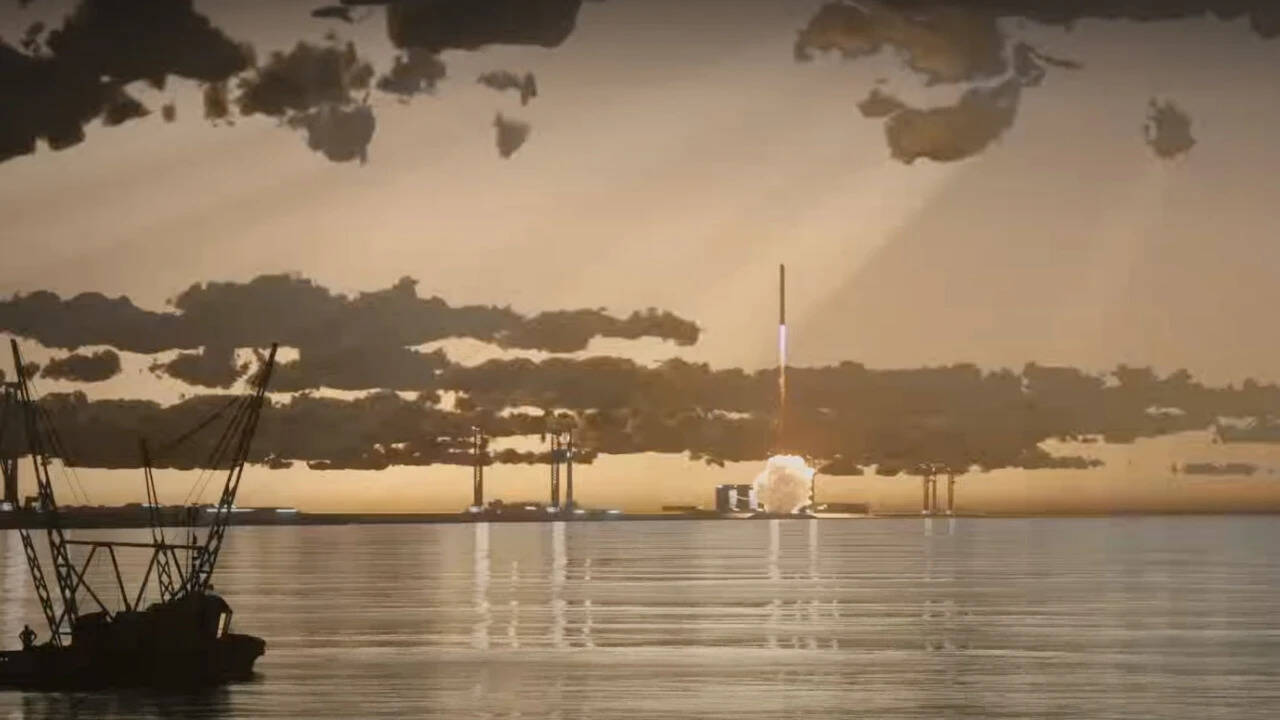
SpaceX isn't just building another launchpad. They are dropping a staggering $100 billion into the marshlands of Vermilion Parish, Louisiana, to create Starbase Louisiana. If you think this is just a routine construction project, you're missing the entire point of what commercial aerospace is becoming.
This new complex aims to handle thousands of Starship flights every single year. It's designed to be the company's fourth and largest launch site, completely redefining what heavy-lift capacity looks like on the Gulf Coast. Let's look at why this specific bet matters, what it means for local workers, and why SpaceX chose southern Louisiana over safer, less complicated terrain.
The Scale of the Pecan Island Bet
When SpaceX executives and Louisiana officials rolled out the blueprint for the Pecan Island project, the numbers shocked even seasoned industry watchers. We are talking about a 125,000-acre footprint tailored for heavy infrastructure. At full buildout, the site will feature five separate launch complexes, each packing two distinct launch pads and dedicated propellant farms.
Unlike the original Boca Chica facility in Texas, Starbase Louisiana won't actually build the rockets. Instead, massive Starships will arrive via deep-water shipping infrastructure from manufacturing hubs, ready to be integrated, fueled, and launched.
The facility is engineered to be entirely self-sustaining. It will generate its own power and produce its own methane propellant on-site. That eliminates the logistical bottlenecks that usually plague high-cadence rocket programs.
Jobs, Money, and the Local Economic Shift
Money talks, and a $100 billion industrial commitment screams. The state expects the project to inject thousands of opportunities directly into the Acadiana region.
- Direct Employment: Over 3,000 new direct jobs are planned over the next decade, sporting an average annual salary hovering around $92,600.
- Indirect Impact: Economic models estimate more than 8,100 additional indirect jobs for local suppliers, fabricators, and service providers.
- Community Funding: The agreement includes an upfront local payment of $20 million, backed by at least $25 million annually for 25 years, alongside a $25 million charitable contribution to the Community Foundation of Acadiana.
Louisiana is banking on its oil and gas workforce. The state's engineers and contractors already know how to build massive, complex structures in harsh, wet environments. SpaceX is basically plugging a multi-billion-dollar aerospace engine straight into an existing industrial talent pool.
Geography and the Quest for High-Cadence Flight
Why Vermilion Parish? It comes down to geography, physics, and raw materials.
South Louisiana offers abundant natural gas resources required to power intensive industrial and fuel-generation operations. More importantly, launching from the Gulf Coast provides optimal trajectories for southern headings. These paths are critical for reaching sun-synchronous orbits—ideal positions for deploying large constellations of satellites designed for heavy data processing and internet coverage.
Elon Musk wants to make spaceflight as routine as commercial aviation. You can't achieve airline-style frequency with a single launch site in South Texas, nor can you rely solely on Florida's crowded schedules. Starbase Louisiana provides the geographic redundancy and physical space required to push flight rates into the thousands per year.
Overcoming Environmental and Logistical Hurdles
Let's be honest: building a massive spaceport in a sensitive coastal wetland is bound to draw fierce opposition. The proposed location on Pecan Island serves as a critical habitat for migratory birds, and local communities are hyper-sensitive to any degradation of wetlands that act as a natural buffer against severe weather.
The pathway to this project only opened after a long legal battle involving historic industrial drilling claims against energy companies was settled and dismissed. SpaceX and state officials insist that large portions of the acreage will remain untouched natural wetlands. They are also coordinating with coastal protection authorities to ensure hydrology and shoreline stabilization are prioritized.
Even with performance-based state incentives protecting taxpayers, the success of Starbase Louisiana hinges on regulatory approval and managing local environmental realities without stalling construction schedules targeted for 2027.
Construction kickoffs are slated for next year, with the first target launch window pointing toward 2029. If SpaceX hits its marks, the southern coast of Louisiana will transform into America's next major space coast.