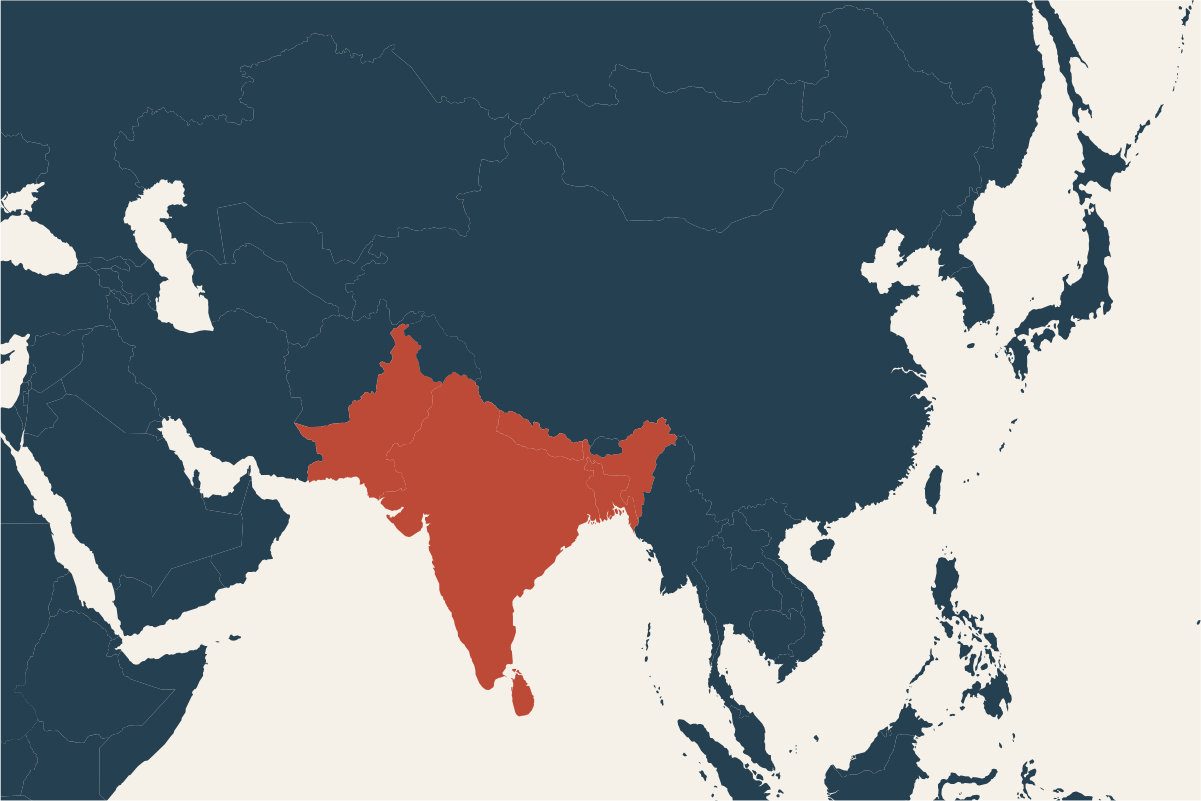
The 2026 Annual Threat Assessment from the U.S. Intelligence Community confirms a grim reality: South Asia remains one misstep away from a disaster that neither New Delhi nor Islamabad truly wants. While high-level diplomacy—often steered by heavy-handed U.S. intervention—managed to pull both nations back from the brink following the 2025 Pahalgam crisis, the structural dry rot remains. The report explicitly warns that "conditions exist for terrorist actors to continue to create catalysts for crises," a sterile phrase that masks a volatile ecosystem where non-state groups effectively hold the remote control to regional stability.
In the early hours of May 2025, India launched "Operation Sindoor," a series of precision strikes against nine terror camps in Pakistan and Pakistan-occupied Kashmir. This wasn't a localized skirmish; it was a high-tech demonstration involving drone swarms and coordinated munitions that dismantled infrastructure belonging to Jaish-e-Mohammed and Lashkar-e-Taiba. The Intelligence Community (IC) assessment suggests that while the military hardware has become more precise, the political "velocity gap" between the two nations has created a new, more dangerous kind of instability.
The Illusion of Control in a High Velocity Crisis
The core problem is no longer just the presence of militants, but the speed at which a single event transforms into a potential nuclear standoff. Investigative findings and recent diplomatic disclosures reveal a "Velocity Gap" that Pakistan has intentionally cultivated. By streamlining their command structures, Islamabad can now move from a terror-induced incident to a full-scale diplomatic and narrative counter-offensive faster than the Indian bureaucracy can vet its intelligence.
During the Pahalgam attack in April 2025, where 26 tourists were gunned down in a meadow often called "mini Switzerland," the delay in India’s "attribution cycle" allowed Pakistan to dominate the international narrative. While New Delhi’s intelligence agencies were still confirming the handlers' identities, Pakistani lobbyists in Washington had already facilitated over 60 engagements with U.S. policymakers to frame the upcoming Indian response as "reckless escalation."
This creates a paradox. India has adopted a doctrine of "coercive clarity," where any major terror attack is treated as an act of state-sponsored war. However, because Pakistan has optimized its ability to "de-escalate" via third-party intervention (specifically the U.S.), the deterrent effect of India’s military strikes is being neutralized. India achieves the tactical hit, but Pakistan wins the diplomatic stabilization, leaving the underlying terror networks battered but fundamentally intact.
The Technological Descent into the Grey Zone
We are seeing a shift from traditional insurgency to a sophisticated "Grey Zone" conflict where AI and unmanned systems have shortened the fuse. The 2026 report highlights how groups like ISIS-K and The Resistance Front (TRF) are using encrypted platforms and AI-generated propaganda to recruit and coordinate with a speed that traditional signals intelligence struggles to match.
- Drone Proliferation: In January 2026, Indian forces detected a surge in drone incursions carrying high-grade weapons and ammunition across the Line of Control.
- Narrative AI: Terror groups are now using AI to create localized, hyper-targeted propaganda aimed at disenfranchised youth, making radicalization harder to track through conventional means.
- Compressed Decision Windows: When both sides deploy cruise missiles and loitering munitions, the time for a leader to decide between "wait for more data" and "launch a retaliatory strike" shrinks from hours to minutes.
The 2025 strikes proved that India can bypass traditional air defenses, but they also showed that Pakistan is willing to "normalize" the exchange of ballistic missiles below the nuclear threshold. This normalization is perhaps the most terrifying development of the last decade. By making "limited" missile exchanges part of the crisis routine, both nations are eroding the psychological barriers that once prevented total war.
The Third Man Problem and the Trump Factor
The U.S. Intelligence Community credits President Donald Trump’s direct intervention for easing the 2025 nuclear tensions. However, relying on a "Great Man" theory of crisis management is a fragile strategy. The report hints that while U.S. mediation is currently effective, it creates a moral hazard. If Islamabad believes the U.S. will always step in to prevent a nuclear exchange, there is less incentive to dismantle the proxy groups that start the fire in the first place.
Furthermore, the intelligence reveals a growing rift between Pakistan and the Taliban in Afghanistan. As Islamabad conducts its own cross-border strikes against the TTP (Tehrik-i-Taliban Pakistan), it is using the exact same "unwilling or unable" legal doctrine that India uses to justify strikes against Pakistan. This legal hypocrisy is eroding Pakistan’s standing in international forums, but it also increases the likelihood of a multi-front conflict involving Afghanistan, Pakistan, and India simultaneously.
The Missile Shadow and Intercontinental Ambition
Perhaps the most overlooked detail in the 2026 assessment is the evolution of Pakistan’s missile program. The IC assesses that Pakistan is no longer just focused on regional parity. They are developing "increasingly sophisticated missile technology" that could eventually reach intercontinental ranges.
While New Delhi views its missile development as a counter to China, Islamabad views any Indian advancement as a direct existential threat. This has led to a vertical arms race where the sheer volume of assets—projected to exceed 16,000 missiles in the region by 2035—makes accidental launch or "use-them-or-lose-them" logic during a crisis almost inevitable.
The brutal truth is that South Asia is not in a state of "peace" or even "stalemate." It is in a state of high-speed management. The terror actors are not just "catalysts"; they are the primary architects of the region's geopolitical tempo. As long as the "attribution friction" remains in New Delhi and the "deniability infrastructure" remains in Islamabad, the next Pahalgam is not a matter of if, but when.
The international community must look past the successful de-escalation of 2025. Tactical victories and successful mediation have only masked the fact that the underlying drivers—state-proxy linkages, rapid-fire drone technology, and a complete lack of direct bilateral communication—are more potent than ever.
Would you like me to analyze the specific technological specifications of the drone swarms used in Operation Sindoor to understand how they bypassed traditional air defense networks?


