Dirt does not forget.
You can pave it. You can build gray suburbs over it. You can let the wild grasses choke the stone foundations until they look like little more than accidental bumps in a farmer’s field. But if you press your hand against the earth in Asuka, somewhere beneath the modern asphalt and the hum of commuter trains, you can feel the stubborn ghost of an empire that refused to die quietly.
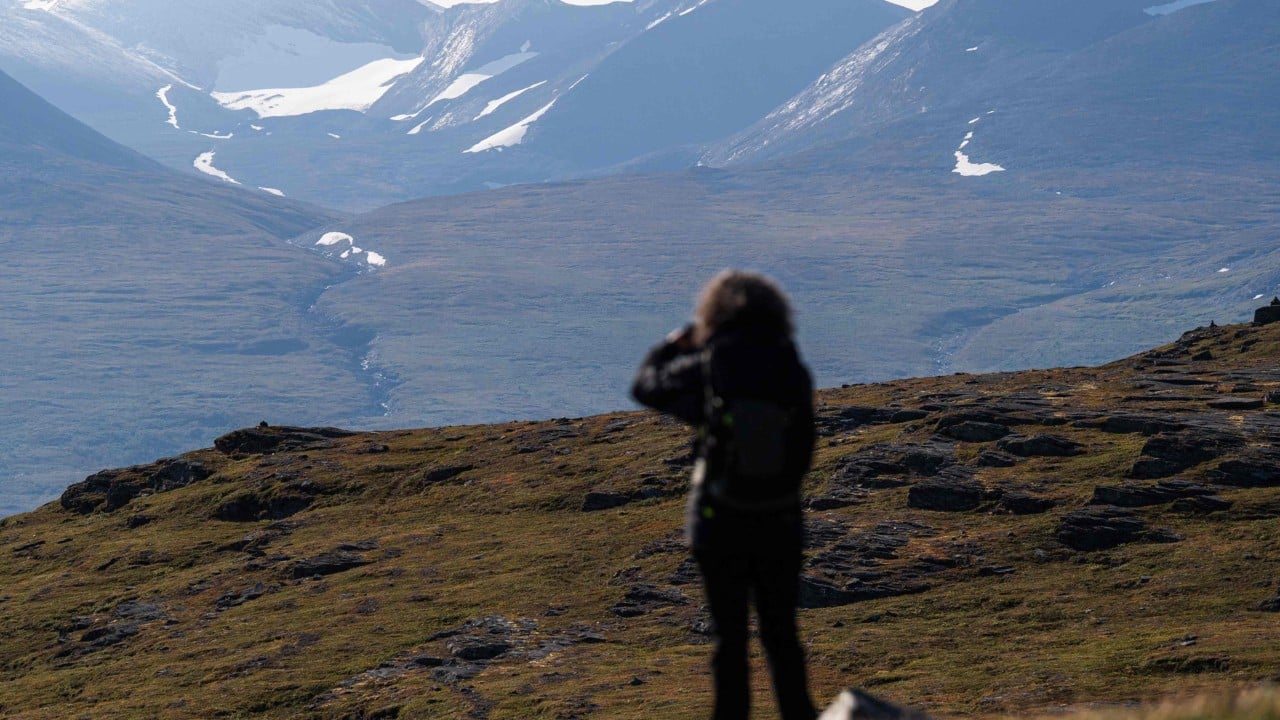
I stood there last autumn, watching a heavy mist lift off the Yamato Plain. My boots were caked in the sticky, reddish-brown clay unique to this part of Nara Prefecture. It is the same soil that workers carried in woven baskets fourteen hundred years ago, shaping it into massive tiered pyramids and palace ramparts. Back then, this valley was the beating heart of Japan. It was a place where politicians argued over the introduction of Buddhism, where poets stared up at the same jagged peaks and wrote verses about transient dewdrops, and where the very blueprint of the modern Japanese state was hammered out on an anvil of mud and timber.
Then, they abandoned it.
By the late seventh and early eighth centuries, the imperial court packed up its belongings, loaded the wagons, and walked away. They marched a few miles north to Fujiwara-kyo, and later to Nara, leaving the old palaces to rot. Rice paddies crept inward. The ditches filled with silt. For centuries, Asuka and its sister site Fujiwara became little more than ghost stories whispered by local grandmothers to children playing among the ancient stones.
Until recently.
When UNESCO officially added the Archaeological Sites of Asuka and Fujiwara to its World Heritage list, the global news cycle treated it like a bureaucratic stamp of approval. A ribbon cutting for historians. But if you have ever walked these quiet paths, you know this designation is something entirely different. It is an act of resurrection.
Let us trace the footsteps of someone who lived through the seismic shift of the seventh century. Imagine a young carpenter named Nakatomi, living in the mid-600s. His calloused hands smell of fresh cypress wood. His grandfather built pit-dwellings with thatched roofs that barely survived the heavy winter snows. But Nakatomi is summoned to work on something grander. The imperial family, rattled by shifting geopolitical winds across the sea in China and the Korean peninsula, decides they need to look like a superpower.
They need scale. They need permanence.
Nakatomi finds himself hauling massive blocks of granite—some weighing several tons—to build the base of Asuka-dera, Japan’s first true Buddhist temple. He watches foreign monks in saffron robes chant words he cannot understand, while local priests mutter nervous prayers to the old local spirits of the trees and rivers. It is a terrifying, exhilarating time. Everything is changing. The clan leaders are centralizing power. The Emperor is no longer just a tribal chief; he is turning into a Son of Heaven.
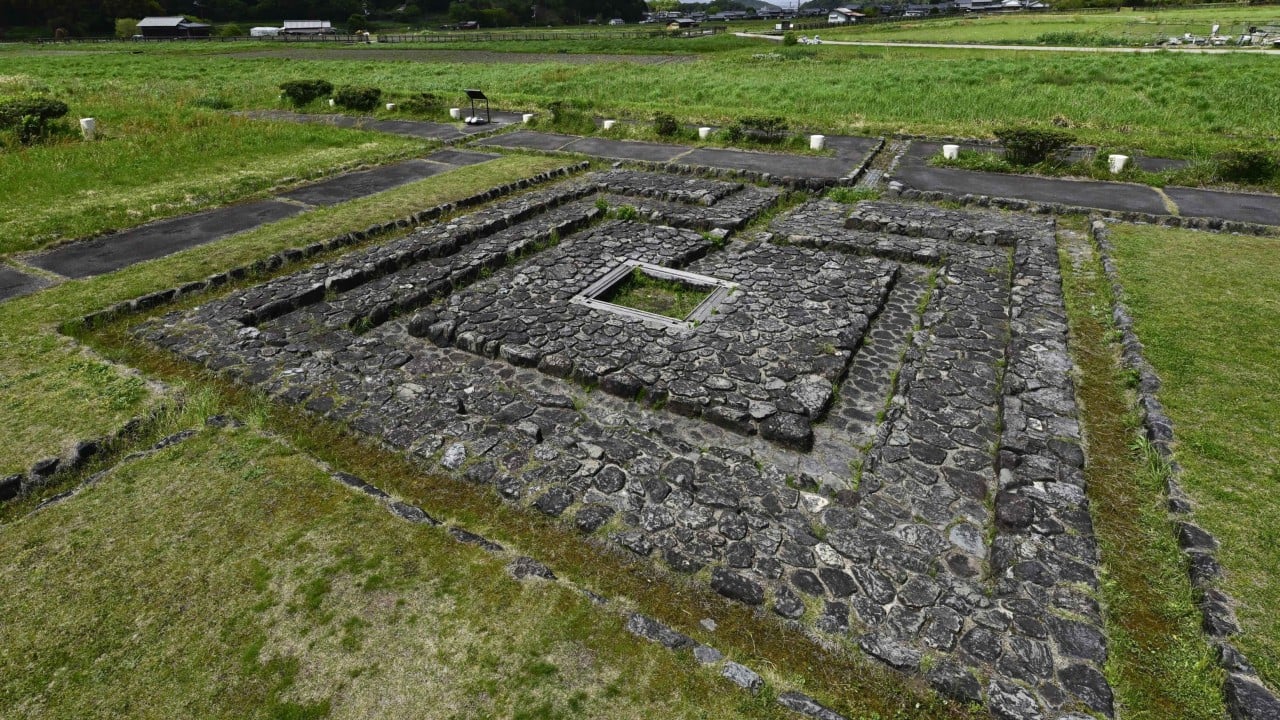
The physical evidence of Nakatomi’s world is what archaeologists spent decades unearthing beneath the cabbage patches and strawberry greenhouses of modern villagers. That is the strange magic of Asuka. Unlike Kyoto, which rises vertical and proud with its multi-storied pagodas staring down at you, Asuka is horizontal. It is subterranean. You have to look down to see it.
You find yourself standing before the Ishibutai Tumulus. It is a massive stone burial mound, likely housing the remains of Soga no Umako, a fiercely ambitious statesman who wielded more power than the puppet emperors of his day. The mound's earth has long since eroded away, leaving only the megalithic stone skeleton exposed to the open sky. Thirty tons of granite, balanced with mathematical precision. You can crawl inside the damp burial chamber. You can touch the cold rock and realize that human hands—without pulleys, without modern engines, relying solely on leverage, friction, and sheer stubborn willpower—wrestled these boulders into place.
It makes your own daily anxieties feel remarkably small.
Just down the road lies Fujiwara-kyo. If Asuka was the chaotic, experimental adolescence of the Japanese state, Fujiwara was the awkward first draft of urban planning. Founded in the year 694, it was Japan’s first truly capital city designed on a rigid grid system, imported directly from China's Tang Dynasty model.
For years, textbooks taught us that Fujiwara was a fleeting experiment, abandoned after a mere sixteen years because of bad feng shui or a series of fires. But walking the flat, wide expanse of the Fujiwara palace site today, you realize how revolutionary it was. This was where the legal codes were written. This was where Japan officially stopped calling itself Wa and started calling itself Nihon, beneath a rising sun flag that existed only in the ambitions of court poets.
Yet, nature reclaimed it with a vengeance.
Imagine living in Fujiwara in the year 710 as the government packs its bags yet again, migrating north to Heijo-kyo in modern Nara city. Within a generation, the grand avenues become muddy tracks. The imperial palace pillars are pulled down to build farmhouses. The grand experiment is swallowed by agriculture. For over a thousand years, farmers plowed over floor tiles stamped with lotus flower patterns. Children skipped smooth roof tiles across irrigation ponds without knowing they were touching imperial roof ornaments.
This is why the UNESCO designation matters. It is not about tourists buying plastic keychains or hotels raising their nightly rates. It is about a collective societal agreement to stop treating our own history as an obstacle to be paved over.
Local farmers in Asuka have fought for decades to protect their ancestral lands from becoming suburban housing developments. They didn't do it for international prestige. They did it because they knew that every time a bulldozer cleared a lot for a convenience store, a chapter of the nation's diary was being shredded. When you talk to an elderly farmer tending his strawberry patches in the shadow of Asuka's ruined stone statues, he doesn't talk like a museum curator. He talks like a custodian of a very old, very heavy secret.
He will point to a seemingly random mound of dirt and tell you whose palace used to sit there. He will show you the drainage ditch where seventh-century potters discarded cracked wine cups.
The world is obsessed with speed. We build glass towers that rise in months and demolish them in decades. We chase the newest digital ghost, discarding our tools before the batteries even die. We are terrified of leaving nothing behind.
We could learn a great deal from the dirt of Asuka and Fujiwara.
They built with clay, wood, and stone, knowing full well that time would eventually chew it all back up. They created an empire not by stopping the decay, but by transforming it. The temples burned. The capitals moved. The politicians died and turned into the very mud that now grows sweet strawberries and heavy autumn rice.
When you leave Asuka as the sun dips behind the western hills, turning the sky the color of bruised plums, the silence is absolute. No tour buses. No loudspeakers. Just the wind rustling through the stalks of dried rice and the heavy, rich smell of wet earth.
The stones are still there. The stories are still breathing beneath the roots. And the ground waits patiently for the next person willing to look down.