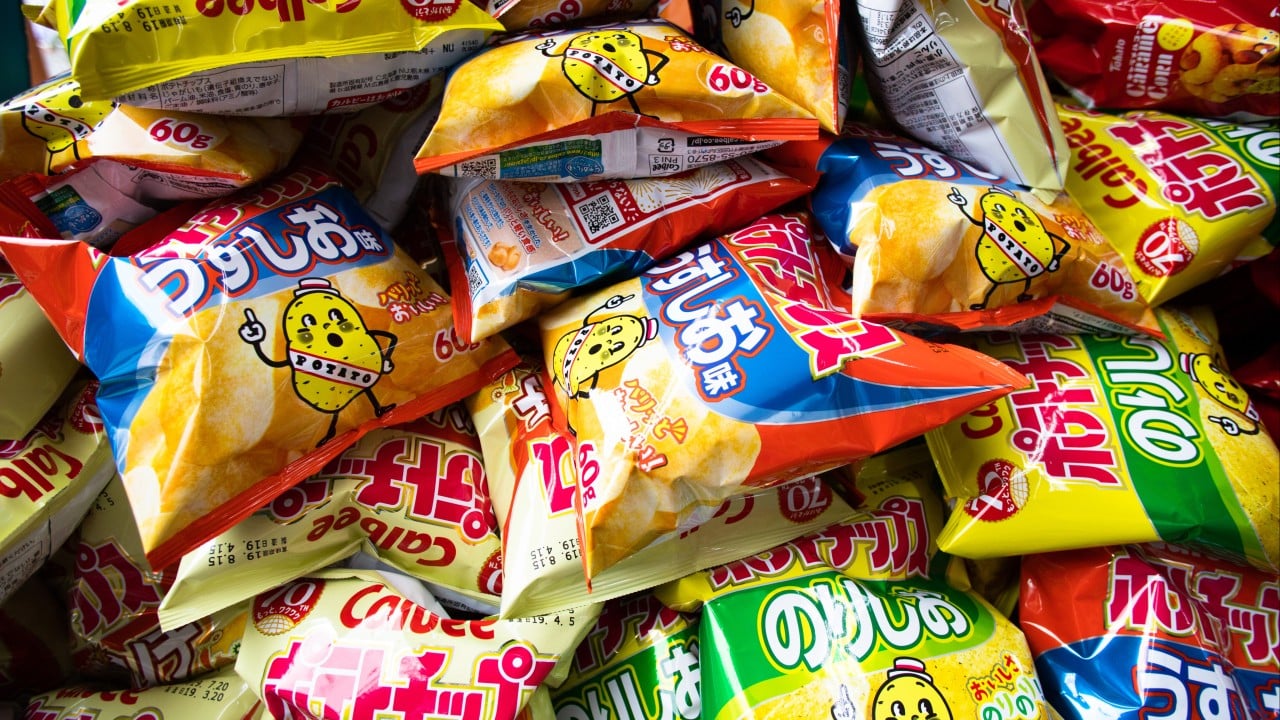
Japanese snack giants are stripping the color from their shelves. Calbee and its contemporaries have begun rolling out black-and-white packaging for flagship products as a direct response to a global shortage of cyan and magenta pigments. This isn't a bold new branding exercise or a nod to retro aesthetics. It is a desperate survival tactic triggered by the sudden collapse of chemical exports following the escalation of regional conflict in the Middle East.
The ink is drying up. For decades, the global printing industry has relied on a hyper-concentrated supply chain for synthetic organic pigments and resins. A significant portion of the precursors required for high-grade flexible packaging ink originates in facilities now caught in the crossfire of the Iran-Israel corridor. When the shipping lanes through the Strait of Hormuz tightened and Iranian chemical output stalled under the weight of wartime footing, the shockwaves traveled straight to the Japanese vending machine.
The Chemistry of a Crisis
Most consumers view a potato chip bag as trash. To a supply chain analyst, it is a complex multilayered laminate requiring specific chemical bonds. The vibrant "Calbee Red" or the electric greens of seaweed-flavored snacks aren't just dyes; they are sophisticated solvent-based inks designed to adhere to plastic films while resisting heat and moisture.
The manufacturing process for these inks relies heavily on petrochemical derivatives. Iran has historically been a silent backbone of this sector, providing the raw naphtha and specific aromatic hydrocarbons that serve as the building blocks for phthalocyanine blues and quinacridone reds. With these exports throttled, the cost of colored ink has spiked by 400% in a matter of months. Japanese firms, operating on razor-thin margins in a deflationary-sensitive market, faced a binary choice: hike prices to a level consumers wouldn't tolerate, or stop using color.
They chose the latter. By switching to monochrome designs, companies can utilize basic carbon black—a pigment that is significantly easier and cheaper to source from domestic coal and oil processing.
Beyond the Surface Aesthetics
This shift reveals a deeper fragility in "Just in Time" manufacturing. Japan’s snack industry is a multi-billion-yen powerhouse that prides itself on "Kawaii" packaging to drive impulse buys. Stripping that away is the corporate equivalent of an emergency blackout.
Industry insiders suggest that the move to black-and-white serves two purposes. First, it preserves the remaining stockpiles of colored ink for high-margin, limited-edition releases. Second, it prepares the public for a new era of scarcity. If a brand like Calbee can prove that consumers will still buy "The Gray Bag," it provides a buffer against future commodity volatility.
However, the technical hurdles are immense. You cannot simply hit "print in grayscale" on a commercial flexographic press and call it a day.
The Printing Press Problem
Existing printing plates are etched for CMYK (Cyan, Magenta, Yellow, and Key/Black) processes. Switching to a purely monochrome run requires re-tooling thousands of cylinders. This transition itself costs millions. The fact that Japanese firms are willing to eat this upfront cost suggests they do not expect the geopolitical situation in Iran to resolve anytime soon. They are digging in for a long winter.
Furthermore, the "black" ink being used isn't even a standard black. To maintain brand recognition without the help of color, designers are utilizing varying opacities and "rich blacks"—mixtures that use minimal color leftovers to create depth—to ensure the product still looks premium. It is a masterclass in making do with less.
The Psychological Gamble on the Shelves
There is a psychological risk here. Color is a shortcut for flavor. Red implies spicy or salty; green implies vegetable or onion; blue often denotes salt or "cool" flavors. By removing these cues, brands are forcing consumers to actually read the labels. In the fast-paced world of Japanese convenience stores (Konbini), where a purchasing decision is made in less than three seconds, this is a dangerous experiment.
Initial data from Tokyo test markets shows a confusing split. Older consumers have responded with "wartime nostalgia," a grim reminder of the austerity measures of the mid-20th century. Younger demographics, however, are seeing the monochrome bags as a "limited edition" aesthetic, inadvertently turning a supply chain failure into a viral trend. This "accidental cool" is the only thing keeping the stock prices of these companies from cratering.
The Hidden Cost of the Strait of Hormuz
While the media focuses on oil prices, the "secondary" chemicals are where the real pain is felt. The Strait of Hormuz carries roughly 20% of the world's petroleum, but it also serves as the artery for the specialized petrochemicals used in resins, adhesives, and coatings.
When a container ship is diverted or an Iranian refinery is repurposed for domestic military use, the snack aisle in Osaka feels the pinch before the gas station in Ohio does. This is because food packaging is an "invisible" consumer of these chemicals. We notice when gas goes up by a dollar; we don't notice when the resin that keeps a chip bag airtight becomes a rare earth equivalent.
Alternative Sourcing is a Pipe Dream
Can't they just buy ink from elsewhere? Not easily. The United States and Germany produce high-end inks, but their capacity is largely spoken for by domestic pharmaceutical and medical labeling industries. Those sectors have deeper pockets and priority contracts. The "junk food" sector is at the bottom of the priority list when it comes to global chemical allocation.
The Chinese market, which might typically fill the gap, is currently hoarding its own chemical supplies as it anticipates its own regional trade disruptions. This leaves Japan—a resource-poor island nation—entirely at the mercy of the seas.
Environmental Silver Linings or Greenwashing
Some corporate PR departments are attempting to spin this as an environmental win. They claim that monochrome printing reduces chemical runoff and makes the plastic bags easier to recycle.
This is largely nonsense.
The plastic itself—the multi-layered BOPP (Biaxially Oriented Polypropylene)—remains the primary environmental hurdle. Whether you print on it with five colors or one, the plastic is still difficult to process. The "eco-friendly" angle is a convenient shield against the admission that the company can no longer afford to make a red bag. It is a tactical pivot, not a moral one.
The Real Threat to Global Brands
If this "grayscale" trend spreads beyond Japan, we are looking at a fundamental shift in global marketing. For fifty years, brand identity has been synonymous with color. Coca-Cola Red, Tiffany Blue, UPS Brown. These are guarded by legions of lawyers and brand managers.
If the Iran conflict persists and the pigment shortage becomes the new "normal," we may see a world where brand identity is stripped down to typography and shape. This would leveled the playing field for generic brands, which have never relied on expensive, high-fidelity printing. The "Big Snack" monopoly is protected by the barrier of entry that is high-end packaging. If everyone is forced into black and white, the premium brand loses its visual edge.
A New Logic for the Modern Shelf
The strategy for survival now relies on transparency. Brands that hide behind "limited edition" labels will eventually be found out when the shelves stay gray for two years. The companies currently winning are the ones being blunt with their customers: "The world is changing, the supply routes are closed, and this bag is black and white so we don't have to raise the price of the chips inside."
This honesty resonates. It builds a different kind of brand loyalty—one based on shared hardship rather than flashy marketing.
The move to monochrome is a flare sent up from the engine room of the global economy. It is a signal that the era of cheap, colorful, disposable everything is hitting a hard ceiling. The snack aisle is just the first place where the lights are going out.
Watch the grocery store shelves closely over the next six months. If you see the oranges and purples of your favorite cereals beginning to fade into shades of charcoal and ash, you'll know the diplomatic efforts in the Middle East have failed. The grayscale economy is here, and it’s a lot less appetizing than the one we’re used to.
Check the batch codes on the back of your next "special edition" monochrome bag. If the manufacturing site has shifted to a secondary facility with lower-spec printers, you aren't looking at a collector's item. You are looking at a casualty of war.