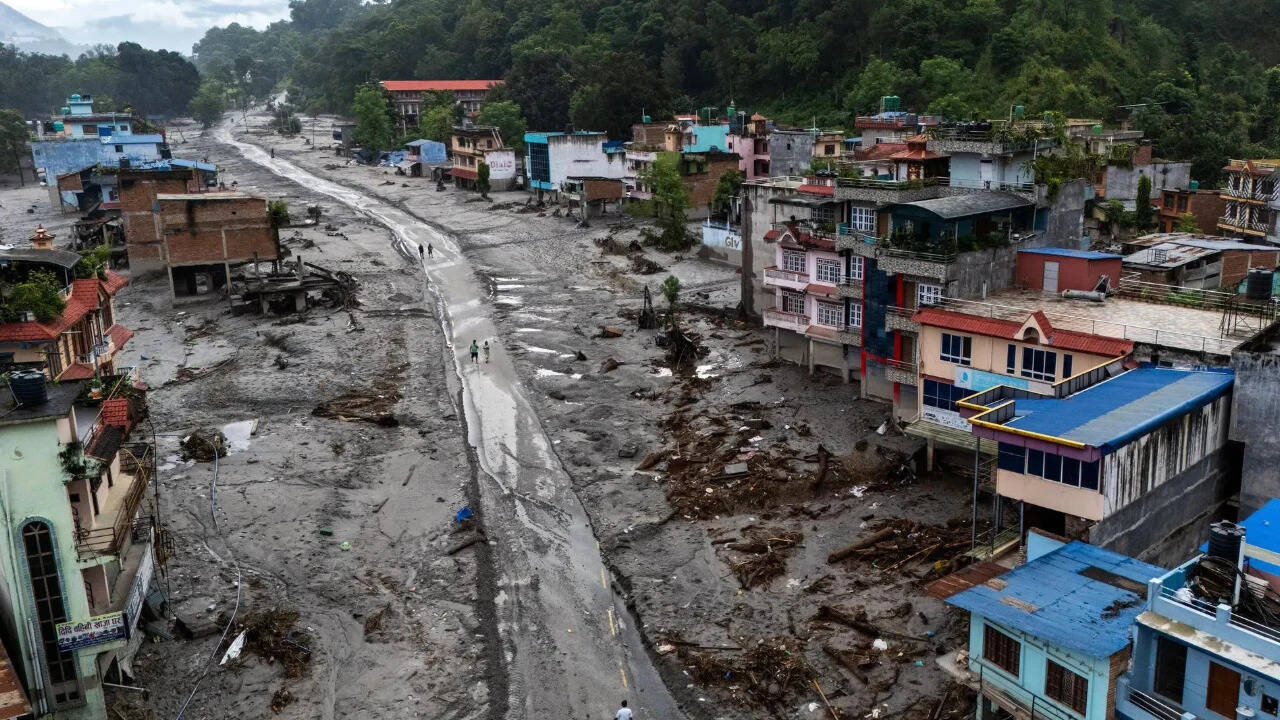
Smoke does not check identification papers. It does not pause at concrete walls, nor does it ask for clearance at military checkpoints. It drifts. It rises from the pulverized concrete and scorched earth of a besieged city, catches the upper atmospheric currents, and crosses invisible lines drawn on old maps.
Consider a farmer standing in an orchard just miles from a geopolitical boundary, wiping dust from his eyes that feels heavier than usual. He thinks it is just seasonal dust. He is wrong.
When conflict reduces an entire urban center to pulverized rubble, the destruction does not stay neatly contained within the combat zone. The physical toll of modern warfare is an intricate web of heavy metals, unexploded ordnance toxins, pulverized asbestos, particulate matter, and the chemical signatures of high-explosive ordnance. When these elements take to the air, they become fugitive particles. They travel. They settle on soil, slip into groundwater tables, and infiltrate the lungs of anyone breathing downwind, regardless of which side of a border they call home.
Environmental toxicologists have long tracked the secondary footprint of war. Long after the silence of a ceasefire falls, the atmosphere remembers. The air carries the residue of a shattered infrastructure—shredded electronics, burning fuel depots, and pulverized concrete mixed with industrial chemicals. When the prevailing winds blow eastward from the coastal strip toward neighboring valleys and coastal plains, they carry an invisible cargo.
To understand this phenomenon without getting lost in abstract scientific papers, imagine baking a cake with soot and ash mixed into the flour. You cannot easily separate the clean flour from the ash once it is baked. The regional ecosystem functions much the same way. The air basin shared by the conflict zone and the surrounding territory is a single, closed room. What burns in one corner fills the entire chamber.
Residents across the border have increasingly reported unusual respiratory irritation, persistent coughs, and a metallic taste in the air during periods of intense bombardment. Medical researchers attempting to map these symptoms face a daunting wall of variables. Wind speeds shift. Air pressure drops. The chemical cocktail changes daily depending on what type of building or facility took a direct hit—whether it was a residential block, a manufacturing workshop, or a municipal sanitation facility.
(Note: While direct, large-scale epidemiological tracking across active conflict divides remains exceptionally difficult due to access restrictions, independent environmental assessments and atmospheric modeling confirm that particulate matter PM2.5 and toxic combustion byproducts do not respect geopolitical borders.)
The human cost of this ecological spillover is rarely counted in daily casualty reports. Those numbers capture the immediate, violent end of a life or the trauma of a hospital ward. They do not capture the chronic asthma flare-up in a toddler sleeping ten miles away. They do not record the long-term cellular mutations silently catalyzed by heavy metal particulate inhalation.
Borders are human inventions. Toxicity is a physical reality.
When toxic waste and combustion byproducts saturate a region, the soil and water become silent archives of the devastation. Rain falls through ash-laden clouds, absorbing sulfur dioxide and nitrogen oxides, turning into mild acid rain that leaches heavy metals out of the debris and directly into local aquifers. These aquifers feed agricultural wells. Those wells water the crops that find their way to dinner tables on both sides of the divide.
The tragedy of war's environmental fallout lies precisely in this inescapable interconnectedness. You cannot isolate a population from the sky it shares with its neighbors.
We look at maps and see neat colors, sharp lines, and distinct territories. We comfort ourselves with the illusion of separation. But the atmosphere laughs at our maps. It circulates, mixes, and delivers the consequence of human choices back to everyone on the ground.
The wind turns. The smoke crosses the line. And the air reminds us that we are all breathing the same exhausted sky.