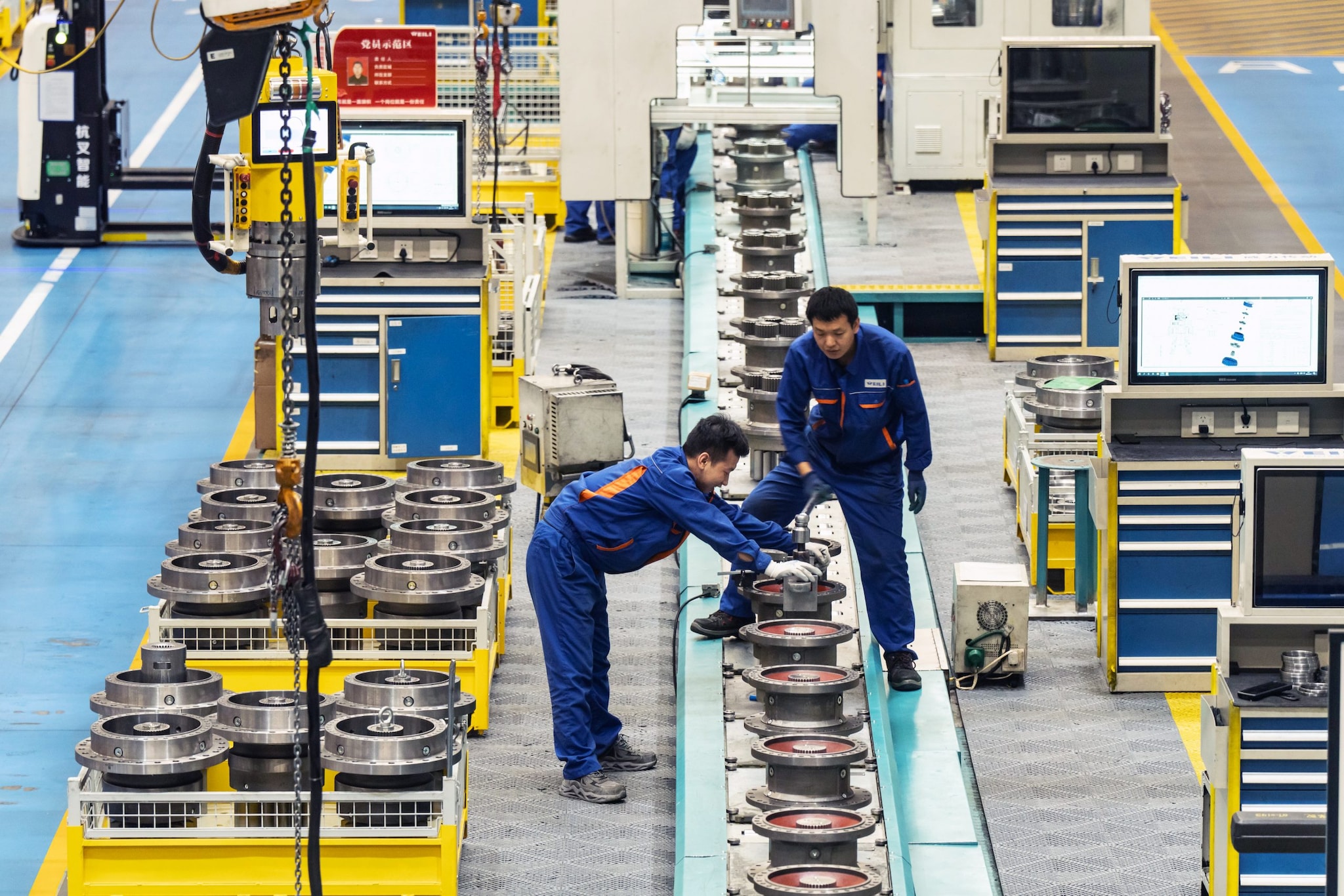
The smell of burning rubber and ozone is usually a sign that something is going wrong. But for Zhang Wei, a middle-manager at a chemicals plant on the outskirts of Ningbo, that scent has become a strange comfort. For thirty-six months, the silence at the factory gates was deafening. The machines were humming, sure, but the ledgers were bleeding. Every week, he watched the producer price index—that cold, clinical measure of what factories charge wholesalers—sink deeper into the red.
Deflation is a ghost that haunts the machinery of the world. When prices fall for three years straight, it isn't a "sale." It is a slow-motion collapse of confidence. It tells every factory owner that their product will be worth less tomorrow than it is today, so why bother buying raw materials? Why hire? Why dream?
Then, the oil started to move.
Crude oil is the blood of the global economy, and recently, that blood has been pumping harder. For the first time in over a thousand days, the data from China didn’t just meet the mark—it shattered it. Factory gate prices have finally clawed their way back into growth. This isn't just a spreadsheet victory. It is the first deep breath a drowning man takes when his head finally breaks the surface.
The Invisible Pressure Cooker
To understand why this matters to a person sitting in a coffee shop in London or a suburb in Ohio, you have to look past the "Made in China" sticker. You have to look at the energy cost. The recent surge in global oil prices acted like a jumper cable to a dead battery. When the cost of fuel rises, the cost of everything else follows—transport, plastics, synthetic fibers, the very electricity that powers the assembly lines in Guangdong.
For three years, China was exporting deflation to the rest of the world. It was keeping global inflation lower by eating the costs at home, a sacrifice forced by sluggish demand and a property market that looked more like a graveyard than a gold mine. But the surge in commodity prices has changed the math.
Imagine a hypothetical small-scale electronics exporter named Li. For years, Li has been squeezed. His domestic customers didn't want to pay more, and his international buyers were used to his prices dropping. He was caught in a vice. But as oil prices ticked up, Li found he could finally raise his prices without being laughed out of the room. He wasn't the only one. Across the industrial heartland, the "beating expectations" headline translated to a very human reality: the ability to pay the light bill without dipping into savings.
The Crude Reality
The numbers are startling because they were so unexpected. Most analysts thought the slump would linger like a bad cold. Instead, the Producer Price Index (PPI) turned positive, driven largely by the raw intensity of the energy sector.
When oil prices climb, it creates a ripple effect. It starts at the wellhead, moves to the refinery, and eventually hits the pallet of goods sitting on a dock in Shanghai. This isn't just about "expensive gas." It’s about the chemistry of modern life. If you are sitting on a chair, wearing a polyester shirt, or holding a plastic phone case, you are holding a byproduct of the very oil that just pushed China’s factory prices back into the light.
But there is a catch.
Growth driven by surging oil prices is a double-edged sword. It’s "cost-push" inflation, not necessarily "demand-pull." In simpler terms: things are getting more expensive because they cost more to make, not necessarily because everyone is suddenly richer and desperate to buy them. It’s a fragile kind of recovery. It’s the difference between a fire started by a match and a fire started by a magnifying glass on a hot day. One is controlled; the other depends entirely on the sun staying out.
The Global Echo
The world has spent the last year terrified of inflation. Central banks have been slamming on the brakes, raising interest rates until the pips squeak. They wanted things to cool down. Now, the world’s factory is heating up again.
If Chinese factory prices continue to rise, the cheap goods that acted as a buffer for Western consumers will disappear. That $20 toaster or $50 pair of sneakers begins to climb in price. The "China Price"—that legendary floor that kept global retail costs down—is moving.
Zhang Wei doesn't think about global macroeconomics when he walks the floor of his plant in Ningbo. He thinks about the heat. He looks at the stacks of barrels arriving at the loading dock. He sees the invoices that finally show a profit margin wider than a razor's edge. To him, the "surging oil prices" aren't a headline or a grievance at the pump. They are the sound of the engine finally catching. They are the reason the ghost of deflation has stopped rattling its chains in the warehouse.
The dragon is breathing again. It’s a hot, oily breath, smelling of industry and expensive fuel, but it’s a sign of life. And in a world that has been waiting for China to wake up, a little heat is better than the cold.
The machines are louder now. The smoke above the factory is thicker, darker, and more expensive than it was yesterday. For the first time in years, the people inside don't mind the soot. They know that as long as the prices are rising, the doors stay open.