The chalk dust in a French high school corridor smells different when the iron gates are chained shut from the inside.
It smells like stale coffee, wet wool, and the nervous, high-pitched laughter of seventeen-year-olds who have suddenly realized that adults are looking at them not as children learning irregular verbs, but as a security threat. Outside, the sirens do not wail with the clean urgency of an ambulance. They hum a dull, bureaucratic drone, bouncing off the damp limestone facades of a Parisian suburb where the morning fog refuses to lift.
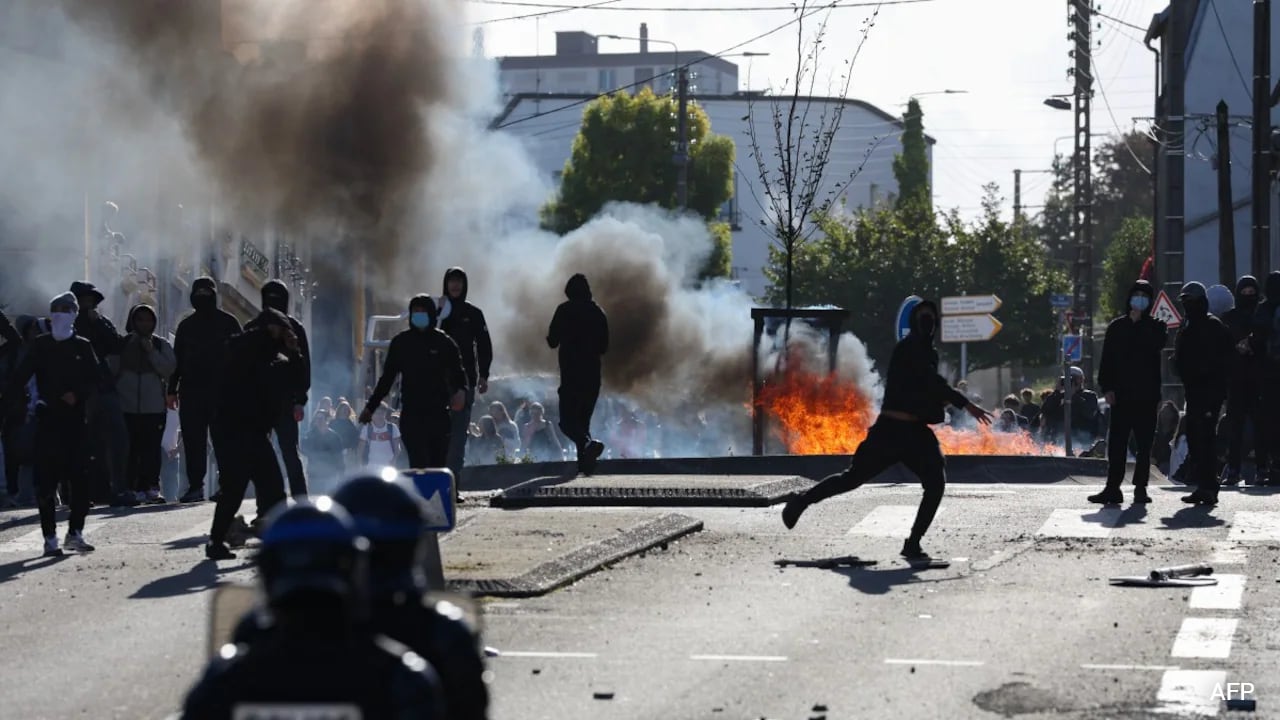
For three weeks, the courtyards have been staging grounds. Metal trash cans, upended and stuffed with damp cardboard and old tires, burn with an acrid, greasy black smoke that blackens the sandstone busts of the Republic's founding fathers. Banners cut from bedsheets hang from the wrought-iron balconies. Their slogans are written in thick, dripping red paint—Avenir Brisé, Stop Reform, The Future Is Not For Sale.
Yet, as the state apparatus reacts, a familiar linguistic machinery begins to grind. In the gilded salons of the Ministry of the Interior, the vocabulary hardens. The unrest—sparked by curriculum reforms, budget cuts, and a mounting dread about the cost of living—is no longer described as adolescent anxiety or structural fracture. It is named. It is categorized. It is attributed.
From the highest offices, the official line drops like a heavy velvet curtain: the radical left is to blame.
Listen closely to how power speaks when it is cornered. It never points to a mirror. It points to an agitator.
To understand why thousands of teenagers are standing shoulder-to-shoulder behind barricades of overturned desks, you have to step away from the podiums and into the stairwells. You have to look at Julien.
Julien is sixteen, with ink-stained fingers and a battered backpack weighed down by a copy of The Stranger and a half-empty bottle of mineral water. He is not a revolutionary. Two months ago, his primary concern was whether his math grade would secure him a place in a decent preparatory track, or if he would be quietly funneled into a vocational system that feels less like a choice and more like an economic trap door.
"They talk about us like we're an army," Julien says, leaning against a graffiti-scarred radiator in a corridor that smells of bleach and damp coats. Around him, students pass around a cracked smartphone, watching footage of last Tuesday’s clashes near Place de la République. Tear gas canisters pop like firecrackers. A riot shield rises. A young woman in a puffer jacket stumbles backward, her eyes red, her scarf soaked in baking soda and water.
"We didn't invent the anger," Julien continues, his voice cracking slightly on the high notes, betraying the boy beneath the hooded sweatshirt. "We just inherited the room it was stored in. But the moment we stand up, they look for someone behind us pulling the strings. Because they can't accept the simplest thing in the world: that we are simply terrified."
This is the psychological pivot of modern governance. When young bodies mass in the streets, demanding a voice in a system that feels increasingly mechanical and indifferent, the state faces a profound narrative crisis. To admit that the education system is buckling under chronic underfunding, that teachers are exhausted, and that the promise of social mobility has curdled into debt and stagnation is to admit institutional failure.
It is far easier, infinitely more efficient, to invoke a phantom.
Enter the shadow of political manipulation. In the official narrative, these teenagers are not actors with grievances; they are proxies. They are foot soldiers in a cynical chess match orchestrated by radical political factions seeking to destabilize the government. The rhetoric is precise, surgical, and designed to delegitimize. It draws a clean line between the "legitimate, calm citizen" and the "subverted youth" manipulated by external extremists.
Yet, walk the perimeter of any high school blockade in Marseille, Lyon, or Saint-Denis, and the reality is stubbornly messy, entirely human, and remarkably leaderless.
There are no veteran revolutionaries handing out manifestos from the back of black sedans. Instead, there are tired teenagers eating cold croissants bought with pooled pocket money, arguing about whether to let the history teacher through the side gate, and nervously checking their phones to see if their parents have seen the news. The coordination is digital, chaotic, and decentralized—born of group chats, TikTok algorithms, and a shared, visceral sense that the social contract protecting their parents’ generation has quietly expired.
The tension escalates not because an opposition party whispered a magic word, but because the kinetic force of the state meets the stubborn, fragile pride of youth.
When the CRS—the mobile riot police—move in with batons drawn and concussion grenades whistling through the gray air, the nature of the protest changes instantly. Fear replaces debate. Adrenaline overtakes logic. A brick thrown by an anonymous hand in a dark hoodie becomes all the justification the evening news needs to brand the entire movement as violent insurrection.
The political calculus is chillingly simple. By focusing the lens entirely on the overturned trash cans, the shattered windows of a Monoprix, and the burning barricades, the core argument is vaporized. The debate shifts away from the viability of pension reforms, the dilution of high school diplomas, and the crushing cost of student housing. It becomes a law-and-order referendum.
Are you for public safety, or are you with the burners?
It is a false binary, weaponized with exquisite skill.
History is littered with the echoes of this exact choreography. Whenever the young crowd the public square, those who hold the keys to the treasury and the police barracks experience a profound vertigo. They look out at the cobblestones and see not citizens exercising a constitutional right to dissent, but a contagion that must be quarantined or discredited.
In May 1968, the streets of Paris shook under very similar slogans. Then, too, the authorities spoke of foreign agitators, of hidden hands, of dangerous radicals exploiting the pure idealism of youth. Decades later, the archives reveal a government desperately trying to rationalize an organic tectonic shift through the narrow lens of conspiracy.
We have learned nothing, because learning implies admitting vulnerability.
Consider the economic backdrop against which these school protests unfold. Inflation has crept into the quietest corners of French domestic life. It is present in the silent calculations of single mothers standing in supermarket aisles, weighing whether to buy fresh vegetables or cheaper pasta. It is present in the university dorm rooms where students sleep three to a bed because the housing market is an impermeable wall of glass and deposits.
When a sixteen-year-old looks at the reforms being tabled in the National Assembly—reforms that push retirement further away, shorten career runways, and signal a permanent austerity—they do not see abstract policy. They see a closing door. They see a future where the baseline of comfort achieved by their parents is a vanished continent.
To reduce this generational panic to the scheming of a radical political party is more than just politically convenient; it is a profound moral evasion. It strips young people of their agency. It treats them as children when it is time to discipline them, and as dangerous radicals when it is time to discredit them, while refusing to grant them the simple dignity of being heard.
As the afternoon light begins to fade over the Parisian suburbs, the smoke from the school gate finally thins, leaving behind a greasy gray residue on the asphalt. The police lines slowly withdraw, their helmets tucked under their arms, trading tension for a watchful boredom.
Inside the courtyard, the students sweep up the debris. They pile the unburned wood back against the brick wall. They talk in hushed tones about tomorrow, wondering if the gates will be locked again, wondering if anyone in the marble halls across the city actually heard the rattle of the chains.
The official statements have already been filed, the television segments edited, the villain neatly assigned. But down here, in the damp chill of the French evening, the silence that follows the tear gas is heavy and unresolved.
The fire is out. The smoke has cleared.
The question remains.