For nearly four years, the tarmac at Hong Kong International Airport held a specific kind of quiet. If you walked near the gates usually reserved for long-haul Western Asia flights during the depths of the pandemic, the silence was heavy. Aviation isn't just about metal tubes moving through cloud banks. It is a circulatory system. When a route dies, a piece of human connection withers with it.
Consider a hypothetical traveler named Sarah. She is a logistics manager based in Hong Kong, the kind of person who counts her life in frequent flyer miles and time zones. For years, her business relied on a direct line to Saudi Arabia. When those flights vanished, her world stretched out. A simple meetings-bound trip mutated into a grueling 20-hour odyssey through third-party hubs. Jet lag became a permanent state of being. Relationships cooled. Deals slowed to a crawl.
That isolation is finally cracking.
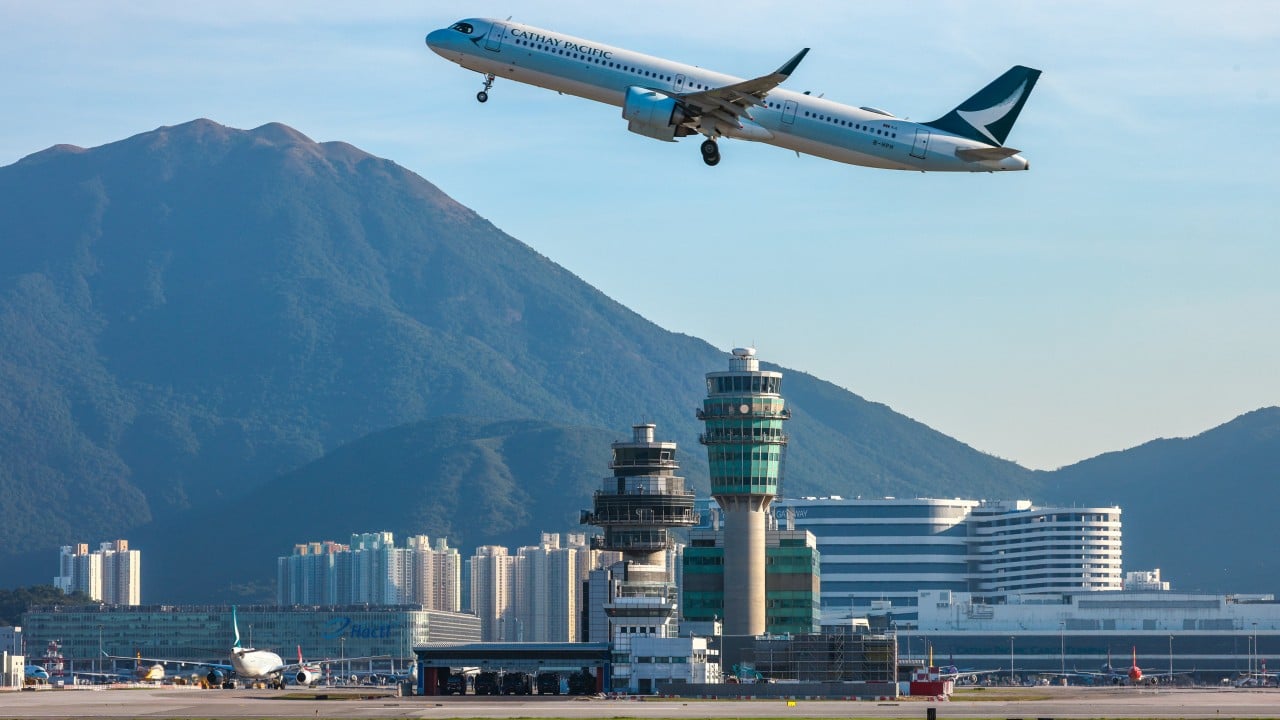
Cathay Pacific is turning the engines back on. Starting this September, the airline will resume direct passenger flights between Hong Kong and Riyadh. It sounds like a standard corporate press release. But underneath the dry operational data lies a massive shift in how two global hubs talk to each other.
The Three-Times-A-Week Heartbeat
The airline isn't dipping a toe in the water; they are committing a flagship aircraft to the cause. The twin-aisle Airbus A350-900 will handle the route. It will fly three times a week.
Think about the sheer physics of that. Every Tuesday, Thursday, and Saturday, a massive composite-wing aircraft will lift off from the edge of the South China Sea, climb into the thin air above Asia, and nose its way toward the Arabian Peninsula. It connects more than just two airports. It links the Greater Bay Area—China’s economic powerhouse engine—directly to the heart of the Middle East.
The schedule is built for the exhausted business traveler. The flight leaves Hong Kong in the late afternoon, chasing the sun westward, and touches down in Riyadh just as the desert heat begins to bleed off into the night. The return leg flies overnight. You sleep over India and wake up as the gears drop over Hong Kong.
Moving Past the Great Pause
To understand why this matters, look backward. The aviation industry took a beating that almost defies description. When borders slammed shut, airlines didn't just lose money; they lost their network effects. A network relies on nodes. When you cut a node, the whole web sags.
For years, getting from Southern China to the Gulf meant navigating a labyrinth of layovers. It meant lost bags in Doha, missed connections in Dubai, and hours spent staring at terminal ceilings. Time is the one asset no executive can buy back. By cutting the flight time down to a direct hop, the airline is essentially handing thousands of hours back to the market.
This resumption is a calculated bet on where the world's economic gravity is shifting. Saudi Arabia is pushing through its Vision 2030 plan, trying to transform its economy from an oil-dependent giant into a modern tech and tourism hub. Hong Kong, meanwhile, is desperate to reclaim its title as Asia’s premier aviation gateway. They need each other.
The Human Freight
We tend to look at airplanes and see tourists. We see vacations, overhead bins, and tiny cups of coffee. But the belly of an A350 tells a different story.
Beneath the passenger cabin lies the cargo hold. When this route opens, it won't just carry suitcases. It will carry high-value electronics from Shenzhen, time-sensitive pharmaceuticals, and specialized machinery components. The revival of this direct link acts like clearing a blocked artery. Suddenly, commerce moves at the speed of flight again, not the sluggish pace of multi-stop freight forwarders.
The uncertainty of the last few years made people risk-averse. Companies hesitated to sign cross-border partnerships because the logistics were too fragile. This move signals stability. It tells the market that the path is clear, predictable, and open for business.
The first flight in September will roll out onto the runway, its engines whining as they spool up to maximum thrust. The passengers inside will look out at the grey waters of the Pearl River Delta as they lift away. Hours later, they will look down at the geometric lights of Riyadh sprawling across the dark sand. The distance between those two worlds just got shorter.